Pride!: Ryan’s Story

I grew up Filipino.
Which meant I also grew up Catholic, respectful, and quiet when it mattered.
You didn’t talk back. You didn’t question your elders. You didn’t come home too late. And you definitely didn’t talk about queerness.
In our community, you could suspect. You could joke. But no one ever said it.
Being gay was either a punchline or a shameful rumor that hovered around someone until it stuck. So I learned early: keep it tucked away. Smile. Be helpful. Be successful. And I was. Success became my armour. Good grades. Good manners. A carefully curated version of myself.
If I couldn’t belong by being me, maybe I could belong by being perfect.

It wasn’t that I didn’t know I was queer. I did.
I felt it in the way I watched certain people longer than I should—especially my sister’s guy friends. These boys were always around: loud, confident in that casual way boys are when they’ve never had to question their belonging.
They’d play basketball, all shoulders and jokes and zero personal space.
And there I was, always on the sidelines wondering what it would feel like not having to hide.
I wasn’t just crushing—I was studying.
How they existed around each other without fear. They were soft with each other in ways no one called soft. Their masculinity was never questioned. Mine was something I monitored constantly.
And I’d sit there wondering, Do I want to kiss them? Be them? Or just be allowed
near that kind of ease? Let’s be real—probably all of the above.

That’s why my first Pride felt… surreal. It was in Vancouver. I had just started letting myself live more openly—not just online or in whispers, but out loud. I didn’t know what to expect.
I just remember putting on this yellow polo shirt—something bright, safe, cheerful. I added a rainbow pin, maybe some beads I’d been handed by a volunteer. It felt like putting on armour, but softer. Like permission. I watched from the sidewalk as the parade moved past. Rainbow flags everywhere. Glitter. Music. People cheering and kissing and dancing in the street like the whole city had finally taken a deep breath.
And then I saw it—the TD float, blasting music with half-naked people dancing in the sun. Glistening bodies. Queer joy. Sweat and pride and freedom.

But here’s the thing: I didn’t feel like I was part of it. I felt like a spectator. Like I was watching someone else’s celebration, not mine.
I was smiling, clapping, even laughing—but I was still on the curb. Still unsure. Still asking myself, “Am I queer enough to belong here?
It wasn’t shame exactly. It was distance. Like I had stepped into the world of Pride, but I hadn’t quite arrived in myself yet.

It took me a few more years, and a move across the ocean, before I’d feel anything different. Brussels Pride caught me off guard. I hadn’t even planned to go, but I found myself in the middle of the city, swept up in the energy.
This wasn’t a hyper-produced parade with big floats and barricades. It felt open. Messy. Intimate.
People weren’t just watching—they were walking. The barriers were barely there. Anyone could step off the sidewalk and join the procession. And people did. People of different backgrounds, mingling, dancing and exuberantly celebrating.
Young people marching with their chosen family. Straight friends carrying signs that said, “I’m here because I love someone queer.”

And the soundtrack? Pure Eurovision chaos. From someone blasting “Tattoo” by Loreen like it was church, to a rhythmic chant to “Europapa,” it was enchanting.
Every corner had its own beat. Every queer had a flag. Every moment felt like home—if your home also occasionally served techno with a side of identity crisis.
Honestly, if you’re a Eurovision fan, hit me up, we clearly speak the same emotional language: high drama, bold fashion choices, and the occasional key change that saves lives and after some time I stepped off the sidewalk.
For the first time, I didn’t feel like I had to earn my place.
I wasn’t perfect. I wasn’t loud. I was just present. And that was enough.

When I think about Pride now, I don’t think about the floats or the glitter or the corporations with their rebranded logos. I think about that moment in Brussels—stepping off the sidewalk and into the street.
Because Pride isn’t a performance. It’s a process. It’s the slow unlearning of shame. It’s the decision to stop apologizing. It’s choosing joy even when the world has only taught you fear.

And yet even now, when I walk into certain spaces—queer or not—I still carry that quiet calculation: “Am I too much here? Or not enough?
Because queerness is not a monolith and the mainstream image of Pride still doesn’t always look like me.
There’s a kind of queerness that gets celebrated more easily.
Usually white. Usually cis. Often male. Lean. Loud.
Unapologetic in a way that feels less like protest and more like branding.
And sometimes, in those clubs, those professional events, those “inclusive” queer spaces, I still feel like I’m back on the sidewalk. Watching the parade.
I’ve been the only brown face in a meeting. I’ve had coworkers pull me aside to tell me I’m “so well-spoken,” as if it’s a surprise. I’ve had white queer people talk over me in meetings about diversity.
I’ve been fetishized for my brownness. Othered, even in intimacy.
And I’ve seen how people treat me differently when I show up femme—when I wear non-conforming garments, when my voice softens, when my wrists move too freely. Sometimes, being a queer person of colour means walking into rooms that claim to celebrate you, but only if you come in fragments.
Only if you leave the messiness, the accent, the ancestors, the softness, the trauma, and the realness at the door.

But that’s not who I am anymore. I don’t fragment myself for anyone now.
Because Pride isn’t just about who you love. It’s about how you insist on your wholeness in a world that keeps trying to carve you into pieces.
I once heard someone say:
“We don’t just want to be tolerated—we want to be accepted.” And that hit me.
Because for so long, I’d been satisfied with tolerance.
With not being bullied. With not being the punchline. With being allowed to exist.
But now? I want more. I want room to be joyful. To be complicated. To be brilliant and brown and queer and soft and taken seriously.
I want acceptance. Not as a concession, but as a given.
I’ve found power in taking up space—not always loudly, but fully. In speaking up at work when something feels off, even if I’m the only one who notices. In mentoring other queer folks of colour, so they don’t have to wait as long as I did to feel seen. In holding space for softness, for mess, for nuance.
In telling my story, especially the parts that aren’t tidy.

Because this is Pride, too. Not just rainbow floats and party weekends, but healing. Boundaries. Audacity. The choice to keep showing up, again and again, in rooms that weren’t designed for you, and remaking them in your image.
Now, when I think about my journey, from hiding behind grades in a Filipino household, to staring longingly at sweaty basketball boys, to watching the parade in Vancouver, to marching through a sea of techno and tears in Brussels—I realize I was never chasing a performance.
I was building a relationship with myself. One where I could love all of who I am.
Brown. Queer. Soft. Strategic. Sensual.
Not half of anything. Not apologizing anymore.

So if you’ve ever felt like Pride wasn’t made for you—too brown, too quiet, too complicated—I hope you know this:
You don’t have to wait for someone to invite you in. You belong here.
Even if you don’t wear glitter. Even if your pride looks like staying in.
Even if your anthem is Loreen and you cry to “Europapa” once a week.

Because Pride is not a moment.
It’s a practice. A rhythm. A reclamation.
And it’s yours.
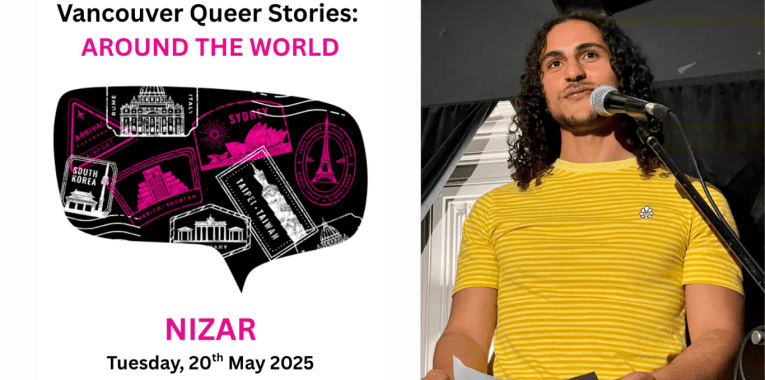
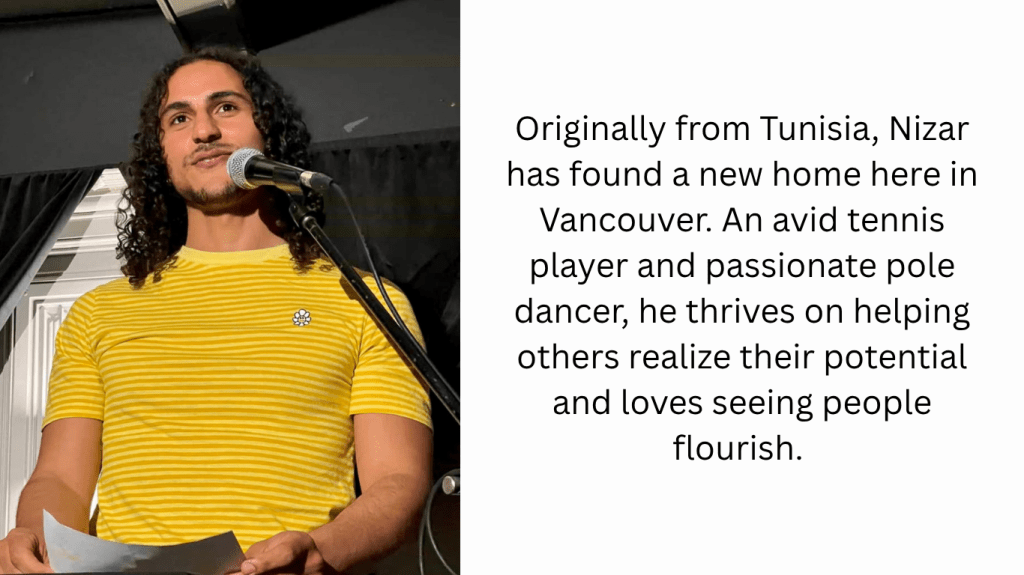
Around the World: Nizar’s Story

I grew up in a small town on the Mediterranean coast of Tunisia, a place where being different often meant being targeted. For those unfamiliar, Tunisia is a North African country with a rich and complex history. From the Phoenicians, Carthaginians, Romans, Vandals, Byzantines, Arabs, Berbers, Ottomans, to the French, many civilizations have left their mark. It’s a beautiful country with stunning landscapes and, if I may say so myself, a lot of beautiful men.

But despite its beauty, Tunisia’s laws are not as progressive. According to Article 230 of the penal code, same-sex relations are criminalized, with penalties of up to three years’ imprisonment. So, while the country is breathtaking, it’s not exactly a safe space for someone like me.

From as early as kindergarten, I knew I was different. My feminine manners and femme-presenting nature made me a target for relentless bullying. Before I even knew I was gay, people had already decided it for me. They called me “fag” and other slurs, and I couldn’t understand why. I felt trapped in a cycle of fear, confusion, and self-loathing.

Looking back now, I realize that people often fear what they don’t understand. In a place where traditional gender roles were set in stone, my existence challenged their norm. I didn’t know it then, but I was stronger than I thought simply for surviving that.

Every day, I’d walk down the street and brace myself for the insults, the rocks thrown my way, and sometimes even the beatings. I’d come home from school, bury my face in my pillow, and scream until I was exhausted. I couldn’t tell anyone, not my mom, not my dad, because I was terrified of judgment and ashamed of who I was. I contemplated ending my life more than once, but something within me, some spark, kept me going. Maybe it was hope or just pure stubbornness, but I wasn’t ready to give up.

As I approached my final year of high school, I knew I couldn’t stay in Tunisia any longer. I needed to escape. My parents couldn’t afford to send me abroad for school, but I was determined to find a way out. Here’s the funny thing about desperation: it makes you creative. I started browsing a website called GayCupid, it doesn’t exist anymore, but at the time, it felt like a lifeline. I reached out to countless men from around the world, Italy, France, Canada, the US, the UK, hoping one of them could help me leave. I convinced myself I was in love with one of them, a man named “Tom”. For two years, I stayed in touch with him, keeping that hope alive. Eventually, he helped me get a visa to Canada as an international student.

Moving to Canada was a huge relief, but living with “Tom” during those first two years was challenging. Even though I had set the boundary that we would just be friends, I often found myself doing things I wasn’t comfortable with to maintain stability. Eventually, I decided that I wanted better for myself. Leaving his place felt like reclaiming my own agency after years of feeling like I had to compromise to survive.

Not long after I moved out, I found myself on the phone with my mom. I wasn’t planning to come out to her that day, it just happened. The emotions overwhelmed me, and before I knew it, I was telling her everything I had kept bottled up since kindergarten; the bullying, the fear, the pain. I couldn’t stop the words from pouring out. It was raw, emotional, and something I didn’t know I needed. At first, she struggled to accept it, but I realized that I needed to accept her too, her background, her limited exposure to different perspectives. My dad’s reaction was different. He simply said, “I don’t care, be whatever you want.” Part of me wanted him to care more, to cry with me, but in time, I understood that his indifferent acceptance was a form of love.

One thing I’ve learned is that acceptance is a two-way street. I was asking my family to accept me, but I had to accept them too. When I let go of the need for my mom to fully understand and embraced her own struggle with my identity, a weight lifted off my shoulders. It wasn’t about them; it was about me, about learning to love myself despite the years of hatred and misunderstanding I had faced.

Living in North America has its own challenges, but it’s nothing compared to fighting for survival back home. Sometimes I feel like I’m going to be one of those people who say, “Back in my day…” but really, the contrast is stark. Back in Tunisia, just being myself was like trying to get a massage while stuck in a war zone. But here I am now, free, resilient, and finally at peace with who I am.

If there’s one thing I want you to take away from my story, it’s this: Sometimes, the journey to self-acceptance means accepting others, too. It’s about finding your own freedom without demanding that everyone understands it. The weight lifts when you let go of the need for validation and choose to live for yourself.

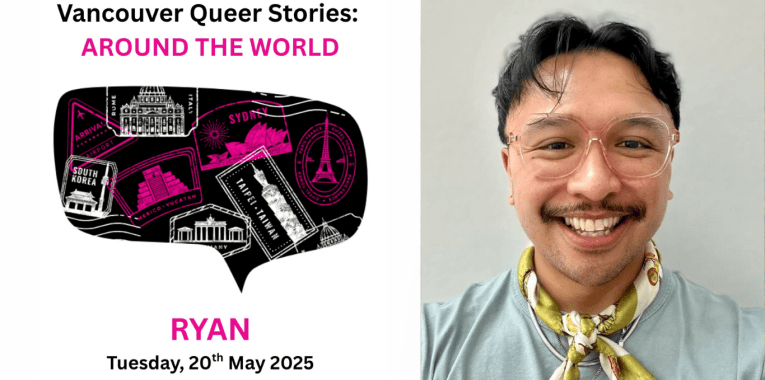
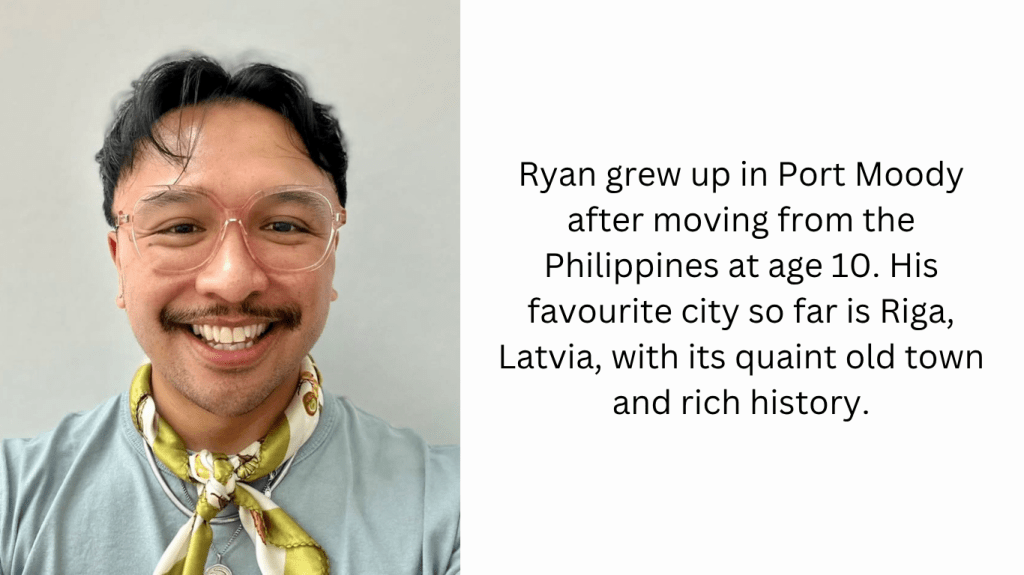
Around the World: Ryan’s Story

I used to think identity was something I had to wear like a badge.
Queer.
Person of Colour.
Canadian.
A neatly folded résumé of who I was supposed to be before anyone even knew my favourite food or how I take my coffee.

In Vancouver, I could feel the labels arriving before I did.
Like I walked into the room after my own footnotes.

But then I left.
Packed two suitcases and a nervous heart, and landed in Berlin —
a city colder than I expected, stranger than I imagined,
and somehow, freer than I’d ever known.

No one knew me there.
Not the barista who handed me my first Latte Macchiato with a crooked smile, not the cashier at Rewe who tossed my groceries with zero small talk, not the friend-of-a-friend at a Kreuzberg Altbau party who didn’t ask “where are you really from?” Or “what do you do for work?”
just asked, “what’s your sign?”

I said Cancer.
They said, “figures.”

And just like that, I wasn’t explaining myself.
I was just existing.

Berlin didn’t care what box I fit in.
It didn’t ask me to choose between my softness and my strength.
It didn’t ask me to be a role model or a symbol or a teachable moment.
It just asked me to be.
To show up.
To dance to pop EDM remixes in Schwuz or twerk at a Latin party in Lido.
To get lost on the winding Straßes.
To survive on Simit, Franzbrötchen and Club Mate.
To fall in and out of routines, and sometimes out of love.

And so I travelled.
Not just through Europe —
though yes, I did float through Stockholm,
sweated under the Barcelona sun,
and blinked at the beauty of Prague’s cobblestones at midnight —
but I also travelled through versions of myself.

The me who stood silently in museums.
The me who laughed too loudly in the S-Bahn.
The me who forgot to be afraid.
The me who wasn’t performing — wasn’t on display —
just living.

See, travel doesn’t just teach you about the world.
It teaches you about who you are when no one’s watching.
When there’s no audience.
No expectations.
No need to explain your history to justify your presence.

In Berlin, I was “the Canadian,” sure.
But that wasn’t code for “outsider.”
It just meant, “you’re not from here, but neither are we.”
I was allowed to take up space.
To make mistakes.
To speak German badly.
To start again.

And maybe that’s what travel gave me most —
the gift of not being anyone’s definition but my own.

In Vancouver, being queer and a person of colour was often the first thing.
Before my name.
Before my jokes.
Before my energy even had a chance to walk in the room.

But in Berlin, in those trains and cafés and moonlit strolls along the Spree —
I got to be just Ryan.

Not reduced.
Not erased.
Not tolerated
But revealed and accepted.

Because I am queer.
I am a person of colour.
And I’m also tender, and smart, and sometimes a little too dramatic.
I wear sheer shirts and glitter nail polish.
I write poems, I’ll never show anyone.
I miss my dog when I’m gone too long.
And I love citrus scents like they’re a personality trait.

And that — all of that — is who I am.
Not a headline.
Not a box.
But a body in motion.
A soul in translation.
A person in process.

Now I’m back.
Different city, same name.
Still me — but expanded.
And when I walk into rooms now, I don’t shrink.
I don’t lead with the résumé of what I am.
I just say, “Hi, I’m Ryan.”
And let the rest unfold.

Because travel didn’t change who I was.
It just reminded me I didn’t need to prove it.

So if you ever feel like you have to explain yourself before you’re allowed to be yourself,
if you ever feel like the world only sees you in fragments — go.
Even if it’s not far.
Even if it’s just to the next town over, or the next friend’s couch.
Find the place where your name is enough.
Where you don’t have to be a statement.
Where you’re not reduced to your resistance.

Find your Berlin.
And then bring it back with you.
Wear it like a soft hoodie.
Speak it in the way you order your coffee.
Live it in the way you look people in the eyes when you say:

“Hi. I’m not here to explain. I’m here to exist.”
Just me.
Just Ryan.