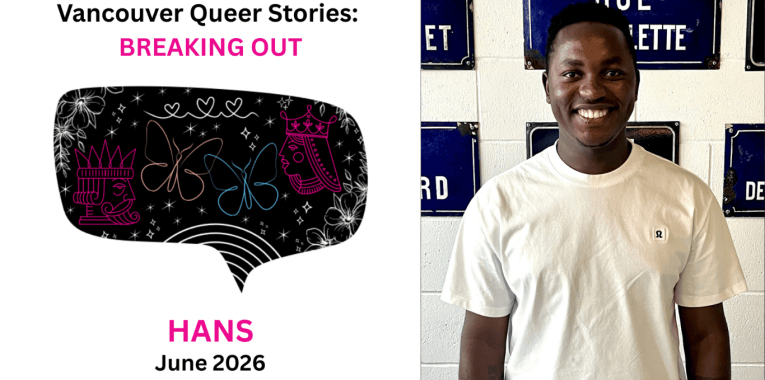
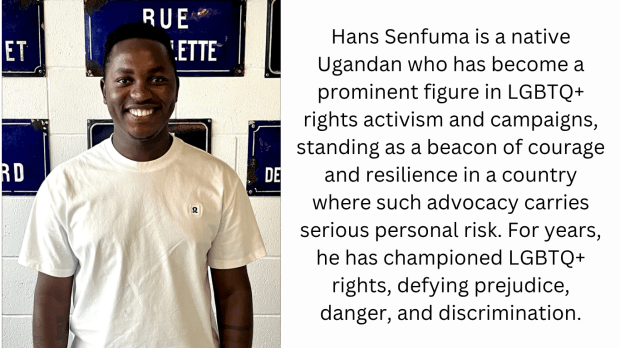
My name is Hans Senfuma, and I am a gay man from Uganda. Writing that sentence still carries weight for me, even today, because for so many years of my life, those words felt like a death sentence — not metaphorically, but literally.
I grew up in a deeply religious household in Uganda, surrounded by people I loved and who loved me, but who I knew would not love this part of me. From a young age, I understood that who I was did not fit the world I had been born into. Uganda is a country where homosexuality is not just socially stigmatized — it is criminalized. And in 2023, the government passed the Anti-Homosexuality Act, one of the harshest anti-LGBTQ laws in the world, with provisions that include the death penalty. Growing up knowing that your existence is punishable by law does something to a person. It teaches you to shrink yourself. It teaches you that survival means silence.
For years, I lived that silence. I smiled at family gatherings when relatives asked when I would get married. I sat through sermons that described people like me as broken, deviant, an abomination. I laughed along with jokes that were made at the expense of queer people, because laughing was safer than flinching. Every single day was a quiet performance of a version of myself that didn’t fully exist. And the exhaustion of that — the loneliness of carrying something so fundamental about yourself completely alone — is something I don’t think I have the words to fully describe.
Coming to terms with my identity was not a single moment. It was slow, painful, and non-linear. There were periods of self-loathing that I am not proud of. There were times I prayed to be different, not because I believed being gay was wrong, but because I desperately wanted to feel safe in my own skin, in my own country, around my own people. Acceptance didn’t arrive like a revelation. It crept in quietly, over time, through stolen moments of honesty with myself — and eventually, with a small circle of people I trusted with my life.
Leaving Uganda was one of the hardest decisions I have ever made. It was also one of the most necessary. The escalating legal climate made it impossible to continue the work I wanted to do from inside the country without putting myself and others at serious risk. When I finally arrived in a place where I could walk down a street without fear, where I could say my name and my truth in the same breath, I cried in a way I hadn’t allowed myself to cry in years. It wasn’t just relief. It was grief — for all the years spent hiding, for the community I left behind, for the Uganda I wished existed.
But leaving didn’t mean stepping away. If anything, it sharpened my sense of purpose. I have dedicated my work to legal advocacy and policy change, fighting for the rights of LGBTQ people in Uganda and across the African continent. I believe deeply that change is possible — not because I am naive, but because I have seen what happens when queer Africans find each other, support each other, and refuse to be erased. I have worked with legal teams challenging discriminatory legislation, contributed to policy frameworks that center the voices of those most at risk, and tried in every way I know how to use whatever platform I have to make noise where there has been silence.
I carry Uganda with me everywhere. I carry its sunsets, and its warmth, and its music, and the faces of people I love who are still there, still navigating a reality I know too well. I carry the responsibility of speaking for those who cannot yet speak for themselves without consequence. That weight is not a burden to me — it is a privilege.
I am sharing my story because visibility matters. Because somewhere right now, there is a young gay boy in Kampala doing exactly what I did — shrinking, hiding, surviving. And I want him to know that survival is not the ceiling. That there is a life beyond silence. That he is not alone, and he is not broken, and he is not an abomination.
In 1990, my teacher warned my best friend’s mom not to let her daughter, Daniella, hang out with me, because I was rarito – a Spanish word that directly translates to “queer.” Like its English counterpart, rarito means “a little strange,” or “a little peculiar.” In Mexico, it specifically refers to men who appear to be gay.
It probably wasn’t hard to see that I was gay: I never enjoyed playing rough games or sports with the other boys, opting instead to play house with the girls at my school. My teacher knew I was gay before I realized it myself. And, rather than choosing to provide support or guidance, she tried to isolate me—an already painfully shy and very socially awkward little boy— by separating me from the one person that I connected with fully at the time. As if a rarito, a queer, didn’t deserve acceptance.
I was seven-years-old.
As the years progressed, so did the insults. If I thought rarito was bad… I had it coming. When I moved to another state at the age of 10, I spent one year in an all-boys school. The insults there became more pointed – maricon, marica, joto, puto (all words for fag — we seem to have a lot of them in Mexico). I then moved to Canada at the age of 14, and was introduced to the English variants of these insults.
When I look at photos of my childhood, I see a naive little queer boy who smiled widely, unaware of the way others perceived me — when teachers called me queer behind my back, but not to my face. But in photos from my teenage years, I see sadness. Not the typical teenage angst, but something deeper. The sorrow of someone who sometimes wondered if life would ever get better.
At 42, I can look back at these snippets of my life with clearer eyes. To my teenage self, I can truthfully say (as cliché as it sounds): it does get better. But it also gets difficult in new ways, because self-acceptance, and pride, and queerdom, isn’t always linear:
In 1992, I had my first crush. His name was Mathias, a German classmate with golden hair… which is odd, because I’m not typically attracted to blonde men.
In 1996, I had a platonic bromance with my friend Jorge. I moved away the next year, and he came out as gay in our 20s. We kept in contact, but never saw each other again, and he died of Covid. I sometimes wonder if I hadn’t moved away, if he might have been my first kiss.
In 2000, I had a crush on a girl from high school. But at the same time, I was deeply attracted to somany of my male classmates. It was a very confusing time. I was repressing my sexuality so much, that when one of the guys I was crushing on slapped my ass during PE class — not sure if he was flirting or bullying me — I responded by slamming a hockey stick to his stomach. Hard. A week later, he returned the favour, slamming a hockey stick against my shins, which fucked up my legs for years to come.
In 2002, at the ripe age of 19, I went on my first date… with a girl from university. Sarah was also my first kiss, which I didn’t enjoy at all. That same year, I went on my first date with a guy. His name was Danny. My name was “Nick…” yes, I used a fake name, because I was still terrified that someone I knew would find out I was gay! Danny was my second “first kiss,” which was more like it. He went on to become my first of many, (many… many) boyfriends
❖ ❖ ❖
When I came out to my friends at 19, their response was mostly positive, but I did lose some friendships over it. When I told my friend Nelda, she responded by asking me: “So what, you like it from behind?,” as if that is the only thing that makes a man gay. I was a virgin at the time… but to answer your question, Nelda – Yes, I do like it from behind.
A year later, in 2003, I came out to my brothers and then my parents. My middle brother had softened the blow by coming out the year before, which simultaneously made things better and worse. I didn’t know at the time that having multiple queer children in one household is actually very common.
In 2009, while holding hands with my boyfriend at the time, someone inside a passing car yelled “faggots,” and threw a jawbreaker at the back of my head. This was on Davie Street. During Pride weekend.
In 2014, I met Eamonn, and we got engaged five years later. When I got engaged, a woman who had worked in the same office as me for four years asked, after seeing my engagement ring, “Where did you propose to her?” I thought it was funny at the time. Then I realized how much of my life I still kept private from non-queer people I saw every day. It seems I’m allegedly “straight-passing” in some circles and find the constant “coming out” exhausting.
❖ ❖ ❖
My relationship with Pride has also had its ups and downs.
In 2004, I went to my first Vancouver Pride, and over the following two decades, I’ve been to many prides and queer-centric events throughout the world. London, Cape Town, Reykjavik, Buenos Aires, Guadalajara… even exotic Winnipeg — searching for queer joy in every time zone.
In 2022, I marched in a Pride parade for the first time, with the Vancouver Queer Irish group, and then again the following year. Yet, since last year, I’ve fallen out of love with Pride parades. With sponsor pullbacks, corporate and government support of an ongoing genocide, and the rights of trans and non-binary folks under attack, I’m feeling disconnected. I know we need visibility… but I keep wondering if we need to change the method. “The first Pride was a Riot,” they say… maybe it’s time we go back to marching on the streets, rather than parading on them.
In 2063, when I’m 80 years old, I’ll hopefully look back at today, and realize how good we had it. But I also hope that things will get much better for queer people over that time, because this, still isn’t it.
❖ ❖ ❖
In 1990, when I was 7-years old, my teacher called me Queer as an insult for the first time… behind my back, of course… Cabrona.
In 1998, someone wrote ‘faggot’ on the back of my sweatshirt in high school… and I wore it that way all day, because I didn’t notice until I got home.
In 2002, I came out as gay to my friends. A year later, I came out to my family.
In 2016, I began using the word Queer as an umbrella term to refer to myself, my friends, and other 2SLGBTQ+ people, in a positive light.
In 2022, I married Eamonn in two wonderful celebrations of the most immense queer joy, surrounded by so many of our friends and family.
Today, in 2026, I stand here, in a room full of queer people, telling our stories. And I finally realize: being a little strange, a little peculiar… a little rarito, if you will, is actually something to be proud of.
Four months before my wedding, I was in full planning mode. Seating charts, handmade invitations, handmade ceremony programs, finalizing caterers and place settings, the works.
One evening, my fiancée, the man of my… parents’ dreams, was scrolling the TIVO, looking for the next show we should watch. He said, “Hey, what about this show? You heard of it? The L Word?”
My insides burned. “Sure,” I managed to say aloud.
I did not tell him I had already seen the series.
I did not tell him I knew The L Word inside out, that certain scenes were burned into the folds of my brain.
You see, long before living with him in Silicon Valley, I had lived in another valley, Lynn Valley, with my parents and sisters.
One of my sisters had brought a pirated copy of the whole DVD set back from China after a year of teaching abroad. One afternoon, sitting in our parents’ basement, I was thumbing through her giant folder of DVDs, and found this show.
With the first sex scene, my entire body responded. All the kissing. Touching. Fucking. Back then, I wasn’t registering the problematic parts of this series: how most of the actors playing lesbians were straight. White. How the sex scenes were so hetero-performative. I just saw boobs. And I liked it. I found myself sliding my hand down my pants and touching myself. Right there in the family basement. Afterwards, I was flooded with shame.
And then I pressed play and kept watching. I wondered how my sister had watched this show with her two roommates, wouldn’t it have turned them all on like it did me?
In the next episode came the next sex scene. And so did I.
Each scene whether it was sex, touching, a glimpse of something, gave me such massive, full-bodied orgasms, that getting through just one episode was quite exhausting.
All this flashed through my mind as my fiancee loaded up the show. I was anxious as shit. How was I supposed to navigate this situation? What would happen when we started watching this show and it started doing to me what I knew it had done before?
As far as anyone knew, including myself, I was straight. The fact that I’d been binging the LWord on loop since my mid-20s was not something I dwelled on. The fact that I’d been binging sapphic erotica since my late teens in that same basement didn’t even make a dent in my mind. Everyone had their secrets, I figured. I never once questioned my sexuality. I just locked it all away in the closet that I didn’t know I had back there.
When my fiancee hit play and the first episode showed the first sex scene, things worked out in my favor. With that first sex scene, he kinda did that straight guy thing of “ohhh” at the sight of two women having sex. He looked at me and I probably made a face like “____” like a desperate attempt to match his turn-on without betraying the depth of my own.
After the episode ended, he began to touch me and I was all too ready to comply. I jumped onto him and came so hard and so fast it left us both shocked. I had had roughly one to two orgasms with this man in the three years we’d been together. But this too, I put away.
The next day, I went back to wedding planning. I stood in the ribbon aisle at Michael’s, contemplating ribbons for the ceremony programs that I was hand-making. Snippets of the night before came unwanted to my mind, right there in the tubelit aisle at Michael’s.
I drilled down harder: lace or satin? I could not go there. Cream or white? More flashes of the night before, the intensity of my orgasm: nope. Not going there. I knew what I needed to do: more sequins for my invitations. And off to the next aisle I went.
That night, we watched the next episode of the L Word. Same turn on, same raging orgasm. Night after night, we watched, I came. And the following day, back to the crafting project that was my wedding.
Finally, my fiancee asked the question I did not ask myself. “Have you ever been with a woman? Have you ever wanted to?”
I caved inward. Memories of all those years of my basement self-pleasurings burned inside me and I fought with Herculean effort to say, “Nah,” and try to sound normal about it. And then neither of us knew what to say. So we just watched the next episode.
One afternoon, back at Michael’s, I studied the cardstock: plain or textured? The question came: “Phi,” a voice inside said, “These nightly sex romps are great and all, but should we talk about what this means?”
But here was where that vast black void kind of clouded my vision. I didn’t know how to examine this. Or who to examine it with. Everyone I knew was straight. Everyone I knew was getting married or was already married.
But each time I asked myself, “Should we examine what’s going on here?” I would think, “Welll, it’s four months till the wedding. People have already bought their plane tickets. It would be rude to cancel.”
This was the actual thought that would go through my head: you can’t cancel a wedding. I have to get married because you can’t cancel a wedding. Back then, I lived by these rules. The you can’ts and you musts and you shoulds.
But the deeper truth, the truth that I would not piece together until years and years later, was this: the idea of listening to my body, the idea of following my desire, at that time in my life, four months before my wedding to the perfect straight brown man, uh uh. I couldn’t.
Because to listen to my body, to follow my desires would make me different. And different was bad. I was already way too different: being a writer, a traveler, wanting to birth novels instead of babies. I was nearly 30 and try as I might, I was not doing a great job at following the script that everyone around me seemed to just slip into so easily. Now my body wanted to add queerness to the list? Queerness was definitely not part of the script.
But getting married? That meant I could fit in. That I would belong. That I had finally done something right. It was all right there within reach. And at that time, I needed to belong, to be like everyone else, more than I needed to be my true self.
We can intellectualize our lust, we can tell ourselves “everyone reacts to the L Word that way”, we can talk ourselves out of what we desire, but sometimes, the body gives it all away. And you can still shove that shit down, and that’s okay too.
It would be years before I would leave my marriage, before I would come out and come in to my full queer self.
It would be years before I would see QUEER community with my own eyes. People who were queer and trans and poly and kinky and thriving.
But that day did come. Literally the same day I left my marriage, I came out. To the person who would become my best friend and my greatest unrequited love. I couldn’t hold it in any longer.
He was stir-frying broccoli for our dinner and I burst out with: “I think I like … girls.”
He nodded, fully accepting of this news. Over the following weeks, he guided me on my great coming out journey, starting with queer films I had to see.
“Hey, have you seen Blue is the Warmest Color?” he asked, naming an extremely sapphic film. “Ummm… yes.”
Shame crept up my neck and into my cheeks. But he just laughed and said, “Oh friend, you’re so gay.” Not in a shaming way. In a way that felt like, “I get you, welcome home.”
It was late one evening, at dinner time, when my mother broke down in tears. A first for my then 29-year-old-ass.
We don’t cry in my family unless we are watching a sad movie. Even then, it’s a game of who can blink their tears back in the quickest. We don’t hug or kiss unless outside airport terminals and we only text “Love you!” right before takeoff, just in case the plane goes down.
Seeing my immunocompromised mother cry right in front of us, chicken still half-chewed in my mouth, I knew this was serious.
It was April, 2020. We had been hearing about this killer disease and every night we saw the case numbers creep closer to our own social circles.
After consoling her by saying that this would fizzle out in a few weeks (we were a bit short), I escaped to my bedroom.
Is this it? I thought. Is this how we go?
And more importantly: Am I going to die before getting to be gay?
❖ ❖ ❖
The first whiff of queerness arrived when I was 13, in a random dream where I saw my cousin laying in bed wearing bright blue briefs. I hovered towards him, Nosferatu-style, until my hand was but a millimeter shy away from his bulge, only to suddenly wake up.
That night sealed two fates: I was going to have a fluid sexuality and I’d never see the 3rd act of any sex dream.
For the next 15 years, bogged down by toxic prejudgments and not exactly feeling “100% top, masc to masc, no smooths, no twinks,” I was like: Why even bother? I’ll just carry on as a straightie, occasionally lusting for Zac Efron’s biceps like any normal, liberal dude.
But then COVID and the threat of imminent death appeared.
❖ ❖ ❖
In January 2022, I moved to Vancouver with three goals: be social, be gayer, and marry quickly to stay in the country. (I’m still missing the third, please inquire after the show.) By nightfall, I had downloaded Grindr.
“How goes it?” a faceless profile asked.
What does that mean? How goes what? I thought. “Hi. How are you?” I replied.
Though surely thinking I was a little slow, this faceless man kept texting and before I knew it he shot: “Send pics.”
“Ok. What do you want to see?”
“Dick and ass,” he replied.
What an assertive man, I thought. I hadn’t planned in advance, so I quickly scrammed to take some pics lest I lose the attention of this prized individual. I was more pressured than aroused, so my photos didn’t represent my full potential. Even so, I must’ve charmed him because he then shared his location.
I was staying at an Airbnb near 41st and Knight. The map showed him across Duffin Donuts, south of a Shell station.
“On my way,” I sent, and my body started shaking uncontrollably. Oh – wow. Being gay is super fun, I thought.
I went outside. The wind had picked up and that Pacific Northwest mist felt a bit like horizontal rain. The weather and my nerves were wreaking havoc on my Mexican skin.
As soon as I turned the corner where this dude lived, I froze. It was a dark, damp, and scary-looking backstreet. I’ll get murdered, I thought. I’ll star as a victim on one of those Netflix exploitative documentaries about homosexual cannibals, confirming my parents’ belief that gays are ‘More passionate than straight people’!
I ran back to my Airbnb.
“Sorry. I’m actually kinda cold – lol,” I texted.
“No problem. I get it. You’re new at this. I could tell,” the would-be-cannibal replied.
❖ ❖ ❖
Even though I eventually wanted to find my legally Canadian partner, I wanted to have some fun before committing. Unfortunately, within the following weeks I discovered I sucked at hookups.
It would always go something like this:
1 – Get horny EXCLUSIVELY after 11pm on a weeknight and find a suitor after an extensive background check.
2 – Invite them over after making sure—just in case—that they knew my big, rugby-playing roommate was sleeping next room. (I live alone.)
3 – Shiver uncontrollably during foreplay. “Are you okay?” “Just cold,” I’d whisper next to my roaring heater.
4 – Say goodbye with a “Sorry. I think I’m just tired,” after failing to finish the deal. “But coffee sometime?”
5 – I’d get blocked.
My body refused to cooperate with my desire for casual sex. After a few lukewarm wins, I theorized hookups weren’t my jam. I was, apparently, a monogamous family man.
❖ ❖ ❖
A couple months after, I had moved into my current place—a garden suite located in one of those “scary backstreets” which, turns out, are quite lovely. My Grindr exploits had slowed down since I started dating this dude who, I was sure, was going to be my forever.
Being my first homosexual relationship, I unfortunately fell infatuated with the guy, which made the text he sent me one night hit like a brick:
“Hey, I think I see you more as a friend.”
“Oh—“
“And I’m also kinda married.”
“Ah.”
I was not looking to break up a marriage, but I was baffled. What happened? Am I boring? Ugly? Not gay enough? What does his husband have that I don’t? Pick me. Choose me. LOVE ME.
❖ ❖ ❖
“Can you fart all over my face? You’re so hot,” read a message on Grindr. I had gone back to the app after a couple of weeks of listening to Sam Smith, journaling, and burning letters.
“Oh – wow. How does that work?”
“Special chair. You sit; I put my face under it.”
Despite just having a protein-heavy dinner, I politely declined. I’m pretty open but wasn’t in the mood to take that kind of a dive.
“You know you can monetize this?” my brother said after I shared the screenshot.
“I don’t think my visa allows for this type of entrepreneurial venture,” I replied.
❖ ❖ ❖
Months turned into years of me being on every app and meeting random men. I got better and more confident in my hookups and dates, but something still hadn’t quite clicked. Much like snow in Vancouver, nothing stuck. I was still missing something. I kept having these brief connections that led only to me sending them off into the night.
In January 2025, my brother and best friend both moved away during the same weekend, leaving me at zero: no friends, no family, no partner. After allowing myself a two-day pity party, I got to work on a new, more critical mission: finding community.
I started attending every event or public meetup that came across my desk. Running groups, drag show events, art exhibits, board game nights—nothing was off the table. I started dancing with strangers at 1181, cheering queens at Junction, sharing beers with bears at Pumpjack. And slowly, something started to finally click.
In my limited view as a prejudiced baby-homo, I thought being gay meant being a regular dude who happens to have sex with men—which is true. But I’d missed that being anyone means being a universe of thoughts, history, connections, feelings, beliefs, perspectives; and being part of a community meant sharing these universes.
By hyperfocusing on trying to find sex and partners, I had been living vicariously through morsels of experiences men shared with me between climaxing and the door.
It is through actively participating that I’ve started to scratch the surface of actually being part of a community. Talking to people, sharing stories, and celebrating one another is what has made me feel closer to “being gay.” And what a joy it’s been!
❖ ❖ ❖
“If you ever need your pits licked, let me know,” someone texted me the other night.
“Sure,” I replied. “… but we gotta be quiet. My big, rugby-playing roommate is sleeping next door.”
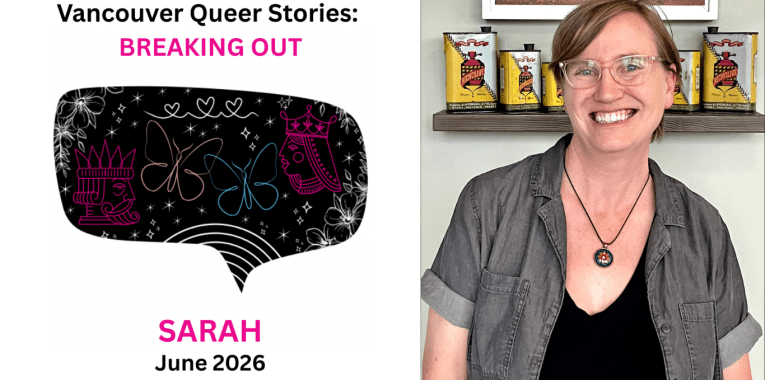
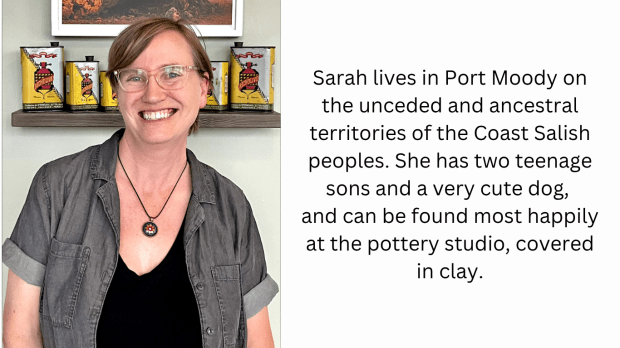
It’s six pm on a rainy Saturday in January and I’m driving alone up Mount Seymour in the dark. My heater is on full blast but even so my windows keep fogging up. My windshield wipers fight furiously against the rain that turns to wet snow as I drive higher.
When I’d signed up for this event, I thought a full moon hike sounded like a lovely, romantic idea. It was my first outing with a hiking group I’d dared myself to join – an antidote to scrolling through dating apps or missing the ex who had recently broken my heart.
Immediately after signing up, panic washed over me. Willingly going out with a group of strangers is as far out of my comfort zone as, I don’t know, kissing an octopus.
But I knew I needed something different. My life as a single mom in the suburbs felt small, limited, and I was starting to feel small with it.
So I cobbled together a hiking outfit, packed a backpack with the things I thought I might need, and said yes.
In the weeks leading up to the hike my anxiety came in waves. I almost cancelled a dozen times. I worried about pretty much everything – would my raincoat look cute? Would the other hikers be boring? What if I was stuck for hours with annoying people? What if they thought I was boring? I scrolled through their tiny photos looking for clues of compatibility.
I hadn’t even thought to consider practical things like, for example, the weather.
So of course, the morning of the hike dawned rainy. With that Vancouver winter rain, ceaseless and daunting. It just kept coming down.
From my couch I alternated between refreshing the weather report and refreshing the event listing. As the day went on, the attendee list dropped from 12 to 8 to 6. I wondered if the hike would be cancelled, if I should pull out.
The more it seemed like it might not happen, the more I realized I really wanted it to.
“Fuck it,” I said, my backpack into the trunk.
As I pull into the parking lot, there might as well not be a parking lot – it’s just a wall of fog. Doubt crowds my mind. Am I the only one stupid enough to actually show up? Why did I think this was a good idea?
Finally, near the end of the lot I spot another vehicle. I pull up beside it and roll down my window. “I’m here for the full moon hike?” I say, cautiously, ridiculously, as wet snow pelts down.
Three women climb out of the car. One, a few years older than me approaches with a welcoming smile and an outstretched hand. Cute braids stick out from under her toque. I like her already.
“I’m Linda,” she says. “This is Joy, that’s Gina.” I recognized them from the photos, but here they were for real, organizing things in their backpacks, pulling on layers.
“You’ve got your ten essentials?” she asks.
I smile and nod like I know what that means.
I feel like such a fraud. Not knowing what to wear, I wore everything. A long sleeve shirt covered by a fleece covered by a down jacket with a raincoat over top.
I try to look like I know what I’m doing. I pull my Value Village rainpaints from the trunk and layer them over my sweatpants.
These women seem effortlessly technical – they have those backpacks with the water hoses to drink from, and Gortex jackets, and carabiners that rattle from their bags like Christmas ornaments. I guess it takes a certain kind of person to come out in these conditions.
I slide my feet into my old hiking boots, tighten the laces over two pairs of socks.
We throw our backpacks on, adjust our headlamps, and head out into the dark night. For awhile there’s nothing but the crunch of our feet on the snow and the wind whistling through the tall trees.
They’ve all met before, chat easily together, and I feel the familiar self-consciousness creep over me. Do I have anything to say?
A little way up the trail, we stop to put our microspikes on over our boots for traction. I pull mine out – cheap ones I bought on Amazon, with little grippy dots. Theirs have big metal teeth. Where they walk, I slide.
Have I mentioned that this is my first hike in months, if not years? That in all of my excitement to get out of my comfort zone and have an adventure, I forgot I’d be lugging my body along with me? You know that expression ‘your eyes were bigger than your stomach”, when you put more food on your plate than you can eat?
This was that, but adventure was the food and the limit was my neglected muscles.
Before long I am huffing and puffing, sweat pouring down inside my many layers.
When they ask about me, it dawns on me that I’m meeting people who didn’t know me before I came out. People who haven’t witnessed my transition from being partnered with a man to becoming comfortable as a queer woman.
I’ve gotten used to defining myself by what I felt I’d failed at – a marriage, keeping my family together.
But here, and now, I can be whoever I want.
The further we climb, the easier conversation flows. One of the women just got back from a trip to to Peru and tells us about her hikes there. I talk about the time I spent living in Chiang Mai in my twenties, and as I do memories come rushing back. Not just memories of tuktuks and pad thai, but of who I was then, independent, confident, curious.
A woman with a taste for adventure.
Near the top we stop in a sheltered valley to discuss our options. We’d planned to climb to Pump Peak to have our snack at the viewpoint. The snow is coming down hard now and visibility is next to nothing. Maybe we should turn back. “But we’re here,” I say, surprising even myself. “Let’s go for it.”
So the four of us, like trekkers on the ascent to Mount Everest, set off up the icy bank for the climb towards the peak. There’s no path, just a sheet of white and shadow under the beam of our headlamps. We are comical, occasionally losing our balance and knocking each other over as we slip backwards.
Finally we make it. The wind whips around us and we search in all directions for a glimpse of the elusive moon.
Instead, it’s almost as though the clouds thicken – we howl with laughter at this epic failure.
I pull out my granola bar, thinking that will suffice as a hiking snack. Not with these ladies. Joy whips out a stove and manages to light it in spite of the wind and rain. She finds her pot and starts cooking gnocchi, of all things. Linda makes hot chocolate and someone produces a bottle of whiskey. Gina lays a tarp on the snow for us to sit on.
I feel like a kid, giddy with the novelty, the make-your-own-fun of it.
This is so much better than a mediocre first date on Commerical drive.
I’ll be honest – originally I joined the group because thought I might meet a woman.
Instead, I met women. Strong, independent women who climb mountains in the dark for fun. Women who see terrible weather not as a reason to stay home, but as part of the adventure.
On the way back down, certain sections of the trail are perfect for sliding and so we do – our feet up in the air like kids. Our screams and laughter echo across the valley, up to the dark sky.
Driving home that night, I am soaked, exhausted, grinning and eager for more.
The moon never appeared that night.
But I felt something else come into view: a version of myself that was still growing, still exploring, still willing to say yes to things that scared me. That night, somewhere between the parking lot and the summit, something had shifted.
For the first time in a long time, my life felt bigger than the boundaries I’d been living inside.
A few months later we returned to Pump Peak for the Strawberry Moon – a larger group this time, the fairweather hikers – and we were treated to a spectacular moonrise over the mountains. This time I brought my newly purchased hiking stove, my backpack with a waterhose. This time I was the one greeting newcomers with a smile and an outstretched hand.
I’ve blown over 30 sets of candles in my life. Most birthdays spent wishing I could sing. I remember the last time I asked for this one thing, Realizing I don’t have the necessary vocal strings. But could put into metaphors, lyrics what I think. I stopped wishing there and then, on my 10th, For a voice that’d give me strength, just I wait.
30 doesn’t sound like a lot if counting my breath Warm whispers that keep away rapid death. 30 reps pump my chest, 30 degrees is hot. 30 likes on a poem’s a lot, 30 on my selfie is not. 30 years young I decide will not bring me stress, Bring on as many second adolescences as I have left.
For my birthday this year, I wish for a full fridge. So that with it, I can build long, delicious bridges. For my family, friends, lovers to be here with me, I wish my homies are healthy, happy, at peace, And for many more years, share stories and tea That might spill, and show off our vulnerability.
I wish to fall in love constantly and against all the last decade’s wishes, stay single. As in centred, focused, whole, in what most of my self-help books have foretold. Life is worth living because of the people we keep around as we get old. I hear the birthday song, the beautiful melody, the voices in unison and join the chant with my mediocre tune. My lifelong worth of wishes came true.
I sing myself a happy birthday because I get to celebrate it here with all of you.
Today is my birthday.
As the years pass, I feel like I’m evolving into a body and mind that better fits the old soul I was born with. Although inevitable, it is a privilege to age, especially in the LGBTQ+ community, but what I would like to celebrate today is the opportunity to grow. Grow up, grow fond, grow apart.
An early memory that I can pinpoint rapid growth to was when I, age 6, wrote a confession to my parents about who had clogged the toilet with toilet paper. They had cancelled my sister’s and I’s nightly storytime and that would not stand. I had to act, swallow my shame, and leave them a letter at their bedroom entrance that must have said something like: “It was I, I clogged the bathroom and, worst of all, said nothing when storytime was cancelled.”
Decades later, I remember writing what I’d say to my school’s Head of Program after a couple of bullies, who caught wind I was gay, started to throw homophobic threats around. Eventually, this conflict led to me coming out to my parents. Without a script, I rendered my emotions in real time during that Zoom call home, kicking off another era of massive growth in my life when I “formally” joined queer spaces and started to befriend my fellow gays.
Dating and being alone at bars sucked. I wish someone had warned me, I think there were lessons that didn’t need to be learned through experience. I’m extremely grateful today for spaces like The Birdhouse for the buddy system and their practices adjacent to the Good Night Out Campaign. In this last year, I’ve noticed a younger vibe in the crowd at some of the bars I frequent. Some are incapable of saying “I’m not interested”, “not right now”, “please don’t touch me” when unwanted attention comes their way, others, stunned when that unwanted attention doesn’t take a hint to back off. I see myself in them.
I wrote this spoken word poem from a night we came together to celebrate another year of our lives passing by:
Well hello there Daddy. I caught you looking and thought to say hello. I’ve seen this on a porno, how these things go. “What are you into? What are you looking for?” I guess, a short convo or to get down on all four. To submit into obedience in a kink experience. We can both play our roles, say it’s coincidence, To find guidance in another generation’s resolutions.
Instead, you offer your hand and ask to dance. So close to midnight, I see it’s time and give him a chance.
Knowing we’ll recreate dynamics from before. From when we were boys and didn’t know more. Tell me Daddy, did you have a Daddy to call you son? Or buddy? Or bro? Or baby? Or boy? Did you have someone to say you’re valuable? Without queer role models to show us the hopes, On sex or intimacy, how to untie bondage ropes. Tangling my neck on all these cables and cords, I’m choking, I can’t breathe, I let the pressure go. Out of one patriarchy and into another. I say no.
I look for things that’ll ground my concussions. Your crow’s feet, furrowed brow and bruises Remind me of my muses, past, present, future. Age befits your years of experience and culture, Your fingers in my hair untie curls with nurture Soothingly against the grain of a calm brain.
This is my kink, agency to see if we’re in sync and What’s meant to be addressed by a shrink. Have we met before, Daddy? I was but a twink, Fresh meat at a gay bar, my glasses tinted pink. Looking for greener grass, getting ass grabbed. The sexual revolution says to get your needs met But even people leaving the sex party say meh. As if that’s the point of it all, to get your dick wet. Not the safe spaces for the rest of the alphabet. Not the right to exist, you have it, so you forget. Not the shame taught everywhere as a preset. The default morals I recall and bring me regret, Versus the gay values reducing me to an asset. Hard earned, liberating, blissful gay sodomy. Personally, would that make my best self happy? To have 30 random stranger loads inside of me? Would it cure me? To assimilate foreign culture?
Under pressure? Fuck no. Freely, I don’t know. The lack of conclusions glitch with my delusions. Daddy, I recognize you as my reality fractures. Plot twist, reparenting myself in a meta rupture. In your eyes, Father Time shows me my future. I’m in a modern orgy of what feels right for us 3. That I’m present Me, I’m Daddy, and I’m Baby. New Year’s a step closer to that state of mind Where I don’t perpetuate outdated philosophy, Whilst adapting ideas that preserve my sanity, Integrity’s reconstructed protecting my inner child with A confident introspection I practice and embody. Midnight. Alone on the dance floor when a man comes up to me. He asks for my name. You can call me “Daddy”.
Being able to verbally request and provide consent is oftentimes not prioritized by men. Historically, bathhouses, circuit parties and cruising communities thrive on physical expressions of interest. It’s imperative and fun to learn to recognize and apply these cues in those spaces, but outside of them, they seem more like outdated survival strategies for generations and legal frameworks that should be more aware of power dynamics.
Suddenly, I’m being addressed as “daddy”, “zaddy”, “stud”, even “sir”. I find myself on the other side of my experiences: I share with friends the weight of responsibility I feel on my shoulders. I don’t want to treat these men like I was treated and I’d rather carry this awkward awareness forward than continue to inadvertently perpetuate harm between us. Some say its a heavy burden to carry, most have simply grown used or fond of it. Others deny and gaslight the idea that sexual assault happens around us, best to grow apart from those people. I’m relieved there’s more public conversations facing the challenges of entering gay spaces for the first time, providing advice and validation that for me came later in life when I felt heard and seen in friends’ stories.
Dating and being alone at bars still kinda sucks. Recently, I went out on my own again, like I did years ago when I came out, knowing now the impact of meeting at least one friendly face. I went out knowing my worth and the difference that makes in who and how men interact with me. I went out confident in the work I’ve put in so far and how strange it will feel to change. I went out on stage to compete for the biggest ass competition, and lost.
There’s plenty to celebrate today: the community spaces that allow for vulnerability to exist, the privilege to age, my 31st birthday, the confidence to speak my mind, and most importantly, the growth of a social circle, aka my friends. It is mainly through them that I’m de-aging my old soul, like a gay Benjamin Button, and relearning what it’s like to be included, safe and silly. I’ve grown into what my therapist would call my Protector persona, partially because of the years, but mainly due to the kind and understanding connections around me. I have no doubt that my Protector is a kaleidoscope of me and all the past, present, good, bad, long, short friendships I’ve had the opportunity to interact and learn from. Thank you for helping me become a person capable of saying, kindly and unapologetically, “no”.
“Please report the video. I hate that your faces are on there with no consent. Getting everyone to report it.”
It’s 2023 and I’m at a bar on a first date. He’s in the bathroom when I get the text from my work wife; it’s accompanied by a Twitter link, posted by an account I’ve never heard of, Libs of TikTok, with the caption: “Elementary school in Vancouver held a pride parade today. Homeschool your kids!”
Even before playing the video, I recognize myself in the thumbnail.
The video starts with me walking by shouting “Happy Pride!” followed by my students and several parents, waving, cheering. A few more clips of students walking by, smiling, waving rainbow flags, before it ends.
My date sits back down, and I show him the video, and proceed to chuckle about some of the comments.
“Give me an S, Give me an I, Give me an N, SIN!”
“Those boys look “sissified” to me”
“It’s a free for all, next is orgy day”
And my personal favourite, the one that, to this day, I still lowkey want to get tattooed on my body: “Homeschool > homoschool”
Already the video has hundreds of thousands of views. I want to keep reading the comments, but don’t want to be that guy, so I put my phone away, and break the tension with a quip.
“How does it feel, knowing you’re on a date with a queer icon?”
The next day our staffroom is buzzin’. Coworkers tell me they’ve reported the video, my principal checks in to see if I’m okay. The video quickly balloons to 1.4 million views. In the comments, someone posted a screenshot of me from the video, wearing a rainbow cape and shiny cowboy hat, with the caption “Found the groomer!”
Another person comments on my picture, “He’s just a flat-out molester. He doesn’t even bother with grooming.”
My friend at the union reaches out, says there’s a lawyer on staff if I’m interested in trying to have the video taken down. We all report it, but all that does is hide the video on our accounts.
Repeatedly, I say I’m okay. That we’re celebrating Pride for the kids who don’t know they’re queer, or don’t feel comfortable being open about it yet, and if it makes things easier for even one of them, then it’s worth it.
But writing this story and revisiting that video in 2026—thankfully stalled at paltry 1.7 million views—my whole body still burns.
I scour the video’s comments section for the funniest pull quotes, trying to discern what’s awful in the entertaining-let-me-read-this-out-loud-to-strangers way and what’s awful in the oh-boy-I’ll-probably-have-to-talk-about-this-in-therapy way. The margin between them is narrower than you think.
I was bullied and called gay before I even knew what that word meant, but I knew that I was supposed to vehemently deny being it.
In sixth grade, I received a friend request online from the email account “jjisgay99@hotmail.com,” one of those memories that’s hilarious now, but at the time, felt like someone had ripped the uvula from the back of my throat.
I’d stay in the closet for almost two decades longer, dating women, participating in casual misogyny. Talking about which actresses I thought were “hot,” but really, I probably just thought they had a nice smile.
It wasn’t until 2020, when, after having my first session of therapy, I knew I was ready to start living authentically. The next day, my 30th birthday, I came out to the majority of my close friends at a socially-distanced pie-themed hang in the park, scrawling “I’M GAY” on the inside of a pie box—the pie was peach-cardamom, obviously.
The atmosphere was one of compounding disasters: sitting on blankets six-feet apart, unknowingly about to embark on the second wave of the pandemic. The sky was muggy and thick with forest fire smoke and a recent looper moth infestation surrounded us with thousands of fluttering bugs.
It was one of the best days of my life.
After coming out during lockdown, I struggled with how to relate to the queer community I suddenly found myself identifying with: my main connections being gay meme accounts on Instagram and a parade of COVID-safe dates that always ended back at my apartment. Dr. Bonnie Henry would certainly agree our activities involved a curve, though none flattened.
One first date, after a guy spent most of the night talking about how much he wanted a boyfriend, we ended back at my apartment, carnally making out on the couch, before he climbed on top of me, squeezed my cheeks together, and hawk-tuahed a single oblong strand of saliva slowly into my mouth. “Sir, we are in a pandemic here, you can’t just spit in people’s mouths, especially without asking first.” We still had sex, of course.
Fucking this rogues’ gallery of strangers felt necessary at the time. Fleeting connections to the gay community, sharing coming-out-stories with cum still leaking out. Hearing about Internet chatrooms and early cruising. I was a cultural anthropologist, absorbing every detail and mentally cataloguing to better understand where I fit.
Later that school year, I was recruited to help organize my school’s first-ever Pride celebration. Starved from no parties in almost 15 months, I brought a finely-curated selection from my personal tickletrunk for my kindergartens. Flamingo sunglasses, a taco hat, sequined fans, an inflatable telephone.
Suddenly, at 30-years-old, I was marching in my first Pride parade.
For the past six years I’ve helped organize and grow school Pride celebrations, each with their own lil’ moments. After our neighbourhood parade in 2024, we headed to the school’s backfield and performed a flashmob to families, all to the song “Born This Way.”
When I’d talked to my kindergartens about what other Pride celebrations involved, my students globbed onto the idea that people sometimes dress up, and asked if they could wear costumes—which is why, in videos of that flashmob, you can see Disney princesses and superheroes dancing to Lady Gaga.
I want these to be the stories I share about school Pride, but it’s important to know it’s not all rainbows and five-year-old Captain America dancing to Gaga.
Like when kindergartens from my class are noticeably absent the day of the parade, because their family “doesn’t celebrate Pride.”
A parent’s venomous email to a colleague, calling everyone at the school pedofiles; the same parent who, later that month, smiled and cooed to me about how she hoped her son would be in my class next year.
The idea that schools are somehow brainwashing youths by showing support and normalizing words like “bisexual” and “trans.”
“I’ve been teaching for decades, and I can barely teach these kids math. And I’m a math specialist!” a colleague shared with me, exasperated. “They think I can somehow influence these kids enough to change their whole ideology or gender?!”
Knowing teachers who’ve been doxxed, received death threats—putting themselves at risk while trying to make things safer for queer youth.
There’s decadent irony that, in tandem with writing this story, I’m helping organize this year’s Pride at my school.
We’re going bigger, bolder, louder. A coworker designed a Pride 2026 logo with our school’s mascot, and managed to get custom stickers donated. We’re inviting neighbouring schools. We have a whole spirit week planned, a dance party, a photobooth. We’re getting T-shirts made as a fundraiser. I get giddy thinking about how amazing this year will be. Usually that excitement drowns out all the what-ifs.
I’ve been working on a handout, highlighting statistics about queer youth, for families to help understand the importance of Pride. Pulling from Statistics Canada empirical gut-punches like how queer youth are twice as likely to describe their mental health as being poor; they’re more likely to be targeted for bullying, experience homelessness, and twice as likely to consider suicide; how trans and non-binary youth are twice as likely to experience cyberbullying.
I triple-check my sources with a diligence I wouldn’t have dreamed of during my English undergrad, knowing these stats will be scrutinized with the vigor that only a bored, privileged suburban parent can muster.
I hate having to take the more thoughtful high road. Having our “We want every kid to feel safe being who they are” met with “You’re all pedofiles,” coming from zealots whose churches, businesses, and governments knowingly protect actual predators. But I digress.
Progress can sometimes feel small.
The odd joy of when reading a book to my class, a student refers to someone as “gay,” and my body seizes up like they’re using a slur, when in fact, the book has a family with two dads. Gay as a descriptor, not an allegation.
It took until my mid-30s before I saw being gay as a gift. A hard-won title after a lifetime of being teased for liking things I didn’t even know I liked yet; the finally-satiated hunger of someone who spent years eating what they weren’t craving. Let’s hope the next generation gets to feel this lucky some day.
And if you need to contact me or have any questions about this story, you can always reach me at jjisgay99@hotmail.com.
You know how they say big things always come in threes? On March 31st this year I had three big things to celebrate, which is a nice change of pace from last year’s three big things, which were decidedly less fun.
March 31st 2026 marked my four-year Van-iversary.
Four years since my husband and I quit the grown-up jobs that were slowly killing us and invested our theoretical house deposit in two one-way tickets and six months’ worth of rent in one of the most expensive cities in the world.
Four years since we filled our folks’ sheds with a decade’s worth of hand-me-down furniture, expensive kitchenware, second-hand books and records, and a couple of pricey-but-priceless artworks—all the trappings of a couple in their late twenties who finally graduated from undergrad sharehouses to cosplaying as adults.
Four years since we farewelled our family and friends at what will likely be the only “retirement party” we’ll ever have, and flew across the world to a city we’d never been to and where we knew one person. Vaguely.
Four years since we rented the first (and only) place we looked at, a basement suite advertised on Facebook marketplace by a new account with no profile picture. Turned out fine, they were a lovely family, and I’m pretty sure I sealed the deal by complimenting their ugly dog.
Four years in our 500sq foot flat with two windows and a resident mouse called Jonathan. Four years is the longest I’ve lived in one place since I was a child.
And each day of those four years, I’ve woken up feeling a bone-deep sense of gratitude. I can walk out my front gate, head four blocks north down our magnolia-lined street to the park with the pollinator meadow and beach access, where you get a flawless view across the inlet to the mountains, where it snowed on our first Christmas, and where I saw the northern lights. Twice!
Four years that I’ve been able to say I get to live here!
It’s been four years since I looked in the mirror and saw myself buried deep beneath a lifetime of trying.
Four years of gently prying that moldering heteronormative mask out of fingers stiffened with the effort of clutching it like a lifeline.
Four years of deep exhales, of space and safety and community and sliding scale counselling. Four years of freedom and finding a happiness I didn’t think was possible for me.
And that’s just the first big thing to celebrate!
March 31st is also Trans Day of Visibility, which feels fitting as it’s really only since moving to Vancouver that I’ve been able to become visible to myself, let alone others. It’s a day that highlights Trans JOY, so it’s kinda nice to celebrate the joy I’ve found here.
The joy of visibility is so much more than being seen, though.
It’s being asked my pronouns when meeting someone new, or even better, when the other person introduces themself with their pronouns first.
The joy of visibility is hearing a grownup customer tell their kid “go ask that person, they look like they work here.” It’s working in such an accidentally queer workplace that they/them has become the default until otherwise corrected.
The joy of visibility is making the conscious effort to “be the me I want to see”, and finding out it’s actually working. It’s being told that you actually are the visible queer person (Cool Gay Elder™) in someone’s life that makes them feel like they, too, are possible.
But the biggest joy is feeling known and seen by people who just get it. So that means that I get to build my friends’ flatpacks and lift their heavy boxes, and then they call me strong and handsome, and it goes straight to my head.
It’s dancing at the birdhouse and being hit on so respectfully that you forget for a second that you should probably tell them you’re married… and when you do, they’re so nice about it and say “well, what a lucky person” and they wish you well, and somehow that whole experience is one of the hottest things that’s ever happened to you.
This year I went all out: maximum visibility, maximum joy.
On March 31st, I submitted my very trans, intensely personal thesis about nonbinary intelligibility and identity in middle-grade fiction, thereby ensuring that I will remain visibly trans in one pocket of cyberspace for the rest of the internet’s existence. How’s that for something to celebrate!
I am trying to get more comfortable with the idea of celebrating myself. It’s something that doesn’t come naturally, perhaps the result of growing up in Australia, terrified of being the poppy that grows too tall, only to be eviscerated by the same people in charge of doling out the fertiliser.
After a lifetime of moderating myself to be just enough, never too much, believing that any sort of self-recognition is boastful, I’m re-learning what achievements actually look like, to me.
So, aside from the big things, like acknowledging the fact that I’m graduating from my second master’s degree tomorrow (entirely paid for by a federal scholarship, which inherently values the importance of my gay little research!), I’ve been celebrating myself in less obvious, more honest ways…
Like the fact that I allow myself space to be bad at (some) things and give myself room to grow.
Despite gaslighting myself for the past three years, I actually can drive in Vancouver.
I can do nearly 2 push-ups. My goal is five—and has been for the past three years—but this time I think I’ll get there.
I have no idea how much I weigh anymore, and that thought doesn’t panic me. I’m just letting the soft animal of my body love what it loves.
I’m learning to trust my own opinion more instead of being swayed by whoever is talking the loudest at the time, and sometimes I can even sit in the discomfort of holding two different ideas at once.
Sometimes I ask for help when I need it.
Sometimes I am even capable of being deeply honest in therapy.
My grey hairs are really starting to come in and I’m genuinely thrilled about it because it’s proof that I’m getting older
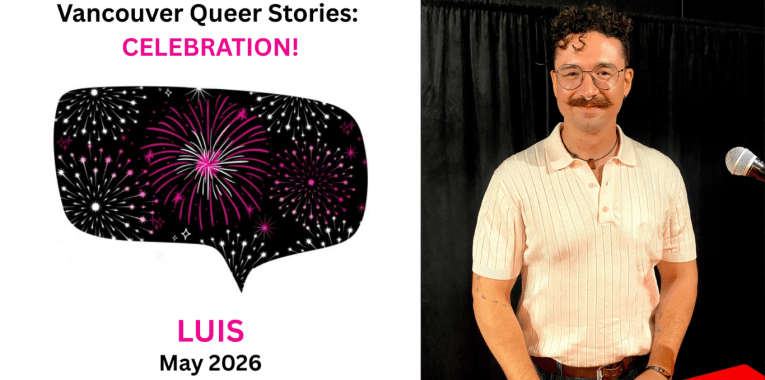
I’m turning 30 this year. When I found out the theme for tonight was “Celebrate,” I started thinking about that word. Celebrate. And I realized, I don’t think I really know how to celebrate myself. Which is weird, because I’m gay, Lebanese, kind of a drama queen, and emotionally attached to both Arabic and English pop music. On paper, I should be excellent at it. And I genuinely love celebrating other people. I love showing up. I love planning. I love hosting. I love making people feel loved. I’m good at it too. Maybe too good. I will plan the timing, the food, the vibe, every small detail and pretend that it’s no big deal, but emotionally, there is a very serious project plan. But when it’s about me? I become aggressively casual.
A couple of months ago, I “celebrated” two years in Canada by going to a St. Paddy’s gay party at the Junction. Very convenient: one of the biggest celebrations of the year was already happening on my anniversary. The universe forcing me to celebrate my milestones. Fair play, universe.
But birthdays are worse. Because birthdays are the one day of the year where you’re allowed to be a little self-centered, and I still don’t know what to do with it. Last year, on my actual birthday, I scored tickets to Lady Gaga’s Mayhem Ball. Picture this: A gay Lebanese boy, now an adult, watching Lady Gaga sing “Born This Way” live. And then the words: “You’re Lebanese.” I’m not even that patriotic. But so many of my early queer moments happened with that song playing secretly through wired headphones, pretending I was just listening to music, when really, I was trying to feel seen. And if Lady Gaga, mother of monsters, said “Lebanese,” not Middle Eastern, not Arab, Lebanese, then she was clearly speaking directly to me. That song was celebrating a part of me before I knew how to celebrate it myself. It’s going to be hard to top a Lady Gaga concert as a birthday celebration. But this year, I’m turning 30. And there is a version of me who wants the balloons. The cake. The friends. The photos. The whole shebang. I know he exists, because once, he fought very hard for a birthday party.
I’m the youngest of four boys, which means by the time my parents got to me, the parental sparkle was running on low battery. But the photos were there. Printed albums. My brothers with their friends. Finger food. Cups of Jell-O. A big cake made by my mom. Awkward parents in the background. Kids playing arcade games and mini golf at this place called Putt Putt. Putt Putt was everything: Arcade games. Skeeball. Ball pit. Chaos. If you had a birthday there, you were basically local royalty. Every brother got Putt Putt. Except for me. To make things worse, my birthday is in August, which is terrible timing if you want a big party as a kid. School is out. Everyone disappears. Half the class is at their village, the other half is at the beach, and suddenly, your birthday is a logistical crisis. So I made my parents feel bad about it. And it happened that my dad did business with the owners of PuttPutt, so it didn’t take much convincing. I may have also pulled the “you don’t love me as much as my brothers” card. Bold strategy. But hey, it worked. And somehow, I convinced my parents to let me do it two months early: June 9, 2006. The day after the last day of school. Also, the first day of the FIFA World Cup, so almost exactly twenty years ago (Very convenient time to tell this story… And very organized of my trauma). And because it was the World Cup, the theme chose itself. Football. Now, did I play football? No. Did I care about football? Also no. In fact, I kinda hated it. Playing football as a closeted gay kid with straight boys going through puberty? Not fun. But it was football season, and you have to understand, people in Lebanon take that very seriously. And I wanted to look cool, so football it was.
I had the party. I had the place. I had the theme. I had the friends. Basically my entire class. This was my moment. I was wearing a Ronaldinho Brazil football costume, because obviously, I LOVE football. Everyone came, (Well, everyone I invited. I had just gone through a huge fight with my best friend at the time, and I decided not to invite him. I don’t remember what the fight was about, but I was very firm about it. I remember my dad looking at me and asking, “Are you sure you don’t want to invite this boy?” And I said, “Yes. We’re not friends anymore.” I was so sure I didn’t want him there. But for someone I apparently didn’t want there, I kept noticing that he wasn’t). The party itself was going really well. I remember parents walking in with their kids. I remember the mountain of gifts. I remember my mom’s cake, a forêt noire, with a chocolate football-shaped ganache on top. Keeping it on theme. We’re committed. Because again: I LOVE football.
Everything was happening exactly how I wanted… then came the piñata. Yup, I had a candy pinata at my birthday party. What shape was the piñata, you ask? A football, of course. You have to understand, back then, a piñata was a big fucking deal. At that point, I had only seen piñatas on TV in cartoons. So having my own piñata, one I got to choose the candy for? Hell yes. They hung it up. The kids gathered around. Everyone got a few hits. People were screaming. The energy was rising. And then the birthday boy got the stick. I started hitting it. I’m going at it. I’m ripping it apart. Everyone is screaming. And then eventually, it breaks. And the second it broke, it was no longer a birthday party. It was capitalism. Kids dropped to the floor like wild cats. Hands everywhere. Candy flying. Elbows out. No morals. No friendships. No birthday etiquette. It was my Hunger Games. And I had lost. Because there I was. The birthday boy. Standing with nothing. I remember looking at my hands and realizing they were empty. And I tried to hold it in. I really did. But then people started noticing. Kids looked at me. Then they looked at their bags of candy. Then back at me. Suddenly everyone realized, OMG… the birthday boy didn’t get any candy. And because it was my birthday, everyone started offering me some of theirs.
Aww. That’s so sweet. It was HORRIBLE, because somehow that made it even worse. Now I wasn’t just the birthday boy with no candy. I was the birthday boy everyone felt bad for. And I couldn’t hold it anymore. I started crying. Hard. Not cute crying. Full meltdown. Birthday drama queen. And if you’re thinking, “Oh God, poor kid, that must have been so embarrassing,” well, there’s more. Even through the tears, I had a plan. What? I’m just gonna stand there and let people feel sorry for me on my fucking birthday? No way José. I looked at everyone, face fully wet, probably snot involved, and said: “Everyone… throw the candy back on the floor. We’re going again.” Which, looking back, is insane. Imagine being a kid at a birthday party, and the birthday boy is sobbing, demanding a second round of candy distribution, after going through WrestleMania with at least 20 other kids. Very socialist of me, honestly. But hey, I was ten. It was my birthday.
Now, I’m not saying this one piñata is the reason I don’t know how to celebrate myself. That would be too easy. The thing is, when the celebration is for someone else, that works. I get to focus on them. But when it’s for me, suddenly I can’t just enjoy it. I have to manage it. Is the food enough? Is the music right? Are people bored? Is the lighting homophobic? And I think that’s the part I still negotiate with. The embarrassment of wanting the day to feel good…. And by good I mean, perfect. Obviously. Because even now, when someone asks, “What are you doing for your birthday?” I feel this little panic. Like I need to have an answer that sounds casual enough. Not too sad. Not too planned. Not too desperate. Something like, “Oh, nothing big.” Which usually means, “I would love for it to be big, but I’m not ready to be responsible for wanting that out loud.” But one day, I would love to have a big party that is actually for me. Maybe for another age when I become more chill, because honestly, just saying “my 30th” spikes my anxiety.
But I want to try anyway. And I don’t think I need to top Gaga. I think I’m just trying to find whatever version of that feeling I can make for myself. It could be a big party, with a giant dick-shaped piñata, just for me. Or maybe it’s quieter than that. A little stoned. Surrounded by people who love me for who I am. Without having to pretend that I like football. Looking around and realizing I’ve built a life that younger me would not believe. And honestly, for now, that feels worth celebrating.
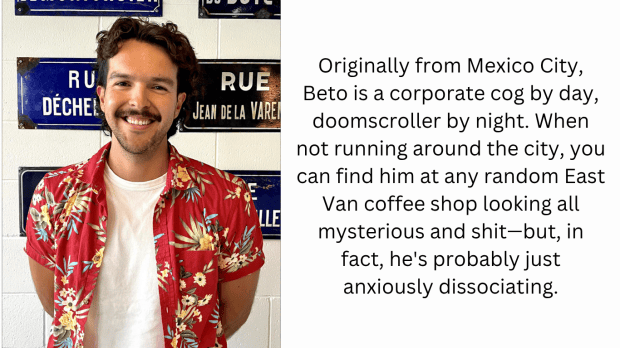
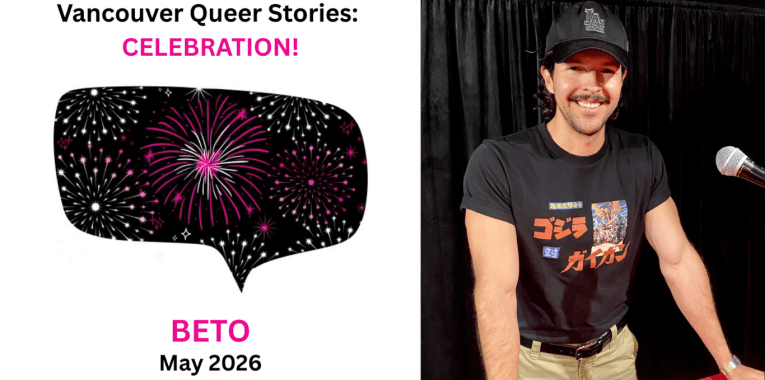
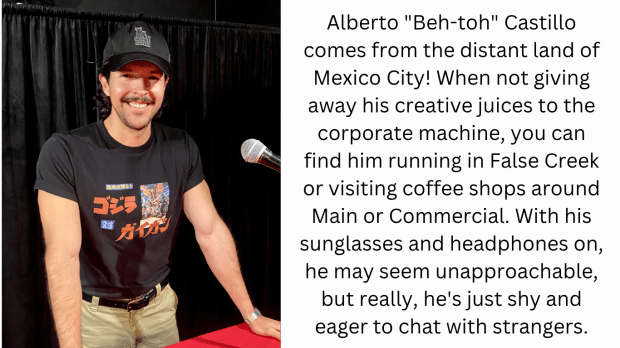
My father was a decorated athlete for a brief period of his life, and like many men his vintage, he wanted his eldest son to be one as well.
That is why, during my early school years, I was arbitrarily enrolled in a new sport at the start of every grade. Each year began with a fresh activity and ended with a full introspective account of the embarrassments I endured and the numerous disappointments I served my father.
The sport of choice for third grade was baseball. Before being enrolled, I had never even touched a bat. My dad, much more excited than I, bought me the full kit: a used mitt, a second-hand bat, and some balls. He then commanded me to join him in the backyard for “practice time.” I suppose I did a decent job; next day my father didn’t feel the need to storm the coach’s office to beg for my removal.
I enrolled late into the season. I know this because that Saturday I set foot on the field—for the first time in my life—I did so without a uniform and with only twenty minutes of prior training with dad. My teammates looked professional. Assigned the New York Yankees uniform, they wore iconic white and navy blue stripes that shone like fresh snow under the morning sun.
I was wearing olive green pants and a gray hoodie.
The coach, a seemingly intuitive man, took one look at me and deduced that I could hardly distinguish between a bat and a mitt, and that I was dying of terror.
“Right field,” he said, pointing to a far corner of the park.
In case you don’t speak “the base-ball”, right field is where the least action happens. Most batters hit right-handed, sending the ball to the left. Balls would only come to me if there was a left-handed batter on the opposing team, or if there was a glitch in the Matrix and the bat hit the ball at the EXACT spot to send it towards my side.
And not to spoil the story for you, but if you’re listening to this, it’s because one of those two fucking things was exactly what happened.
I walked the long trek to practically another country to wait for the two hours of the game to pass without me having to intervene whatsoever. I was there, shifting my body weight between my two legs while my nylon pants made that “FFFT! FFFT!” sound, when I saw the opposing team get into position.
They wore the Tampa Bay Rays uniform. Deep purple shirts with dark gray pants. If our team looked like an elegant albino vixen, they looked like that purple mascot from Mcdonald’s–– menacing, I mean. And the cherry on top of this horror sundae: they were the fourth graders. The bigger, stronger, faster, fourth graders.
The whole scene was too overwhelming for this 8-year-old.
My father? Safe over by the stands, eating some fried pork rinds with Valentina sauce at nine AM. So, perhaps not that safe actually.
For most of the game, I just had to stand on the grass, something I have always been good at. The intense part happened on our turn to bat, when I furtively had to keep telling every kid behind me in line, “Oh, you can go before me,” until our turn was over.
That’s how I passed the time, and I don’t know if it was the mental numbness–because it definitely wasn’t because I was having a great time–but suddenly I realized we were already in the last round. And the Rays were batting.
The mood was tense. As my dad tried to explain on the car ride back home, we were leading by one point. We needed one more “out” to win; a home run for the Rays would mean defeat.
Clearly, all this I semi-understood right up until a couple of minutes ago, when I Googled “How to play baseball” to write this story. On that Saturday in question, I was standing obliviously in my peaceful right field, about 350km from where all the action and excitement was happening, skinny and sun-burnt like a human Slim Jim from all the exposure I was soaking.
Suddenly, a batter with a precocious mustache appeared. This creature went to the plate and hit the ball as if it was the crotch of his absent father.
I watched as the ball rose through the air like a rocket—heading towards me.
I had roughly three seconds to calculate the trajectory of my entire future. My eyes followed the ball like a predator: Velocity, weight, curvature, differential equations, air resistance, and the Coriolis effect. I was teetering on the fine line between glory and total catastrophe.
And finally, when the ball was a few meters above me, I decided to take the best possible strategy: I closed my eyes, stretched out my left arm, and prayed for the best.
THUNK!
The physical and emotional stress of the previous seconds had left me disoriented. My vision was blurry, and in my ears there was silence with a slight, sharp tone.
Gradually, I regained my senses. A steady echo came from my team’s dugout.
When I finally opened my eyes, I could see blurry white patches running towards me. There was a slight weight shift in my hand, and when I turned to see it, my eyes finally focused: a steaming ball resting inside my mitt.
I didn’t even have half a second to examine it because I was violently rammed by a group of children dressed in white. Then I finally was able to translate the steady echo from a second ago: “BE-TO! BE-TO! BE-TO!” They yelled as they ruffled my hair and patted me on the torso amicably.
I felt on top of the world. I was living in my own Hallmark movie. The game had finished, and my actions had made the team win, my team—The Yankees of the Cristobal Colon Primary School.
Through the chaos, I glimpsed the stands. My dad had gotten up so fast from his seat that his pork rinds were spread all over; he was clapping like never before. Had I been closer, I wouldn’t have been surprised to see a couple of tears running down his face.
After three years of insatiable searching, we finally found a sport in which I excelled at.
…
Unfortunately, my delusions of grandeur betrayed us. My teammates quickly forgot that game in which I had been the star when, the following Saturday, I failed to catch a ball that caused an opposing team’s home run. Never again in the entire school year did I catch another ball, and much less hit one. After all, baseball wasn’t my thing either.
And my dad? Despite my excellent debut, after a couple of months, opted to just drop me off at the entrance to the baseball park, and pick me up after the game. The following year, when I decided to try basketball, I don’t remember seeing him at any event.
I don’t blame him. It must be painfully uncomfortable to watch your kid constantly suck at sports. Four years into the failed experiment to have an athletic son would defeat even the most willing.
This is not a childhood trauma or a deep scar in our relationship, though. Years later, he was able to find some solace by cheering on my creative endeavours.
Anyway, I was not born for competitive sports. But while those four years of me dipping my toes in them were incredibly anxiety-inducing and humiliating, I now think they are worth it just for the memory of that cold Saturday morning, when for a brief moment in time, my dad and I were able to share the same passion.