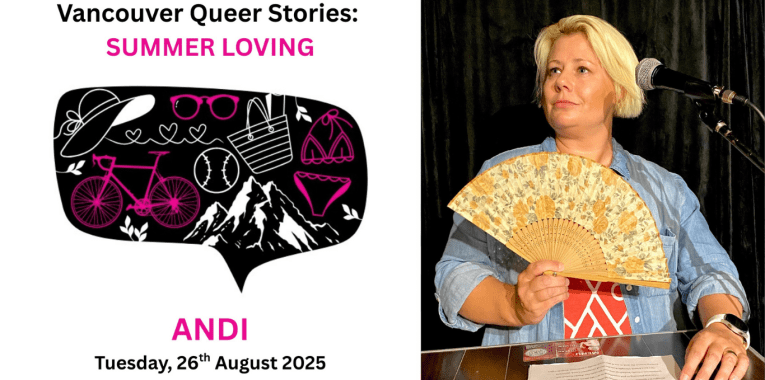
Summer Loving: Andi’s Story

I remember sitting at my desk and feeling every molecule in my body pull me towards the door. In the past 6 months, I had only enough energy to come home after work and sleep. I would wake up the next day, head back into work, and completely disassociate.
At work, sounds were becoming louder, I could hear the photocopier at the rear of the office better than the person trying to converse in front of me. I had zero short-term memory. If a conflict arose, even if it was an easy fix, my mind would draw a blank, my eyes would well, and my voice would stop working. I felt like I was hanging on by a thread; I had no core inside my chest to hold the weight I was feeling. 
I thought to myself “why am I the only person not able to cope in this environment?” 

On that same day, I listened to my gut and I started the process of going on medical leave. I made a doctor’s appointment, I emailed HR for the paperwork, and then I bawled my eyes out that night thinking I was a failure and doomed to go nowhere in life because of my perceived shortcomings. 
A few days later, after processing some emotions, I realized how deprived I had been from the things that brought be joy and peace. I made a plan. The first thing I was going to do was put in the film The Sound of Music, because Julie Andrews knows how to do.
Then I was going to commit to doing more art and, despite not having a car at the time, I was going to get out of the city one way or another (these are a few of my favourite things). 

I thought about flying home to see my folks in prairie nowhere, Manitoba, but given the circumstances, I didn’t think a family visit was going to alleviate the stress and guilt I was experiencing. There was, however, one family member I had recently reconnected with who I felt understood me more than anyone else at that time: My 93-year-old Great Aunt Maizie; the eccentric sister of my late grandfather who had moved out to the West Coast in the 1950s to practice yoga and to become a “heathen” (as Grandpa would say)! 
I remembered first meeting her when I was 5 years old during a trip to Vancouver for my uncle’s wedding. I thought she was a spunky old lady… And that odd old house she lived in decorated with beads, candles, and photos of bearded East Indian men, it was so different from my regular surroundings…That yard she had, it was full of lush trees and flowers… That ocean, where I collected shells near that massive park… that terribly scary swinging bridge I cried the entire way across holding my Dad’s leg for dear life… those Godly Totems… That had all been 23 years prior, and it had evidently left a mark on me. It became clear to me where my journey out of Calgary was going to be: Vancouver. 

Remember when Airbnb was cheap? I booked 5 nights in a shared apartment that overlooked Davie Street for $37 bucks! I mean, it was no Shangri-La, the room was a closet with a window to the kitchen, and the folks living there didn’t care much for their own privacy (saw a lot of bum), but hey! I made it! 
After dropping off my bag, I went straight to Beach Avenue and down to the water. I felt the sea air fill my lungs like drinking a cold glass of mountain spring water. The bay was like glass and appeared to stretch beyond the horizon. I needed to swim. I stripped down into my bathing suit. I fell into the sea, and then it fell into me. In the middle of a busy city, I could finally hear the silence I so desperately needed just beneath the water’s surface. I felt an internal exhale. 
Afterwards I walked to the edge of Stanley Park and around the giant trees. I felt nostalgic, the farm I grew up on was full of big trees and I missed them, but another feeling returned to me that I hadn’t felt in years. I felt like I was home. 

The following day I ended up going over to North Vancouver. The journey up and down the mountain felt magical; a maze through hills and trees, all of which extended beyond my bus framed vision. But you know what else was fricken cool? The Seabus! Woah, I was on a boat! That may seem ridiculous to some, but if you’re from the prairies, it’s absolutely delightful! The angle of the light during my initial crossing lit up the buildings on the North Shore as if I was entering the ‘Kingdom of North Vancouver.’ 
And then there was Maisie’s house… It was EXACTLY THE SAME as it had been all those years prior! Maisie however, was much older, much more frail, but that did not stop her from showing me her flexible yoga moves! We chatted about family for a bit, then life and philosophy. Despite the enormous age gap, I felt like I was talking to an old friend who understood that I needed to set my spirit free. 

Coincidentally, a few different old friends were in Vancouver at the same time, and I ended up having a blast catching up with them! I went out on a party boat and hit up all the gay bars on Davie! Joy had returned, and experiencing a little more Queer representation around me also brought about a sense of safety. 
I went back to the North Shore once more, not just for that Seabus thrill, but to shop and chill at the Lonsdale Quay. I sat at the brewery that shared its patio with the promenade, sipped my IPA, and watched the ships, boats, and aircrafts go by. Despite my busy surroundings, I had found a bit of peace. 

Inevitably, the day to board my departing flight had come. I settled into my window seat and felt tears come to my eyes. I didn’t want to go, but I knew I would do my best to return. I consciously left a piece of myself at YVR that day, imagining that one day, even if only for a week every other year I would meet myself again. 

That soul cleansing visit in the summer of 2015 put me on a incredible trajectory. 3 weeks after returning to Calgary I would meet my future wife. 5 months later I left my job for good. 2 years later, my partner and I would take a trip to Vancouver together to start apartment hunting after she accepted a new position. 5 years later in Vancouver, I would be diagnosed with Autism Spectrum Disorder which allowed me to reflect on and reevaluate my own needs at work and in life (as it turns out I have selective mutism and what I had gone through was burnout). An engagement, and a whole pandemic later, my partner and I married in a spectacular service at Christ Church Cathedral with all our family and loved ones present. 

As for my dear Great Aunt Maisie of whom I found a kindred spirit, she would pass on just shy of her 101st birthday. Sometimes we fall in love with people, and sometimes we fall in love with places, whether it’s a summer “fling,” or something that later becomes a long-term commitment. Vancouver was my summer fling that later became my home. Vancouver opened up her ocean stretched arms and nestled me into her mountainous earthy embrace, she filled my cup, and restored my peace. 

Whatever the future has in store, even if my wife and I end up leaving this place down the road, I will always love Vancouver because Vancouver reminded me how to love myself.
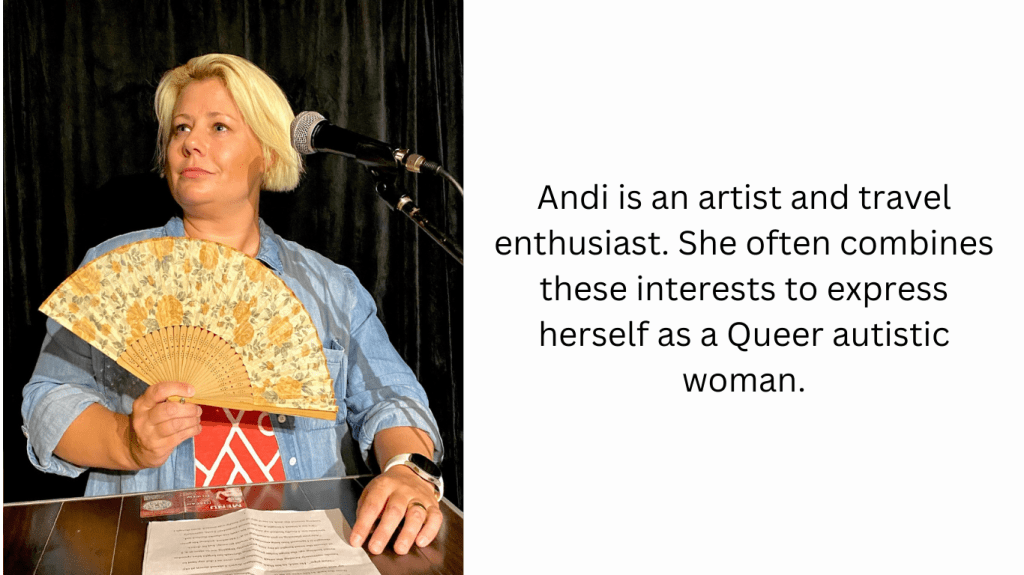
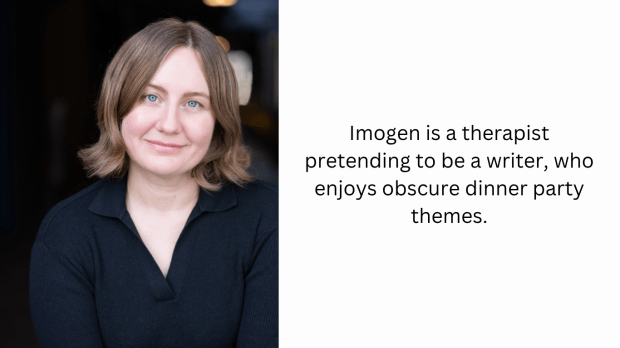
Around the World: Imogen’s Story

Identified Patient

I am in Calgary today learning how to diagnose autism. The training is in the same hospital building where I was detained for a month and ultimately diagnosed with OCD when I was eleven. A month of one-way mirrors and cheese whiz toast and CBT worksheets. My current therapist sends me a message before I leave that says “I hope this trip is somehow good for you rather than jarring,” which I think was supposed to be reassuring but ends up coming off ominous.

At the Vancouver airport I text my partner and tell them I cannot stop thinking that I’ve forgotten something important and something terrible is going to happen. There must be a ritual I can do to prevent it, they joke. Ha ha ha. It turns out the feeling that I have forgotten something is correct, although the scale of the catastrophe is a little off. When I arrive at the Calgary airport and try to pick up my rental car, my driver’s license has expired two days earlier, and I have to get a cab. I had planned to maybe check out trendy restaurants that have popped up here since I left in 2004, but quickly I realize I’m going to be basically confined to the strip mall around my Best Western and the children’s hospital where my
course is being held. Wings clipped, I feel like I’m waiting for my sixteenth birthday so I can go through Peter’s drive-in for milkshakes or drive to the airport just to look at it, so I can start to imagine forward movement as a real possibility.

The view out the cab window is vast and empty and slow, and I realize I had forgotten how this place seemed to be a mismatch for the pace I wanted to go. Wheels spinning on ice, futility and pent up energy; knowing there was a whole big world out there where I wouldn’t be such an anomaly. In the parlance of CBT: the feeling didn’t necessarily tell me the truth. There was a whole big world out there, and I wouldn’t necessarily feel like less of an anomaly once I found it. But the idea of it was enough to give me traction, to propel me out of this place that always reminds me of how no one can hear you scream in space because there’s nothing for the sound waves to even bounce off of.

Did you know that it’s more common to be afraid of wide open spaces than it is to be claustrophobic? I am sure that I do not belong here. They gave me diagnostic powers by mistake, it is an administrative error. A Freaky Friday type mishap where I have woken up with unearned power and freedom. I spiral and sweat through the afternoon lecture, imagining all of the catastrophic sequelae of this mistake. My heart races. On the break I get an ice cream from the vending machine where my mom would get me ice cream before family therapy, like trying to coax a feral animal. Only she’s dead now, so I’m trying to coax myself back to productivity or achievement, to my hard-earned place on the other side of the glass this time. I am conscious that adult professionals probably don’t eat ice cream for lunch when surrounded by colleagues. At any second they may realize I’m an impostor, and send me back downstairs for toast, a PRN, a worksheet and a nap.

I go for a walk to try to feel better, and end up feeling sad and slow and lonely, a specific sensation that feels like dull prairie winter in my chest. Vancouver moves fast – my favourite restaurants and memories disappearing before I can make new ones. Calgary moves slow, the pancake restaurant I used to go to with my mom before skiing preserved like a bug trapped in amber. The steakhouse we’d go to after church. The dead mall, standing there like the husk of a giant insect, where I had my first job selling novelty swords to nerds with poor impulse control, and which I recognized recently when it was used as a set in The Last of Us. Everyone I could call from my previous life here has moved or died.

It is dense with memory and devoid of connection. When I was nineteen I saw another psychiatrist who told me he thought I had Asperger’s, which was a thing then. Likely because I looked at the floor while I talked to him, and told him that I believed that the problem was not depression or even OCD, but that “I suffered from a pervasive remoteness.”

These days I have mostly abandoned the CBT I learned when I was eleven at the Children’s hospital psych unit. I still eat cheese whiz on toast, because it feels like a hug. But in light of everything that’s happened, it feels unhelpful to say “that’s a catastrophic thought.” It’s trite, but the only thing that slows down my heart rate and lengthens my breath is gratitude. When I was thirteen I found queer youth group, and when I was fifteen I started volunteering to run it. When I was sixteen they started paying me, and I’ve been lucky to build that into a career as a therapist. The early parts of that were nurtured by old (to me) lesbians who wanted to see me be happy and succeed; who understood that I was doing my best in a hostile environment and wanted to believe in the idea that someone like me could be okay. You couldn’t take a kid under your wing like that now; it would be called grooming. But no one was ever creepy, and I wouldn’t be where I am now without them.

When I moved to Vancouver, queer people felt unfriendly and suspicious of difference. There were a lot of invisible divisions I struggled to intuit – the mirror is never just a mirror. No one was jumping to take me under their wing. I still had the embarrassing tells of someone from a town that hosted the national high school rodeo, whose social and cultural centre was a grain elevator, and where you could ride your horse to school and hitch it there. I used to think it was too easy here, that there wasn’t the kind of exposure to hostility that makes us tender with each other’s earnestness.

When I started writing this, what I didn’t want to happen was for it to turn into a kind of city-over-country supremacy that I think it’s easy for anyone, but maybe especially for queer people, to slip into without noticing. When we do that, what we’re actually trying to signify is the cruelty and stress of the places we grew up, but we tend to do so without examining our own capacity for cruelty that we pack up in our backpacks and Rubbermaid totes and bring with us across mountain ranges on Greyhound buses. I’d even hazard to guess that as much as we learn what to tolerate in relationships from our families of origin, we learn how to be in community in places that hurt us. From where I stand now, I know that under a lot of the cool disaffectedness that I used to be so intimidated by, there is often deep vulnerability.

What I brought with me was a pane of one-way glass, the pain of being observed and described, the specific pain of the identified patient. I roll the words around in my mouth. Nothing goes away until it teaches us what we need to know. I repeat it to myself over and over again like a mantra until my mouth is dry, and it seems to help. My heart slows down to match the pace of this place, the thing I couldn’t do when I was growing into myself

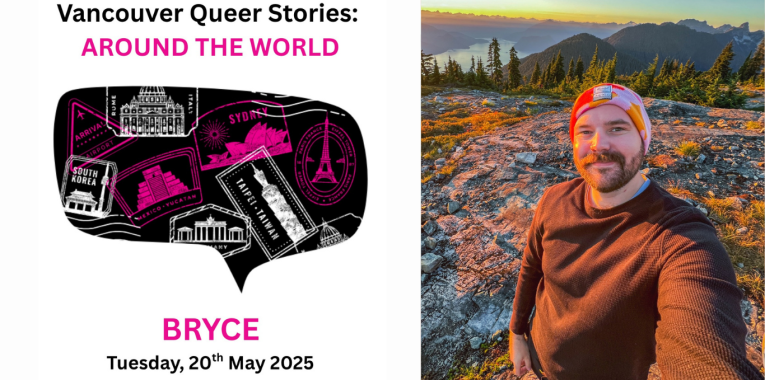
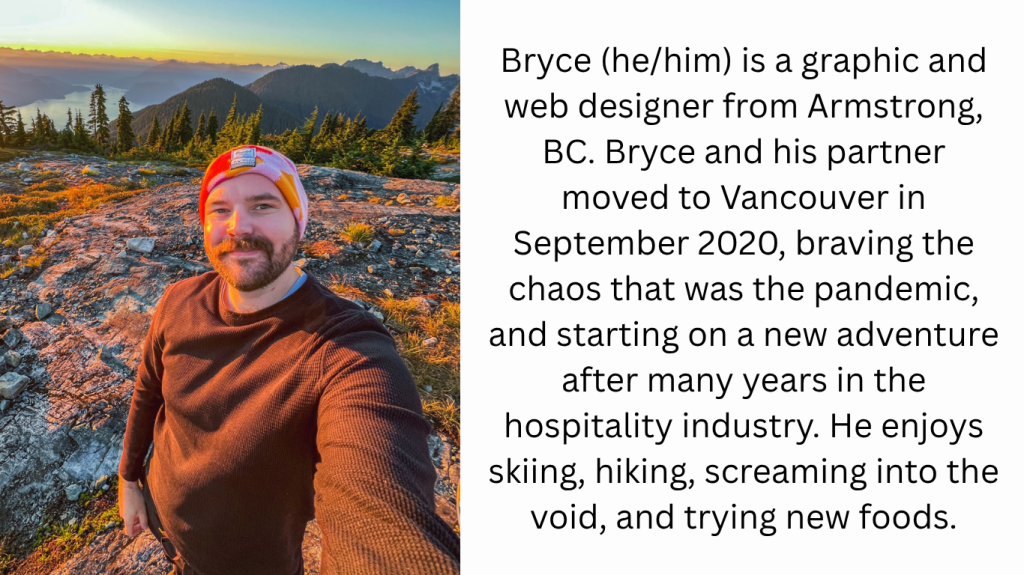
Around the World: Bryce’s Story

Let me take you back.

I was 18. That magical age where you think you’ve got it all figured out, but you still call your mom when your laundry turns pink. I had just hit that point in life where everything in my hometown felt too small. The streets, the routines, the same familiar faces. It was all closing in on me.
I needed space. Air. Maybe even some chaos. So, I packed up my car—if you could call it that. It was more of a metal box with an engine and a slight identity crisis. No GPS, no credit card, barely any cash, but a lot of heart.
I didn’t even tell many people I was leaving. I just drove west and decided I’d figure it out on the way.

When I got to Vancouver, I had exactly zero plans. Zero housing. Zero resources. But I had arrived, and that felt like… something?
I found myself driving around Stanley Park. I’d never seen anything like it. There were trees that made my little car look like a toy. Water that sparkled like it was auditioning for a movie. And people, jogging like they actually enjoyed it.
I parked and sat in silence for a bit, pretending this was all part of some Eat, Pray, Love moment. In reality, I was stalling because I had nowhere else to go.
That night, I curled up in the driver’s seat, hoodie rolled up as a pillow, trying to convince myself it was an adventure. The air was damp. The windows fogged up. But hey, I was free… right?

By morning, my back felt like it had aged 50 years, but I was still in one piece. I took that as a win. I stretched out, rubbed my eyes, looked out across the park and said, “Okay, day one in the big city—let’s do this.”
I drove into downtown. The city was buzzing: there were bikes, buses, beeping horns, neon signs. And somehow, every single person seemed like they had somewhere important to be.
Except for me, that is. But I didn’t want to look like an outsider, so I did what any self-respecting newcomer would do: I pretended. I adjusted my sunglasses. I leaned back like I knew where I was going. I even nodded at the people on the street, like I was one of them.

And then I saw it: a street that looked like it led somewhere cool. Brick buildings, people walking dogs, some artsy-looking cafés. Perfect. So I went for it.
Left-hand turn. No big deal.
Except, within seconds, I realized… big deal.
Because coming directly toward me, fast, was a silver Audi R8.
I froze. Like, full-body, “brain not working,” kind of frozen.

There are moments in life where time slows down. Where everything gets very clear, very fast. This was one of those moments.
I could see the grill of that car. The expression on the driver’s face (equal parts confusion and rage). And even the little sunglasses dangling from his rearview mirror. That man had money—and zero patience for a kid in a $2,000 car, going the wrong way.
I heard honking, shouting. I saw people on the sidewalk point at me like I was some kind of public safety demonstration. One guy just shook his head, like I’d personally disappointed him.

I did what my instincts told me to do: I cranked the wheel and swerved into the nearest side street—right past a massive green dumpster.
Parked—slammed my car into park. And just sat there.
I was shaking. My face was hot. I felt like I’d just survived an extreme sport, except the only thing I’d done was make a left turn.

And then the thoughts came, one by one, loud and clear:
Did I actually just do that?
Am I still alive?
Is it too late to move back home?

I slumped down in my seat, like hiding would help. I was parked beside literal garbage, and somehow it still felt like a step up from what had just happened.
I remember looking around to make sure no one had followed me; as if the Audi guy was going to chase me down, and hand me a bill for emotional damages.

Eventually, the adrenaline wore off, and something strange happened: I started laughing. Like, really laughing. The kind of laugh that starts as a nervous giggle and then snowballs until your stomach hurts. Because in the grand scheme of things… it was kind of hilarious.
I had survived my first real Vancouver experience. Not a sunset on the seawall. Not a cozy coffee shop moment. But a full-blown, wrong-way-down-a-one-way-street near-death experience.

Over time, I got better. I learned the roads. I found a place to live. I even got a credit card—with a limit so low, it was more symbolic than useful, but still. I figured it out. But I’ll never forget that feeling—of being completely out of place, completely lost. And somehow still okay.

And that, my friends, is how I learned about one-way streets.
Not from a sign. Not from a city tour. Not even from Google Maps.
No, I learned about one-way streets the old-fashioned way:
With fear. With adrenaline.
And with a luxury car speeding directly at my face.