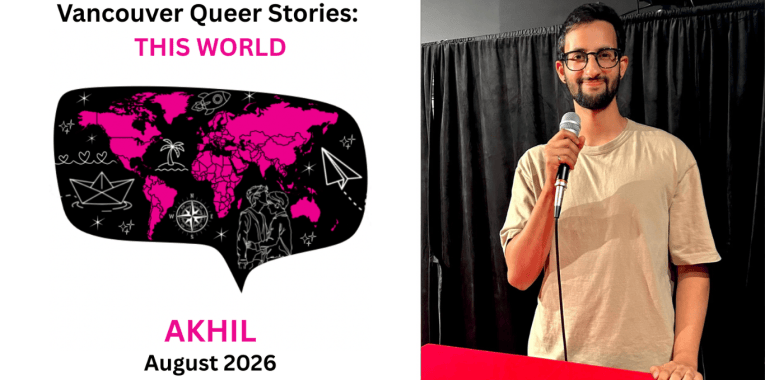
This World: Akhil’s Story

If you met me today, you’d probably never guess there was a time I could barely get a few words out. I was painfully shy. If someone simply asked me, “How are you?”, I’d rehearse the answer in my head over and over before stumbling through the words, grasping at air for support. I was terrified of saying the wrong thing.

School felt like a hunting ground..
I was picked on constantly for having what people called a “gay voice.” My classmates mocked the way I walked, the sway of my hips, the softness in my voice. Some days, groups of boys would surround me in the hallway like a pack of wolves, laughing while I stood there wishing I could disappear from the world.
I had spent years wanting nothing more than to fly away.
Then, in one moment of vulnerability, someone mistook my silence for permission. They reached for something that was never theirs, and when they left, it felt as though they had stripped away the very feathers that made me whole.
They stole my voice.
I stopped trusting my body. I stopped trusting my instincts. I convinced myself that the safest way to move through the world was to be as small and invisible as possible.
Silence felt safer than speaking.

But there’s something curious about silence. If you sit with it long enough, it begins to make room for other voices.
For me, it happened to be the voices of my ancestors.

I remember it so vividly. It was half past 9pm and my mother and I were nestled in blankets sitting together with cups of adharak chai and nankhatai biscuits, watching youtube videos exploring ancient Indian temples. I wasn’t expecting my life to change that night.

But then a strange sculpture appeared on the screen. I remember leaning forward, perplexed.
One half was unmistakably Shiva—matted locks, a strong jaw, broad shoulders, a trident resting beside him.
The other half was Parvati—soft features, flowing jewellery, a graceful curve through the waist.
They weren’t standing beside each other.
They were one.
One body.
One face.
One divine form.
Ardhanarishvara.

I couldn’t stop looking. How had I never seen this before? This image had been carved into stone more than a thousand years ago, yet in that moment, I felt like it was waiting for me.

For years I’d believed I had to choose which parts of myself the world would find acceptable. To be more masculine. Speak differently. Walk differently. Tone myself down.

Yet here, in one of the most sacred images of my culture, masculinity and femininity weren’t in conflict.
They weren’t competing.
They were in harmony.
Neither half diminished the other.
They were whole.

That night became the beginning of a journey I never expected to take.
One story led to another. One temple led to another. And before I knew it, I wasn’t simply learning about history anymore.
I was seeking refuge in my ancestors.

I came across the ancient chronicles of Shikhandi, A transgender warrior who was a central figure in the Mahabharata, one of India’s greatest epics.
I saw carvings of queer love etched into the stone walls of Khajuraho temple.
Two women.
Two men.
Lovers in embrace.
These weren’t hidden away in some forgotten text.
They were carved into the walls of temples for the world to see.

For years, I tangled intimacy with shame.
Yet here were my ancestors telling a completely different story.
Not with words.
With stone.
Love wasn’t hidden.
It was celebrated, honored and part of Prakriti–nature.

One discovery led to another.
I learned about Bhagiratha, born from two mothers.
I read translations of the Kama Sutra. There was one specific passage that I could never forget. It was two male lovers exchanging flower garlands, petals embracing each other as their first shared touch.
I had never seen queer love described with such tenderness.
Maybe because it was the first time I saw intimacy without shame.

The more I searched, the more I realized something.
The world I thought had rejected me was much older—and much kinder—than I’d ever been taught.
I hadn’t just been learning about history.
I’d been finding my way home.
The stories my ancestors left behind weren’t asking me to become someone new.
They were reminding me of something I’d forgotten—that I belonged.

Today, I tell stories. Stories of my ancestors. Stories of queer south asians. Stories that remind us we’ve always belonged.

I often think about how badly sixteen-year-old me needed to see something like that.
Back then, I thought I was the only one.
Now I stand beside queer South Asians from different faiths, languages, cultures, and backgrounds. I listen to their stories. We laugh together. We cry together.
And every single time i think about that lonely kid who believed there wasn’t space in the world for him,
I tell him… he was never alone.

When people ask me what changed my world, I tell them it wasn’t one story, or one sculpture or one temple.
It was realizing my ancestors had already made room for me long before I was born.
I spent years searching the world for somewhere I belonged.
In the end, I found it by looking back.
I found it in my ancestors.
I found it in my community.

And somewhere along the way, I found refuge in myself. 
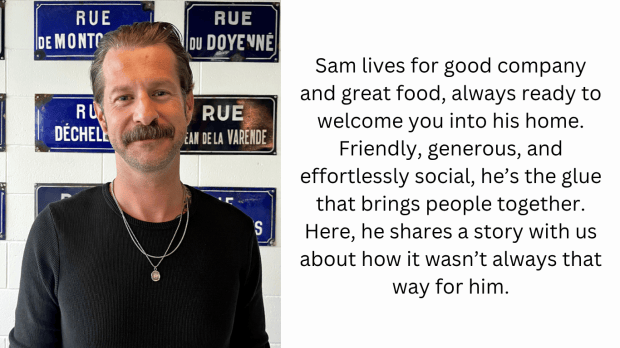
Breaking Out: Sam’s Story

How could I have thought that the days of youthful innocence were the worst of it? Looking back now, it was easy. Life was full of the simple pleasures of childhood freedom: the smell of fresh-cut grass, the lingering haze that followed a midday shower before us kids took to the streets again, running amok with sun-licked shoulders, torn denim, and imaginations still in overdrive. Then Sundays would roll around, and my mother would force me to put on the freshly ironed clothes draped over the side of my bed for church. The image of my family was very important to her. Those little stints of angelic performance taught me how to wear different masks. I would present one way while feeling entirely different within. Much like the Gemini, June stood beneath the sun with two heads, one looking forward and one looking back. This was the month I was born.

Maybe that is why memory has always felt split to me. A collection of Polaroids carried around in my pocket like souvenirs: tangible reminders of moments I survived and experiences I would eventually grow from. But with enough time, like anything, those pictures fade. The edges blur. Eventually, even the person staring back at me became hard to recognize.

It can take a lot of courage to break free from certain parts of our lives. After constantly being labelled and dismissed as too sensitive and too emotional, I gravitated toward the other side of the spectrum: avoidance. Cramming my pain and fears into every nook and cranny. I easily confused escapism and the outward appearance of independence with genuine freedom.

My hometown was a small suburban community saturated in white privilege. With no visible examples of queer love, I never felt safe to express myself. I was a lanky kid who would cower in masculine, heteronormative settings. I wanted to peel off my skin and disappear like a shadow beneath a streetlight, barely present, wandering aimlessly.

It was only a matter of time before I found ways to cope. I am human, after all, inherently wired for survival. By the age of fourteen, I had built up walls, brick by brick, with every drink and every drug. My secret life became one of isolation and self-hatred. I was a master of disguise, portraying a life of fearless adventure when deep down, I was just running away from the queer kid I never wanted to be. I denied that kid love and connection, not just from others, but more importantly, from myself.

For nearly two decades, my addiction ebbed and flowed between multiple lives, geographical cures, absolute chaos, and blissful self-loathing. I risked it all in search of oblivion. Staggering through the alleys of the DTES, chasing the moonlight in meth-infested slums of the Philippines, or bruising my fists on a prison wall in Australia. I had found something that felt like a solution: comfort wrapped in the delicate lie of temporary relief. In reality, there was a consequence waiting on either side of that next drink or drug.

Convinced I was unworthy of love and unable to give it, I kept running. With every unfamiliar country, I hoped that maybe this time I could become myself and begin again. By the last few years of my addiction, I had ended up in a place I never want to return to. I had given up, completely defeated, carrying around a note in my wallet bearing the words “I’m sorry, I love you” scribbled in black Sharpie. I couldn’t find anything else to write.

I was exhausted; the weight of the guilt and shame had become unmanageable. Leaving me to believe that death was my only way out.

Just when I thought I was at the end of my rope, something washed through me. A flash flood of hope coursed through my veins, short-lived, yet it was still a feeling I hadn’t experienced in years. Seeing my sisters get married, start families, and build homes filled with Love and kindness made a part of me want to know what my life could be like. Could I face the pain from which I had been running? Did I have the strength to work through the guilt and shame? Did I deserve to have a life full of love? Could I accept my true, authentic self? These questions ruminated in my head for many sleepless nights, strung together like the beads of a
cursed rosary.

Thanks to the gift of desperation, surrender finally became possible. The prison I had created was one I longed to break free from. Starting with my older sister, whose relationship I cherish deeply, I began to tell my family and close friends that I was going to seek help. Three months in a treatment centre gave me the safe space to address the demons I’d been dragging across the globe. I learned healthy coping skills, laid the stones for a new foundation, and grew by shedding my old skin.

Here we are back in June, where the story started. I recently celebrated my fortieth birthday. Since getting sober, I have been living my life openly as a queer man, reaching a place of self-love and acceptance. Navigating new experiences, I have been able to let others in, form intimate relationships, build trust, and show up as my caring, vulnerable self.

Over the last eight years, life has handed me some of my most challenging lessons and led me down paths I never could have imagined. Facing one of my greatest fears, I went back to finish high school so I could get into college. In a month, I will graduate from psychiatric nursing. Never in my wildest dreams did I think this is where my life would end up or that my past would become one of my greatest strengths. It has given me the ability to relate to those who are struggling and to offer them a safe, empathetic, and compassionate space.

That imagination I abandoned in my youth has also returned in the role I now get to play with my nieces and nephew. I feel incredibly fortunate to be their gay uncle, someone who can show up honestly and help answer their questions about addiction, identity, and the queer community.

Every version of myself I tried to outrun has become part of me. They are what allow me to sit beside someone in their darkness and remind them they are not alone. Maybe this is what the two-headed June was trying to teach me all along, how to look back without turning away and how to move forward without leaving myself behind. My life feels like it is just beginning, and let me tell you, I have already lived many lives.

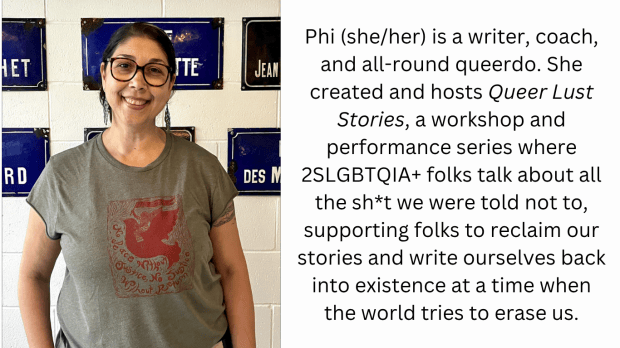
Breaking Out: Phi’s Story

Four months before my wedding, I was in full planning mode. Seating charts, handmade invitations, handmade ceremony programs, finalizing caterers and place settings, the works.

One evening, my fiancée, the man of my… parents’ dreams, was scrolling the TIVO, looking for the next show we should watch. He said, “Hey, what about this show? You heard of it? The L Word?”

My insides burned. “Sure,” I managed to say aloud.

I did not tell him I had already seen the series.

I did not tell him I knew The L Word inside out, that certain scenes were burned into the folds of my brain.

You see, long before living with him in Silicon Valley, I had lived in another valley, Lynn Valley, with my parents and sisters.

One of my sisters had brought a pirated copy of the whole DVD set back from China after a year of teaching abroad. One afternoon, sitting in our parents’ basement, I was thumbing through her giant folder of DVDs, and found this show.

With the first sex scene, my entire body responded. All the kissing. Touching. Fucking. Back then, I wasn’t registering the problematic parts of this series: how most of the actors playing lesbians were straight. White. How the sex scenes were so hetero-performative. I just saw boobs. And I liked it. I found myself sliding my hand down my pants and touching myself. Right there in the family basement. Afterwards, I was flooded with shame.

And then I pressed play and kept watching. I wondered how my sister had watched this show with her two roommates, wouldn’t it have turned them all on like it did me?

In the next episode came the next sex scene. And so did I.

Each scene whether it was sex, touching, a glimpse of something, gave me such massive, full-bodied orgasms, that getting through just one episode was quite exhausting.

All this flashed through my mind as my fiancee loaded up the show. I was anxious as shit. How was I supposed to navigate this situation? What would happen when we started watching this show and it started doing to me what I knew it had done before?

As far as anyone knew, including myself, I was straight. The fact that I’d been binging the L Word on loop since my mid-20s was not something I dwelled on.
The fact that I’d been binging sapphic erotica since my late teens in that same basement didn’t even make a dent in my mind.
Everyone had their secrets, I figured. I never once questioned my sexuality. I just locked it all away in the closet that I didn’t know I had back there.

When my fiancee hit play and the first episode showed the first sex scene, things worked out in my favor. With that first sex scene, he kinda did that straight guy thing of “ohhh” at the sight of two women having sex.
He looked at me and I probably made a face like “____” like a desperate attempt to match his turn-on without betraying the depth of my own.

After the episode ended, he began to touch me and I was all too ready to comply. I jumped onto him and came so hard and so fast it left us both shocked. I had had roughly one to two orgasms with this man in the three years we’d been together. But this too, I put away.

The next day, I went back to wedding planning. I stood in the ribbon aisle at Michael’s, contemplating ribbons for the ceremony programs that I was hand-making. Snippets of the night before came unwanted to my mind, right there in the tubelit aisle at Michael’s.

I drilled down harder: lace or satin? I could not go there. Cream or white? More flashes of the night before, the intensity of my orgasm: nope. Not going there.
I knew what I needed to do: more sequins for my invitations. And off to the next aisle I went.

That night, we watched the next episode of the L Word. Same turn on, same raging orgasm.
Night after night, we watched, I came. And the following day, back to the crafting project that was my wedding.

Finally, my fiancee asked the question I did not ask myself. “Have you ever been with a woman? Have you ever wanted to?”

I caved inward. Memories of all those years of my basement self-pleasurings burned inside me and I fought with Herculean effort to say, “Nah,” and try to sound normal about it. And then neither of us knew what to say. So we just watched the next episode.

One afternoon, back at Michael’s, I studied the cardstock: plain or textured? The question came:
“Phi,” a voice inside said, “These nightly sex romps are great and all, but should we talk about what this means?”

But here was where that vast black void kind of clouded my vision. I didn’t know how to examine this. Or who to examine it with. Everyone I knew was straight. Everyone I knew was getting married or was already married.

But each time I asked myself, “Should we examine what’s going on here?” I would think, “Welll, it’s four months till the wedding. People have already bought their plane tickets. It would be rude to cancel.”

This was the actual thought that would go through my head: you can’t cancel a wedding. I have to get married because you can’t cancel a wedding. Back then, I lived by these rules. The you can’ts and you musts and you shoulds.

But the deeper truth, the truth that I would not piece together until years and years later, was this: the idea of listening to my body, the idea of following my desire, at that time in my life, four months before my wedding to the perfect straight brown man, uh uh. I couldn’t.

Because to listen to my body, to follow my desires would make me different. And different was bad. I was already way too different: being a writer, a traveler, wanting to birth novels instead of babies. I was nearly 30 and try as I might, I was not doing a great job at following the script that everyone around me seemed to just slip into so easily. Now my body wanted to add queerness to the list? Queerness was definitely not part of the script.

But getting married? That meant I could fit in. That I would belong. That I had finally done something right. It was all right there within reach. And at that time, I needed to belong, to be like everyone else, more than I needed to be my true self.

We can intellectualize our lust, we can tell ourselves “everyone reacts to the L Word that way”, we can talk ourselves out of what we desire, but sometimes, the body gives it all away. And you can still shove that shit down, and that’s okay too.

It would be years before I would leave my marriage, before I would come out and come in to my full queer self.

It would be years before I would see QUEER community with my own eyes. People who were queer and trans and poly and kinky and thriving.

But that day did come. Literally the same day I left my marriage, I came out. To the person who would become my best friend and my greatest unrequited love. I couldn’t hold it in any longer.

He was stir-frying broccoli for our dinner and I burst out with: “I think I like … girls.”

He nodded, fully accepting of this news. Over the following weeks, he guided me on my great coming out journey, starting with queer films I had to see.

“Hey, have you seen Blue is the Warmest Color?” he asked, naming an extremely sapphic film.
“Ummm… yes.”

Shame crept up my neck and into my cheeks. But he just laughed and said, “Oh friend, you’re so gay.” Not in a shaming way. In a way that felt like, “I get you, welcome home.”

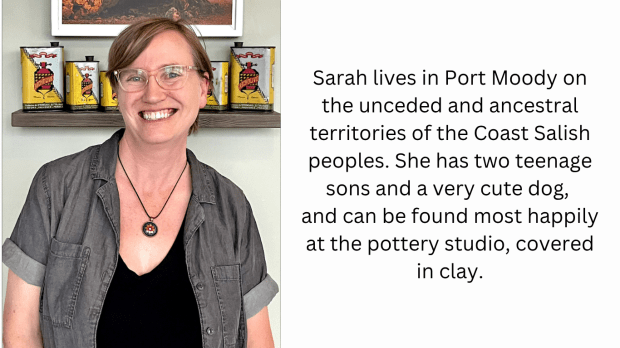
Breaking Out: Sarah’s Story

It’s six pm on a rainy Saturday in January and I’m driving alone up Mount Seymour in the dark. My heater is on full blast but even so my windows keep fogging up. My windshield wipers fight furiously against the rain that turns to wet snow as I drive higher. 

When I’d signed up for this event, I thought a full moon hike sounded like a lovely, romantic idea. It was my first outing with a hiking group I’d dared myself to join – an antidote to scrolling through dating apps or missing the ex who had recently broken my heart.

Immediately after signing up, panic washed over me. Willingly going out with a group of strangers is as far out of my comfort zone as, I don’t know, kissing an octopus. 

But I knew I needed something different. My life as a single mom in the suburbs felt small, limited, and I was starting to feel small with it. 

So I cobbled together a hiking outfit, packed a backpack with the things I thought I might need, and said yes.   

In the weeks leading up to the hike my anxiety came in waves. I almost cancelled a dozen times. I worried about pretty much everything – would my raincoat look cute? Would the other hikers be boring? What if I was stuck for hours with annoying people? What if they thought I was boring? I scrolled through their tiny photos looking for clues of compatibility.

I hadn’t even thought to consider practical things like, for example, the weather. 

So of course, the morning of the hike dawned rainy. With that Vancouver winter rain, ceaseless and daunting. It just kept coming down.

From my couch I alternated between refreshing the weather report and refreshing the event listing. As the day went on, the attendee list dropped from 12 to 8 to 6. I wondered if the hike would be cancelled, if I should pull out. 

The more it seemed like it might not happen, the more I realized I really wanted it to. 

“Fuck it,” I said, my backpack into the trunk.  

As I pull into the parking lot, there might as well not be a parking lot – it’s just a wall of fog. Doubt crowds my mind. Am I the only one stupid enough to actually show up? Why did I think this was a good idea? 

Finally, near the end of the lot I spot another vehicle. I pull up beside it and roll down my window. “I’m here for the full moon hike?” I say, cautiously, ridiculously, as wet snow pelts down. 

Three women climb out of the car. One, a few years older than me approaches with a welcoming smile and an outstretched hand. Cute braids stick out from under her toque. I like her already. 

“I’m Linda,” she says. “This is Joy, that’s Gina.” I recognized them from the photos, but here they were for real, organizing things in their backpacks, pulling on layers. 

“You’ve got your ten essentials?” she asks.

I smile and nod like I know what that means. 

I feel like such a fraud. Not knowing what to wear, I wore everything. A long sleeve shirt covered by a fleece covered by a down jacket with a raincoat over top.

I try to look like I know what I’m doing. I pull my Value Village rainpaints from the trunk and layer them over my sweatpants. 

These women seem effortlessly technical – they have those backpacks with the water hoses to drink from, and Gortex jackets, and carabiners that rattle from their bags like Christmas ornaments. I guess it takes a certain kind of person to come out in these conditions. 

I slide my feet into my old hiking boots, tighten the laces over two pairs of socks. 

We throw our backpacks on, adjust our headlamps, and head out into the dark night. For awhile there’s nothing but the crunch of our feet on the snow and the wind whistling through the tall trees.

They’ve all met before, chat easily together, and I feel the familiar self-consciousness creep over me. Do I have anything to say?  

A little way up the trail, we stop to put our microspikes on over our boots for traction. I pull mine out  – cheap ones I bought on Amazon, with little grippy dots. Theirs have big metal teeth. Where they walk, I slide. 

Have I mentioned that this is my first hike in months, if not years? That in all of my excitement to get out of my comfort zone and have an adventure, I forgot I’d be lugging my body along with me? You know that expression ‘your eyes were bigger than your stomach”, when you put more food on your plate than you can eat? 

This was that, but adventure was the food and the limit was my neglected muscles. 

Before long I am huffing and puffing, sweat pouring down inside my many layers. 

When they ask about me, it dawns on me that I’m meeting people who didn’t know me before I came out. People who haven’t witnessed my transition from being partnered with a man to becoming comfortable as a queer woman. 

I’ve gotten used to defining myself by what I felt I’d failed at – a marriage, keeping my family together. 

But here, and now, I can be whoever I want. 

The further we climb, the easier conversation flows. One of the women just got back from a trip to to Peru and tells us about her hikes there. I talk about the time I spent living in Chiang Mai in my twenties, and as I do memories come rushing back. Not just memories of tuktuks and pad thai, but of who I was then, independent, confident, curious. 

A woman with a taste for adventure. 

Near the top we stop in a sheltered valley to discuss our options. We’d planned to climb to Pump Peak to have our snack at the viewpoint. The snow is coming down hard now and visibility is next to nothing. Maybe we should turn back. “But we’re here,” I say, surprising even myself. “Let’s go for it.”  

So the four of us, like trekkers on the ascent to Mount Everest, set off up the icy bank for the climb towards the peak. There’s no path, just a sheet of white and shadow under the beam of our headlamps. We are comical, occasionally losing our balance and knocking each other over as we slip backwards.  

Finally we make it. The wind whips around us and we search in all directions for a glimpse of the elusive moon.

Instead, it’s almost as though the clouds thicken – we howl with laughter at this epic failure. 

I pull out my granola bar, thinking that will suffice as a hiking snack. Not with these ladies. Joy whips out a stove and manages to light it in spite of the wind and rain. She finds her pot and starts cooking gnocchi, of all things. Linda makes hot chocolate and someone produces a bottle of whiskey. Gina lays a tarp on the snow for us to sit on. 

I feel like a kid, giddy with the novelty, the make-your-own-fun of it. 

This is so much better than a mediocre first date on Commerical drive. 

I’ll be honest – originally I joined the group because thought I might meet a woman. 

Instead, I met women. Strong, independent women who climb mountains in the dark for fun. Women who see terrible weather not as a reason to stay home, but as part of the adventure.

On the way back down, certain sections of the trail are perfect for sliding and so we do – our feet up in the air like kids. Our screams and laughter echo across the valley, up to the dark sky. 

Driving home that night, I am soaked, exhausted, grinning and eager for more.

The moon never appeared that night. 

But I felt something else come into view: a version of myself that was still growing, still exploring, still willing to say yes to things that scared me. That night, somewhere between the parking lot and the summit, something had shifted. 

For the first time in a long time, my life felt bigger than the boundaries I’d been living inside.

A few months later we returned to Pump Peak for the Strawberry Moon – a larger group this time, the fairweather hikers – and we were treated to a spectacular moonrise over the mountains. This time I brought my newly purchased hiking stove, my backpack with a waterhose. This time I was the one greeting newcomers with a smile and an outstretched hand. 

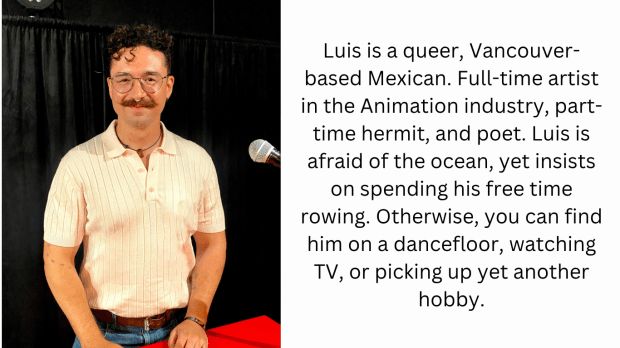
Celebration!: Luis’ Story

I’ve blown over 30 sets of candles in my life.
Most birthdays spent wishing I could sing.
I remember the last time I asked for this one thing,
Realizing I don’t have the necessary vocal strings.
But could put into metaphors, lyrics what I think.
I stopped wishing there and then, on my 10th,
For a voice that’d give me strength, just I wait.

30 doesn’t sound like a lot if counting my breath
Warm whispers that keep away rapid death.
30 reps pump my chest, 30 degrees is hot.
30 likes on a poem’s a lot, 30 on my selfie is not.
30 years young I decide will not bring me stress,
Bring on as many second adolescences as I have left.

For my birthday this year, I wish for a full fridge.
So that with it, I can build long, delicious bridges.
For my family, friends, lovers to be here with me,
I wish my homies are healthy, happy, at peace,
And for many more years, share stories and tea
That might spill, and show off our vulnerability.

I wish to fall in love constantly and against all the last decade’s wishes, stay single. As in centred, focused, whole, in what most of my self-help books have foretold. Life is worth living because of the people we keep around as we get old. I hear the birthday song, the beautiful melody, the voices in unison and join the chant with my mediocre tune. My lifelong worth of wishes came true. 

I sing myself a happy birthday because I get to celebrate it here with all of you. 

Today is my birthday.

As the years pass, I feel like I’m evolving into a body and mind that better fits the old soul I was born with. Although inevitable, it is a privilege to age, especially in the LGBTQ+ community, but what I would like to celebrate today is the opportunity to grow. Grow up, grow fond, grow apart.

An early memory that I can pinpoint rapid growth to was when I, age 6, wrote a confession to my parents about who had clogged the toilet with toilet paper. They had cancelled my sister’s and I’s nightly storytime and that would not stand. I had to act, swallow my shame, and leave them a letter at their bedroom entrance that must have said something like: “It was I, I clogged the bathroom and, worst of all, said nothing when storytime was cancelled.”

Decades later, I remember writing what I’d say to my school’s Head of Program after a couple of bullies, who caught wind I was gay, started to throw homophobic threats around. Eventually, this conflict led to me coming out to my parents. Without a script, I rendered my emotions in real time during that Zoom call home, kicking off another era of massive growth in my life when I “formally” joined queer spaces and started to befriend my fellow gays.

Dating and being alone at bars sucked. I wish someone had warned me, I think there were lessons that didn’t need to be learned through experience. I’m extremely grateful today for spaces like The Birdhouse for the buddy system and their practices adjacent to the Good Night Out Campaign. In this last year, I’ve noticed a younger vibe in the crowd at some of the bars I frequent. Some are incapable of saying “I’m not interested”, “not right now”, “please don’t touch me” when unwanted attention comes their way, others, stunned when that unwanted attention doesn’t take a hint to back off. I see myself in them.

I wrote this spoken word poem from a night we came together to celebrate another year of our lives passing by:

Well hello there Daddy.
I caught you looking and thought to say hello.
I’ve seen this on a porno, how these things go.
“What are you into? What are you looking for?”
I guess, a short convo or to get down on all four.
To submit into obedience in a kink experience.
We can both play our roles, say it’s coincidence,
To find guidance in another generation’s resolutions.

Instead, you offer your hand and ask to dance.
So close to midnight, I see it’s time and give him a chance.

Knowing we’ll recreate dynamics from before.
From when we were boys and didn’t know more.
Tell me Daddy, did you have a Daddy to call you son?
Or buddy? Or bro? Or baby? Or boy?
Did you have someone to say you’re valuable?
Without queer role models to show us the hopes,
On sex or intimacy, how to untie bondage ropes.
Tangling my neck on all these cables and cords,
I’m choking, I can’t breathe, I let the pressure go.
Out of one patriarchy and into another. I say no.

I look for things that’ll ground my concussions.
Your crow’s feet, furrowed brow and bruises
Remind me of my muses, past, present, future.
Age befits your years of experience and culture,
Your fingers in my hair untie curls with nurture
Soothingly against the grain of a calm brain.

This is my kink, agency to see if we’re in sync and
What’s meant to be addressed by a shrink.
Have we met before, Daddy? I was but a twink,
Fresh meat at a gay bar, my glasses tinted pink.
Looking for greener grass, getting ass grabbed.
The sexual revolution says to get your needs met
But even people leaving the sex party say meh.
As if that’s the point of it all, to get your dick wet.
Not the safe spaces for the rest of the alphabet.
Not the right to exist, you have it, so you forget.
Not the shame taught everywhere as a preset.
The default morals I recall and bring me regret,
Versus the gay values reducing me to an asset.
Hard earned, liberating, blissful gay sodomy.
Personally, would that make my best self happy?
To have 30 random stranger loads inside of me?
Would it cure me? To assimilate foreign culture?

Under pressure? Fuck no. Freely, I don’t know.
The lack of conclusions glitch with my delusions.
Daddy, I recognize you as my reality fractures.
Plot twist, reparenting myself in a meta rupture.
In your eyes, Father Time shows me my future.
I’m in a modern orgy of what feels right for us 3.
That I’m present Me, I’m Daddy, and I’m Baby.
New Year’s a step closer to that state of mind
Where I don’t perpetuate outdated philosophy,
Whilst adapting ideas that preserve my sanity,
Integrity’s reconstructed protecting my inner child with
A confident introspection I practice and embody.
Midnight. Alone on the dance floor when a man comes up to me.
He asks for my name. You can call me “Daddy”.

Being able to verbally request and provide consent is oftentimes not prioritized by men. Historically, bathhouses, circuit parties and cruising communities thrive on physical expressions of interest. It’s imperative and fun to learn to recognize and apply these cues in those spaces, but outside of them, they seem more like outdated survival strategies for generations and legal frameworks that should be more aware of power dynamics.

Suddenly, I’m being addressed as “daddy”, “zaddy”, “stud”, even “sir”. I find myself on the other side of my experiences: I share with friends the weight of responsibility I feel on my shoulders. I don’t want to treat these men like I was treated and I’d rather carry this awkward awareness forward than continue to inadvertently perpetuate harm between us. Some say its a heavy burden to carry, most have simply grown used or fond of it. Others deny and gaslight the idea that sexual assault happens around us, best to grow apart from those people. I’m relieved there’s more public conversations facing the challenges of entering gay spaces for the first time, providing advice and validation that for me came later in life when I felt heard and seen in friends’ stories.

Dating and being alone at bars still kinda sucks. Recently, I went out on my own again, like I did years ago when I came out, knowing now the impact of meeting at least one friendly face. I went out knowing my worth and the difference that makes in who and how men interact with me. I went out confident in the work I’ve put in so far and how strange it will feel to change. I went out on stage to compete for the biggest ass competition, and lost. 

There’s plenty to celebrate today: the community spaces that allow for vulnerability to exist, the privilege to age, my 31st birthday, the confidence to speak my mind, and most importantly, the growth of a social circle, aka my friends. It is mainly through them that I’m de-aging my old soul, like a gay Benjamin Button, and relearning what it’s like to be included, safe and silly. I’ve grown into what my therapist would call my Protector persona, partially because of the years, but mainly due to the kind and understanding connections around me. I have no doubt that my Protector is a kaleidoscope of me and all the past, present, good, bad, long, short friendships I’ve had the opportunity to interact and learn from. Thank you for helping me become a person capable of saying, kindly and unapologetically, “no”. 

I love you all, as friends.

Celebration!: M.’s Story

I’m turning 30 this year.
When I found out the theme for tonight was “Celebrate,” I started thinking about that word. Celebrate. And I realized, I don’t think I really know how to celebrate myself. Which is weird, because I’m gay, Lebanese, kind of a drama queen, and emotionally attached to both Arabic and English pop music. On paper, I should be excellent at it.
And I genuinely love celebrating other people. I love showing up. I love planning. I love hosting. I love making people feel loved. I’m good at it too. Maybe too good. I will plan the timing, the food, the vibe, every small detail and pretend that it’s no big deal, but emotionally, there is a very serious project plan.
But when it’s about me? I become aggressively casual.

A couple of months ago, I “celebrated” two years in Canada by going to a St. Paddy’s gay party at the Junction. Very convenient: one of the biggest celebrations of the year was already happening on my anniversary. The universe forcing me to celebrate my milestones.
Fair play, universe.

But birthdays are worse. Because birthdays are the one day of the year where you’re allowed to be a little self-centered, and I still don’t know what to do with it.
Last year, on my actual birthday, I scored tickets to Lady Gaga’s Mayhem Ball.
Picture this: A gay Lebanese boy, now an adult, watching Lady Gaga sing “Born This Way” live. And then the words: “You’re Lebanese.”
I’m not even that patriotic. But so many of my early queer moments happened with that song playing secretly through wired headphones, pretending I was just listening to music, when really, I was trying to feel seen.
And if Lady Gaga, mother of monsters, said “Lebanese,” not Middle Eastern, not Arab, Lebanese, then she was clearly speaking directly to me. That song was celebrating a part of me before I knew how to celebrate it myself.
It’s going to be hard to top a Lady Gaga concert as a birthday celebration. But this year, I’m turning 30. And there is a version of me who wants the balloons. The cake. The friends. The photos. The whole shebang.
I know he exists, because once, he fought very hard for a birthday party.

I’m the youngest of four boys, which means by the time my parents got to me, the parental sparkle was running on low battery.
But the photos were there. Printed albums. My brothers with their friends. Finger food. Cups of Jell-O. A big cake made by my mom. Awkward parents in the background. Kids playing arcade games and mini golf at this place called Putt Putt.
Putt Putt was everything: Arcade games. Skeeball. Ball pit. Chaos. If you had a birthday there, you were basically local royalty.
Every brother got Putt Putt. Except for me.
To make things worse, my birthday is in August, which is terrible timing if you want a big party as a kid. School is out. Everyone disappears. Half the class is at their village, the other half is at the beach, and suddenly, your birthday is a logistical crisis.
So I made my parents feel bad about it. And it happened that my dad did business with the owners of PuttPutt, so it didn’t take much convincing.
I may have also pulled the “you don’t love me as much as my brothers” card. Bold strategy. But hey, it worked.
And somehow, I convinced my parents to let me do it two months early: June 9, 2006. The day after the last day of school. Also, the first day of the FIFA World Cup, so almost exactly twenty years ago (Very convenient time to tell this story… And very organized of my trauma).
And because it was the World Cup, the theme chose itself. Football.
Now, did I play football? No. Did I care about football? Also no. In fact, I kinda hated it. Playing football as a closeted gay kid with straight boys going through puberty? Not fun.
But it was football season, and you have to understand, people in Lebanon take that very seriously. And I wanted to look cool, so football it was.

I had the party. I had the place. I had the theme. I had the friends. Basically my entire class. This was my moment. I was wearing a Ronaldinho Brazil football costume, because obviously, I LOVE football.
Everyone came, (Well, everyone I invited. I had just gone through a huge fight with my best friend at the time, and I decided not to invite him. I don’t remember what the fight was about, but I was very firm about it. I remember my dad looking at me and asking, “Are you sure you don’t want to invite this boy?” And I said, “Yes. We’re not friends anymore.” I was so sure I didn’t want him there. But for someone I apparently didn’t want there, I kept noticing that he wasn’t).
The party itself was going really well. I remember parents walking in with their kids. I remember the mountain of gifts. I remember my mom’s cake, a forêt noire, with a chocolate football-shaped ganache on top. Keeping it on theme. We’re committed.
Because again: I LOVE football.

Everything was happening exactly how I wanted… then came the piñata. Yup, I had a candy pinata at my birthday party. What shape was the piñata, you ask? A football, of course.
You have to understand, back then, a piñata was a big fucking deal. At that point, I had only seen piñatas on TV in cartoons. So having my own piñata, one I got to choose the candy for? Hell yes.
They hung it up. The kids gathered around. Everyone got a few hits. People were screaming. The energy was rising. And then the birthday boy got the stick.
I started hitting it. I’m going at it. I’m ripping it apart. Everyone is screaming. And then eventually, it breaks.
And the second it broke, it was no longer a birthday party. It was capitalism.
Kids dropped to the floor like wild cats. Hands everywhere. Candy flying. Elbows out. No morals. No friendships. No birthday etiquette. It was my Hunger Games. And I had lost.
Because there I was. The birthday boy. Standing with nothing. I remember looking at my hands and realizing they were empty. And I tried to hold it in. I really did.
But then people started noticing. Kids looked at me. Then they looked at their bags of candy. Then back at me. Suddenly everyone realized, OMG… the birthday boy didn’t get any candy. And because it was my birthday, everyone started offering me some of theirs.

Aww. That’s so sweet.
It was HORRIBLE, because somehow that made it even worse. Now I wasn’t just the birthday boy with no candy. I was the birthday boy everyone felt bad for. And I couldn’t hold it anymore. I started crying. Hard. Not cute crying. Full meltdown. Birthday drama queen.
And if you’re thinking, “Oh God, poor kid, that must have been so embarrassing,” well, there’s more. Even through the tears, I had a plan. What? I’m just gonna stand there and let people feel sorry for me on my fucking birthday? No way José.
I looked at everyone, face fully wet, probably snot involved, and said: “Everyone… throw the candy back on the floor. We’re going again.” Which, looking back, is insane.
Imagine being a kid at a birthday party, and the birthday boy is sobbing, demanding a second round of candy distribution, after going through WrestleMania with at least 20 other kids. Very socialist of me, honestly.
But hey, I was ten. It was my birthday.

Now, I’m not saying this one piñata is the reason I don’t know how to celebrate myself. That would be too easy.
The thing is, when the celebration is for someone else, that works. I get to focus on them. But when it’s for me, suddenly I can’t just enjoy it. I have to manage it.
Is the food enough? Is the music right? Are people bored? Is the lighting homophobic?
And I think that’s the part I still negotiate with. The embarrassment of wanting the day to feel good…. And by good I mean, perfect. Obviously.
Because even now, when someone asks, “What are you doing for your birthday?” I feel this little panic. Like I need to have an answer that sounds casual enough. Not too sad. Not too planned. Not too desperate. Something like, “Oh, nothing big.” Which usually means, “I would love for it to be big, but I’m not ready to be responsible for wanting that out loud.”
But one day, I would love to have a big party that is actually for me. Maybe for another age when I become more chill, because honestly, just saying “my 30th” spikes my anxiety.

But I want to try anyway. And I don’t think I need to top Gaga. I think I’m just trying to find whatever version of that feeling I can make for myself. It could be a big party, with a giant dick-shaped piñata, just for me.
Or maybe it’s quieter than that. A little stoned. Surrounded by people who love me for who I am. Without having to pretend that I like football.
Looking around and realizing I’ve built a life that younger me would not believe.
And honestly, for now, that feels worth celebrating.

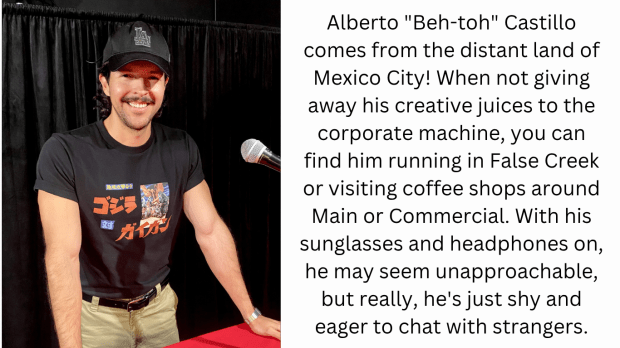
Celebration!: Beto’ Story

SPORTS!

My father was a decorated athlete for a brief period of his life, and like many men his vintage, he wanted his eldest son to be one as well.

That is why, during my early school years, I was arbitrarily enrolled in a new sport at the start of every grade. Each year began with a fresh activity and ended with a full introspective account of the embarrassments I endured and the numerous disappointments I served my father.

The sport of choice for third grade was baseball. Before being enrolled, I had never even touched a bat. My dad, much more excited than I, bought me the full kit: a used mitt, a second-hand bat, and some balls. He then commanded me to join him in the backyard for “practice time.” I suppose I did a decent job; next day my father didn’t feel the need to storm the coach’s office to beg for my removal.

I enrolled late into the season. I know this because that Saturday I set foot on the field—for the first time in my life—I did so without a uniform and with only twenty minutes of prior training with dad. My teammates looked professional. Assigned the New York Yankees uniform, they wore iconic white and navy blue stripes that shone like fresh snow under the morning sun.

I was wearing olive green pants and a gray hoodie.

The coach, a seemingly intuitive man, took one look at me and deduced that I could hardly distinguish between a bat and a mitt, and that I was dying of terror.

“Right field,” he said, pointing to a far corner of the park.

In case you don’t speak “the base-ball”, right field is where the least action happens. Most batters hit right-handed, sending the ball to the left. Balls would only come to me if there was a left-handed batter on the opposing team, or if there was a glitch in the Matrix and the bat hit the ball at the EXACT spot to send it towards my side.

And not to spoil the story for you, but if you’re listening to this, it’s because one of those two fucking things was exactly what happened.

I walked the long trek to practically another country to wait for the two hours of the game to pass without me having to intervene whatsoever. I was there, shifting my body weight between my two legs while my nylon pants made that “FFFT! FFFT!” sound, when I saw the opposing team get into position.

They wore the Tampa Bay Rays uniform. Deep purple shirts with dark gray pants. If our team looked like an elegant albino vixen, they looked like that purple mascot from Mcdonald’s–– menacing, I mean. And the cherry on top of this horror sundae: they were the fourth graders. The bigger, stronger, faster, fourth graders.

The whole scene was too overwhelming for this 8-year-old.

My father? Safe over by the stands, eating some fried pork rinds with Valentina sauce at nine AM. So, perhaps not that safe actually.

For most of the game, I just had to stand on the grass, something I have always been good at. The intense part happened on our turn to bat, when I furtively had to keep telling every kid behind me in line, “Oh, you can go before me,” until our turn was over.

That’s how I passed the time, and I don’t know if it was the mental numbness–because it definitely wasn’t because I was having a great time–but suddenly I realized we were already in the last round. And the Rays were batting.

The mood was tense. As my dad tried to explain on the car ride back home, we were leading by one point. We needed one more “out” to win; a home run for the Rays would mean defeat.

Clearly, all this I semi-understood right up until a couple of minutes ago, when I Googled “How to play baseball” to write this story. On that Saturday in question, I was standing obliviously in my peaceful right field, about 350km from where all the action and excitement was happening, skinny and sun-burnt like a human Slim Jim from all the exposure I was soaking.

Suddenly, a batter with a precocious mustache appeared. This creature went to the plate and hit the ball as if it was the crotch of his absent father.

I watched as the ball rose through the air like a rocket—heading towards me.

I had roughly three seconds to calculate the trajectory of my entire future. My eyes followed the ball like a predator: Velocity, weight, curvature, differential equations, air resistance, and the Coriolis effect. I was teetering on the fine line between glory and total catastrophe.

And finally, when the ball was a few meters above me, I decided to take the best possible strategy: I closed my eyes, stretched out my left arm, and prayed for the best.

THUNK!

The physical and emotional stress of the previous seconds had left me disoriented. My vision was blurry, and in my ears there was silence with a slight, sharp tone.

Gradually, I regained my senses. A steady echo came from my team’s dugout. 

When I finally opened my eyes, I could see blurry white patches running towards me. There was a slight weight shift in my hand, and when I turned to see it, my eyes finally focused: a steaming ball resting inside my mitt.

I didn’t even have half a second to examine it because I was violently rammed by a group of children dressed in white. Then I finally was able to translate the steady echo from a second ago: “BE-TO! BE-TO! BE-TO!” They yelled as they ruffled my hair and patted me on the torso amicably.

I felt on top of the world. I was living in my own Hallmark movie. The game had finished, and my actions had made the team win, my team—The Yankees of the Cristobal Colon Primary School.

Through the chaos, I glimpsed the stands. My dad had gotten up so fast from his seat that his pork rinds were spread all over; he was clapping like never before. Had I been closer, I wouldn’t have been surprised to see a couple of tears running down his face. 

After three years of insatiable searching, we finally found a sport in which I excelled at.

…

Unfortunately, my delusions of grandeur betrayed us. My teammates quickly forgot that game in which I had been the star when, the following Saturday, I failed to catch a ball that caused an opposing team’s home run. Never again in the entire school year did I catch another ball, and much less hit one. After all, baseball wasn’t my thing either.

And my dad? Despite my excellent debut, after a couple of months, opted to just drop me off at the entrance to the baseball park, and pick me up after the game. The following year, when I decided to try basketball, I don’t remember seeing him at any event.

I don’t blame him. It must be painfully uncomfortable to watch your kid constantly suck at sports. Four years into the failed experiment to have an athletic son would defeat even the most willing.

This is not a childhood trauma or a deep scar in our relationship, though. Years later, he was able to find some solace by cheering on my creative endeavours.

Anyway, I was not born for competitive sports. But while those four years of me dipping my toes in them were incredibly anxiety-inducing and humiliating, I now think they are worth it just for the memory of that cold Saturday morning, when for a brief moment in time, my dad and I were able to share the same passion. 

Celebration!: Nicholas’ Story

I celebrate myself, and sing myself,
And what I assume you shall assume,
For every atom belonging to me as good belongs to you
– Walt Whitman, Song of Myself

Note from the Author:
The following is an old piece I submitted to The Globe and Mail around Mother’s Day last year. It’s a letter to my departed Mother, who died in 2010 after a battle with cancer.

***

The thought of losing you was so staggering and overwhelming that, in tears, I proclaimed that I would make you proud of me. Your last words to me, although in truth I seldom think of them, were that you already were.

I was fifteen when you said that to me. And as this year is the fifteenth since your death, it seems appropriate to reflect. I don’t need to ruminate on whether or not you are proud—you have already said so—but rather, I want to reflect on whether or not I am truly proud of myself; and, by extension, if I bathe in the warmth, light, and love that a mother wants for her child.

When I was thirteen, surly like all teenagers, we often butted heads. You felt I was wasting my life away on the internet, and I thought you should back off and leave me alone. Despite changing logins, hiding keyboards, and unplugging modems, I would always find a way back online. You didn’t know that the internet was the only place I felt comfortable expressing myself, and that I found other nerdy teenagers who loved spending time with me. All I wanted to do was hang out with my friends. Just like any other kid.

Of course, as an adult I can expand my perspective and see myself as a confused parent worrying about their child, not understanding what would attract them about spending their entire day in front of a computer, worrying about the long-term damage it could cause. But I also know that I was miserably depressed and anxious even before you left us, and I wish you could’ve trusted me more.

People often say that mothers know their children better than themselves. For me, you knew I was gay before I was willing to admit it. Remember the day you called me a cocksucker while driving me to my shift at the radio station? That didn’t help things. Did you know I would become a man who, despite choosing to live with no regrets, would always wish that he came out to you before you died? That losing you would unlock a torrential floodgate, give me the courage to come out shortly after when I was sixteen? Probably not, but I’m sure you aren’t surprised.

When I turned eighteen, my loneliness was so turbulent, and the loss of you still so raw that it propelled me with a feverish desire to to be independent and become a grown man. I moved from BC to Nova Scotia, spent a summer in Scotland proper; spent nights upon drunken nights away from home, beer-taps flowing, cajoling with strange men I couldn’t understand, finding myself in their arms, trying to find my place in the world.

I eventually found myself where you were born, Toronto, finishing up the eighth year of a hellish undergraduate experience. I was twenty-five, dealing with COVID lockdowns, and my therapist called me out for never acknowledging your passing. She was right, and the solution was clear: I’d do a shot of tequila on the upcoming anniversary of your death. That was what the family did at the first memorial after all. It was a no-brainer.

I then chose to share that tradition with another family—my rugby family. A group of gay men (and their supporters) who gave me structure and community, allowed me the space to channel my emotions, helped me become the man I am today. One day after practice I gathered everyone together, gave them dingy plastic shot glasses, and poured the tequila. Told them that my mother was watching us and would help us win our upcoming tournament, silently promising that I would pull this off somehow.

My team took the shot for you; shut out a team from Perth, Australia in the finals after they said they’d kick our ass; I won forward of the tournament for leading my pack; your warrior’s spirit shone within me; I fulfilled a promise to myself; we achieved this together.

Winning that championship at twenty-seven is my finest accomplishment so far. It was with profound emotion that I moved back to BC shortly after the tournament, a type of bittersweet that comes from knowing you’re making a responsible decision. It was time to stop running away from you and move back home where I belong.

I’m now thirty years old, and it’s funny how the goals for my life are intersecting more with the goals you had for me. I don’t want to spend time online anymore; I want to engage in the offline world with my friends. But above all, I am a damn proud little cocksucker who’s living authentically in an increasingly challenging world.

Mom, I am happy to say that I am proud of myself. I’m a man who’s confident enough to part the clouds with my bare hands, bathe in the warm rays of the sun as it shines upon me, embrace myself in my entirety, and feel the love of the world as I walk on Wreck Beach with my friends, baring everything for all to see, as the world made me.

Jingle Tales: Darren’s Story

Like many, I was in my late teens before I realised I liked men. But those weren’t the first signs, no. For those, we go all the way back to the 80’s! Most of the strongest memories of my childhood come from Christmas as a kid, and that’s where my first obsession with a man started! His name is Santa Claus. 

When I was a kid, my parents had a Christmas Eve tradition of bringing me and my siblings to visit relatives to exchange gifts. First up would be my grandaunt Maggie. She was a sweet woman that we loved dearly, but she was stern and her husband was cranky, so we tended to be on our best behaviour in her house. She usually had some new fancy chocolates for us to eat, and we always knew that she would give us a box of those before we left, so it was worth behaving for that hour.

But then we would visit my grandparents. Their house was small and cosy, walking in to their kitchen just smelled of Christmas. The wood fired range would usually have been burning all day, so there was a feint smell of smoke. This was enhanced by the smell of the ham that would be slowly cooking for dinner the next day, and the Christmas pudding and cake that was waiting for us eat! Not to mention the boxes of biscuits, tins of chocolates, and almost no limit to how much of anything we could have! As we ate, my grandparents would tell us stories about how different Christmas was for my Mam and her family back in the day. I could never fully comprehend how they handled Christmas for 13 people in that tiny four roomed cottage… not four bedrooms, four rooms, total! Of course my parents would enjoy a tipple or two… it was the 80’s… and it really was so happy and joyous, my favourite day of the year so far! That was until we got into the car to go back home and my Christmas fear would kick in. Why you ask? Well, by the time we were leaving my grandparents house, it would be dark and close to our bedtime. My little head would fill with fearful questions. “What if Santa Claus came and we weren’t there? Would he go and not leave us any presents? What if he put us on the naughty list for being out so late?” This wasn’t helped on several occasions by my parents pointing to flashing lights in the sky and saying “look, it’s Santa”! My terrified little body would crouch down into the rear footwells of the car the rest of the way home, totally shaking in fear and praying he wouldn’t see me! As soon as we arrived home, I would make a mad dash for the house, and you have probably never seen a kid get ready for bed as quickly as I did those evenings! For my parents, it was the perfect play.

I never really had anything to worry about, as the next morning after my parents made us lineup down the stairs in order of age (the youngest going first), we would burst into the sitting room. “Look, Santa came”, my Mam would cry every year. It was a moment of pure joy for us, but also legitimate shock that Santa Claus had been in our house! It was scary, happy and exciting all at the same time! Every year it would blow my tiny little mind that this magical person, who held so much power, had been in our house while we were asleep. But that was just the beginning of the excitement, then we had… the presents.

I truly got some great gifts as a kid. Some of my most memorable ones are the year I got my first proper bike. It was a blue and yellow BMX, I still have a photo of five year old me on it! There was the year I got a toy kitchen, and the year I got my first keyboard! It’s pretty embarrassing to reflect on, but the memory of that keyboard is also accompanied by the memory of me refusing to go to bed on Christmas night until after I’d performed for my parents friends that were visiting… and by performing I mean pressing the auto-song button and pretending to play. At the time you could not tell me they were not impressed, the next Elton John… but I’m fairly confident now that they were entertaining me more than I was entertaining them. 

While I was very excited by what I got every year, I always had a close eye on what my sister Alison got! She was the girly girl sister so dolls were always part of her haul. And as great as my gifts were, I was sometimes quite sad that I didn’t just get to play with her dolls… or more specifically, their hair. I alway felt like I could only play with them when no one else was around, and Christmas Day was great for this because she had lots of dolls so it would be easy to sneak an old one away while she was entertained with the new ones! This never really lasted long, she’d usually find out later and get mad at me… especially if I thought that Cindy needed a haircut. That didn’t go as down well as I’d hoped, but I don’t ever remember being reprimanded for playing with dolls and I don’t ever recall my parents not wanting to get me the gifts I asked for… I just was never brave enough to ask for my own doll.

As I grew up, the joy of Christmas changed, it wasn’t gone… it was just different. Throughout my teens, I was more “normal”. I received gifts that were broadly in line with what my friends were getting. Gone were the kitchens and keyboards and in were the PlayStations and CD players. Although I did get Janet Jackson’s Design of a Decade for Christmas in 1995 which I’m sure was a sign of things to come, however I was 22 before I asked for something which was truly meaningful again.

This isn’t meant to be a story about me coming out, but just before I told my parents I was gay, I remember thinking to myself “They’ve got to know right? What about all the gifts they got me as a kid? They weren’t typical boys toys. All the times I played with my sisters toys or “borrowed” her boyband cd’s. Surely they have an idea, right?”. They didn’t, and me being gay came as quite a shock to them… which came as quite a shock to me. 

During one of our conversations in the days after, they asked if I had a boyfriend. I did, so I told them about him and how great he was, but they were angry and my Mum said that he would never be allowed into the house. At the time this was very upsetting, and it was actually a big part of why I moved out of home shortly after. I wanted to live with my boyfriend and be with him all the time. He was perfect, and better than any gift.

Over the next couple of weeks with some distance between us, my parents began to accept me for me and the healing began. So when Christmas came close and my Mam asked me what I wanted as a gift that year, I knew there was only one thing that was on my list. I wanted them to meet Alan for the first time over Christmas. It was the only thing I asked for that year. At first my parents were tentative, but we were in better place so they eventually agreed. A few weeks later, on Boxing Day in 2005, two extremely nervous boys walked into that house together as a couple for the first time. And it was great, perfect even. My Dad was, and always will be a tough nut to crack but he knew Alan was important to me, so he shook his hand and made awkward small talk for about five minutes before retiring to the sitting room (this was good) and once my Mam discovered that Alan loved to drink wine, he was like a second son to her.

Over twenty years later, we still celebrate Christmas as an expanded family every year. It looks a lot different now, but we still make an effort to exchange gifts and keep alive some of the traditions that have meant a lot to me and my family since a very young age. I often think about the dolls I used to sneak away and play with, how I would sit there brushing their hair until I was found… I never did get a doll of my own with plastic hair to brush, unless you count my husband’s one attempt at drag as Lady Anal – that came pretty close.

Jingle Tales: Sarah’s Story

My story starts, as all good Christmas stories do, with a divorce.

Specifically, the divorce of my parents, who split up when I was six when my mom fell in love with another woman. In 1982 small-town Ontario this was a bit of a scandal, and when the homophobia proved to be too much, Mom moved to Toronto to be with her new girlfriend.

My brother and I would hop on the greyhound bus every other weekend to visit her, swapping our big house for her tiny co-op apartment in the city. I loved taking the subway, going to art exhibits, visiting the big library with books I’d never find at home. We were introduced to interesting new things like the lesbian softball league, Take Back the Night marches, and drag shows.

Mom was a vibrant, passionate woman who threw herself into this new life. I hated leaving her at the end of the weekend, and I hated that at home her gayness was still largely a secret.

Under her charismatic exterior mom was also insecure, and sometimes sad. Her new relationship was chaotic, with undercurrents and breakups I didn’t understand. As a kid, I watched helplessly as her moods rose and fell.

My story takes place during one of these break-ups, and it’s low. I was about eight, that my brother and I went to Toronto to spend the holidays with Mom. It was her first Christmas without a partner in years. In our family, Christmas had always been a bustling, cheerful affair, with turkey dinner, grandparents, cousins, the fancy silverware, tablecloths.

But that year, mom surprised us by announcing we’d be going out to a restaurant for dinner on Christmas day, just the three of us. She wanted us to be excited, but I felt disappointed that we weren’t doing our regular things.

Maybe she was trying to make new traditions, or maybe she didn’t have the energy to cook a holiday meal. I don’t know, but whatever the reason, there we were on that brutally cold Christmas day, bundling up to walk to the restaurant she’d chosen. I remember zipping our coats up to our noses and pulling our toques down almost over our eyes for the walk over.

The streets were empty – I imagined everyone else gathered around big tables with big, happy families. As the snow crunched under our feet, I missed home, my dad, my dog, the feeling of being part of something bigger. This didn’t feel like Christmas.  

Once I saw the restaurant she’d chosen, I was even more disappointed. It was a stark, low budget kind of place with metal tables and fluorescent lights. A chalkboard outside said Turkey Dinner in a messy scrawl. Inside, several sad-looking people ate alone. The smell of grease hung thick in the air. Even the Christmas music playing through the tinny speakers didn’t make it feel festive.

I nudged my brother and pointed to one of the diners – a large man with a big round belly and a long white beard, though it was kind of yellowed and dirty. He wore a thick, moth-eaten blue sweater.  “It’s Santa,” I whispered jokingly. My brother rolled his eyes. The waitress brought the guy another beer and a plate of fries. His weathered hands shook as he ate.

No question, this place was depressing. 

Still, I knew that my mom was trying to make Christmas special, and I wanted her to be happy. She said we could order whatever we wanted, which was unheard of – mom was always on a budget.

The waitress came by – an older woman with a greying ponytail. “What a special night!” she said.

We were trying.

I ordered a milkshake, then wondered if I shouldn’t have because of the cost. I built towers out of the little jam and peanut butter packets that were still on the table from breakfast.

Mom put on a smile, but behind it, she looked tired. I kept talking, telling her everything I could think of about school and my friends. My brother was quiet as usual, looking like he’d rather be anywhere else.

Mom lit a cigarette and smoked while we waited for the food to come. She kept opening the menu – I could see her scanning the prices, doing the math in her head.  

We drank our milkshakes, then ate our dry turkey with lumpy mashed potatoes.

Mom asked if we wanted dessert, but we both said no, not wanting to stress her out any more.

The bell over the door jingled, and I looked up to see Santa leaving, pulling his ratty plaid jacket on as he went out into the cold.

Not even Santa wants to have Christmas here, I thought.

Finally, after what felt like the longest meal of my life, mom pulled out her wallet and motioned for the check.

The waitress came over to our table and smiled. “Don’t worry,” she said. “It’s been taken care of.”

Mom blinked “What?”  

The server pointed to where Santa had just been sitting. “That gentleman asked if he could buy you dinner.”

Mom blinked again, tears in her eyes, still unsure of what was happening.

The server patted her hand, said “Merry Christmas hon. There’s pie on the way.”

The smile that slowly filled mom’s face brightened to a thousand watts. And with that we had her back, laughing as we devoured our pie with whipped cream.

We left the diner giddy, talking over each other about how we’d seen the real Santa that night. It was still cold, but now I noticed the holiday lights twinkling from people’s apartment balconies.

We may not have had tablecloths, or extended family, or fancy silverware, but Santa bought us dinner!

I’ve returned to the memory of that night so many times over the years. It’s like I’m looking in through the diner’s fogged-up window to see two sad blonde kids with messy hair and a mom in a thrifted red sweatshirt trying her best to make Christmas merry. And a guy with a white beard – and probably not a lot of money himself – who sees them.  

This story is a love letter to that man and his unexpected kindness.  

But it’s also a love letter to parents going through hard times.

See I feel a kinship with my mom, with who she was back then, now that I’ve spent quite a few Christmases on my own, trying to conjure magic for my kids, sometimes when I was barely holding on myself. I’ve watched my kids negotiate lost traditions and adjust to new normals. And honestly it’s been hard at times.

I wish I could tell that young version of my mom, she’s doing a great job. That it’s okay to be sad at Christmas. I wish I could tell her thank you for taking us to a restaurant, even if it’s not what I wanted at the time. Thank you for trying something new. And thank you for being brave enough to follow your heart, for falling in love and coming out, even though it wasn’t all sunshine and rainbows.  

You gave me the courage to do the same.

 I want to tell her it all works out in the end – her queer daughter will grow up knowing the beauty of chosen family and evolving traditions.

That her daughter will be grateful for that night, and how it reminded her to believe in miracles.