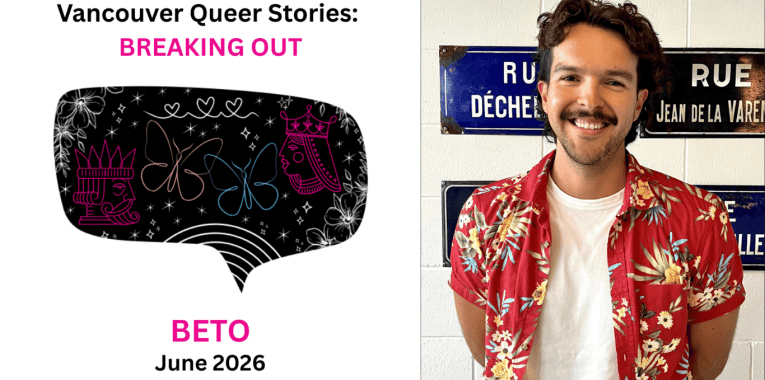
Celebration!: Beto’ Story

SPORTS!

My father was a decorated athlete for a brief period of his life, and like many men his vintage, he wanted his eldest son to be one as well.

That is why, during my early school years, I was arbitrarily enrolled in a new sport at the start of every grade. Each year began with a fresh activity and ended with a full introspective account of the embarrassments I endured and the numerous disappointments I served my father.

The sport of choice for third grade was baseball. Before being enrolled, I had never even touched a bat. My dad, much more excited than I, bought me the full kit: a used mitt, a second-hand bat, and some balls. He then commanded me to join him in the backyard for “practice time.” I suppose I did a decent job; next day my father didn’t feel the need to storm the coach’s office to beg for my removal.

I enrolled late into the season. I know this because that Saturday I set foot on the field—for the first time in my life—I did so without a uniform and with only twenty minutes of prior training with dad. My teammates looked professional. Assigned the New York Yankees uniform, they wore iconic white and navy blue stripes that shone like fresh snow under the morning sun.

I was wearing olive green pants and a gray hoodie.

The coach, a seemingly intuitive man, took one look at me and deduced that I could hardly distinguish between a bat and a mitt, and that I was dying of terror.

“Right field,” he said, pointing to a far corner of the park.

In case you don’t speak “the base-ball”, right field is where the least action happens. Most batters hit right-handed, sending the ball to the left. Balls would only come to me if there was a left-handed batter on the opposing team, or if there was a glitch in the Matrix and the bat hit the ball at the EXACT spot to send it towards my side.

And not to spoil the story for you, but if you’re listening to this, it’s because one of those two fucking things was exactly what happened.

I walked the long trek to practically another country to wait for the two hours of the game to pass without me having to intervene whatsoever. I was there, shifting my body weight between my two legs while my nylon pants made that “FFFT! FFFT!” sound, when I saw the opposing team get into position.

They wore the Tampa Bay Rays uniform. Deep purple shirts with dark gray pants. If our team looked like an elegant albino vixen, they looked like that purple mascot from Mcdonald’s–– menacing, I mean. And the cherry on top of this horror sundae: they were the fourth graders. The bigger, stronger, faster, fourth graders.

The whole scene was too overwhelming for this 8-year-old.

My father? Safe over by the stands, eating some fried pork rinds with Valentina sauce at nine AM. So, perhaps not that safe actually.

For most of the game, I just had to stand on the grass, something I have always been good at. The intense part happened on our turn to bat, when I furtively had to keep telling every kid behind me in line, “Oh, you can go before me,” until our turn was over.

That’s how I passed the time, and I don’t know if it was the mental numbness–because it definitely wasn’t because I was having a great time–but suddenly I realized we were already in the last round. And the Rays were batting.

The mood was tense. As my dad tried to explain on the car ride back home, we were leading by one point. We needed one more “out” to win; a home run for the Rays would mean defeat.

Clearly, all this I semi-understood right up until a couple of minutes ago, when I Googled “How to play baseball” to write this story. On that Saturday in question, I was standing obliviously in my peaceful right field, about 350km from where all the action and excitement was happening, skinny and sun-burnt like a human Slim Jim from all the exposure I was soaking.

Suddenly, a batter with a precocious mustache appeared. This creature went to the plate and hit the ball as if it was the crotch of his absent father.

I watched as the ball rose through the air like a rocket—heading towards me.

I had roughly three seconds to calculate the trajectory of my entire future. My eyes followed the ball like a predator: Velocity, weight, curvature, differential equations, air resistance, and the Coriolis effect. I was teetering on the fine line between glory and total catastrophe.

And finally, when the ball was a few meters above me, I decided to take the best possible strategy: I closed my eyes, stretched out my left arm, and prayed for the best.

THUNK!

The physical and emotional stress of the previous seconds had left me disoriented. My vision was blurry, and in my ears there was silence with a slight, sharp tone.

Gradually, I regained my senses. A steady echo came from my team’s dugout. 

When I finally opened my eyes, I could see blurry white patches running towards me. There was a slight weight shift in my hand, and when I turned to see it, my eyes finally focused: a steaming ball resting inside my mitt.

I didn’t even have half a second to examine it because I was violently rammed by a group of children dressed in white. Then I finally was able to translate the steady echo from a second ago: “BE-TO! BE-TO! BE-TO!” They yelled as they ruffled my hair and patted me on the torso amicably.

I felt on top of the world. I was living in my own Hallmark movie. The game had finished, and my actions had made the team win, my team—The Yankees of the Cristobal Colon Primary School.

Through the chaos, I glimpsed the stands. My dad had gotten up so fast from his seat that his pork rinds were spread all over; he was clapping like never before. Had I been closer, I wouldn’t have been surprised to see a couple of tears running down his face. 

After three years of insatiable searching, we finally found a sport in which I excelled at.

Unfortunately, my delusions of grandeur betrayed us. My teammates quickly forgot that game in which I had been the star when, the following Saturday, I failed to catch a ball that caused an opposing team’s home run. Never again in the entire school year did I catch another ball, and much less hit one. After all, baseball wasn’t my thing either.

And my dad? Despite my excellent debut, after a couple of months, opted to just drop me off at the entrance to the baseball park, and pick me up after the game. The following year, when I decided to try basketball, I don’t remember seeing him at any event.

I don’t blame him. It must be painfully uncomfortable to watch your kid constantly suck at sports. Four years into the failed experiment to have an athletic son would defeat even the most willing.

This is not a childhood trauma or a deep scar in our relationship, though. Years later, he was able to find some solace by cheering on my creative endeavours.

Anyway, I was not born for competitive sports. But while those four years of me dipping my toes in them were incredibly anxiety-inducing and humiliating, I now think they are worth it just for the memory of that cold Saturday morning, when for a brief moment in time, my dad and I were able to share the same passion. 

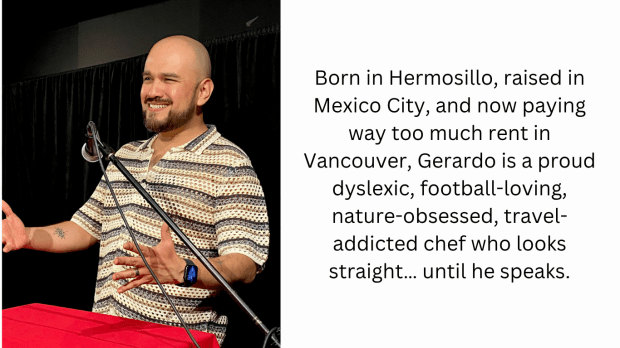
Pride!: Gerardo’s Story

I was 15
when I came out of the closet…
and ended up on the street.

No applause.
No rainbow confetti.
No RuPaul track playing in the background like a fabulous gay fairy tale.

Just me,
a garbage bag of clothes,
a slammed door,
and a silence that hummed like heartbreak.

That was my welcome to being gay.

I was raised Catholic.
Not “Christmas and Easter” Catholic,
I mean full-blown confess-your-thoughts-about-Ricky-Martin Catholic.
Church every Sunday.
Rosaries.
Guilt… lots of it.

They told me to love God…
but not like men.

So I prayed. Hard.
To be “normal.”
To wake up with a sudden interest in boobs and dirt bikes.

I prayed so much,
I could do the Hail Mary in under 10 seconds,
blindfolded, while crying, and brushing my teeth.

But when I finally said the words,
“I’m gay,”
those prayers didn’t soften anything.

No angels showed up.
Only a mother with heartbreak in her eyes
and a “pack your things” on her lips.So I did.

Here’s the twist though:
I used to play football.
Yeah… cleats, tackles, full-on jock life.
And so did my first boyfriend.

We were teammates…
and then roommates.
And then, well,
boyfriends with shared trauma and a twin mattress.

When both our parents kicked us out,
we moved in together.
Two 15-year-old boys,
figuring out rent, ramen,
and how to hide tears in public bathrooms.

I lied about where we were living.
Said I was “staying with friends.”
Showed up to school like everything was fine.
Even when I was starving.
Even when everything hurt.

And that…
was my first taste of Pride.

Not the parade.
Not the glitter.
Not the glam.
But the quiet, stubborn kind.
The “I’m still here” kind.
The “watch me survive” kind.

In school, I got bullied.
They whispered “faggot” like it was a spell meant to vanish me.
And for a while… I did disappear.
Into myself.

Until one day,
I cracked. I got loud.
Got mean.
Got funny.
And accidentally became… a bully.

Because if I made you the punchline,
then I couldn’t be one.

And honestly?
Therapist says: iconic trauma, villain era.

But broken kids wear armour however they can.

In my 20s, I was a mess with Internet.
(Yeah, that one with the horrible phone sound.)
Terrible jobs…
Worse taste in men…
A strict diet of frozen pizza, mezcal shots, and red flags.

But I kept going.
Finished two degrees.
Opened my own little restaurant.
Not Michelin-starred…
but hey, the health inspector only gave us one warning. (Just kidding. Kind of.)

Safe.
Stable.
Mine.

Then one day…
a message.

From her.
My mom.

“I miss you. Can we talk?”

So we did.
We cried.
We screamed (in Spanish… very healing).
We listened.

She apologized.
I told her I was still hurt.
But we tried.

Slowly,
we learned each other again.
Found love in the wreckage.

And now?
Now I’ve got something 15-year-old me never dreamed of…
I’m married.
To a man who makes me laugh,
makes me coffee,
and makes me feel safe in a way I didn’t know men could.

And yes…
my mother walked me down the aisle.
She cried.
I cried.
Even the DJ cried.
(It was Madonna’s “Like a Virgin…” who doesn’t cry at that?)

So yeah,
I’m proud.

Proud of the pain I survived.
Proud of the boy who didn’t disappear.
Proud of the man I became…
with jokes, scars, and a hell of a lot of glitter.

Pride isn’t just a parade.
It’s not just drag and disco (although… bless those queens).
It’s surviving.
It’s forgiving.
It’s calling your mom after coming out…
and knowing she’ll answer.

It’s saying,
“This is who I am,”
and not flinching anymore.

I used to kneel in church,
begging God to fix me.

Now I stand up tall,
husband by my side,
knowing there was never anything broken to begin with.

And bro…
no slammed door,
no whispered slur,
no prayer for “normal,”
will ever make me doubt my pride again.

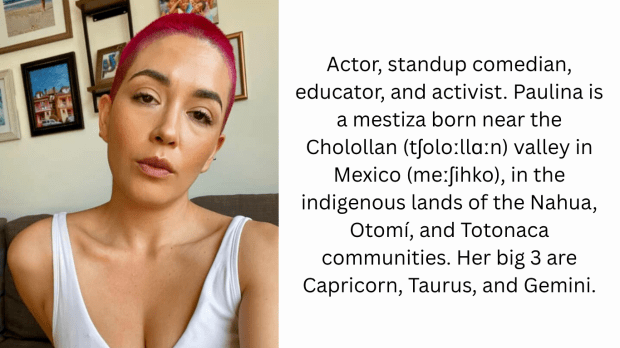
Around the World: Paulina’s Story

Mis raíces son de aquí y de allá.
My roots are from here and there.
But not literally here. By “here,” I mean Mexico—that’s where my “here” stayed.

Me and my family come from a long line of immigrants who arrived from northern Spain and Italy, eventually mixing with Indigenous people and mestizxs in Mexico. And no, I didn’t spit into a tube for Google to find this out.
I know, because where I come from, that kind of knowledge is passed down, close to the heart. Being of European descent still carries a kind of social value—less weight, more pride—even if it was five or seven generations ago.

Having that said, my gay genes are from all over the world!!
I only dare say genes because science hasn’t settled on it—it’s a mix of hormonal, genetic, and environmental factors. And I plan to tell my family that. So they can start taking responsibility for some of the emotional baggage they’ve passed down.

Yes, I’m from Mexico—from a city surrounded by three volcanoes.
Since I was little, my horizon has always been populated. It was hard to pick a favourite volcano, so I just decided to love them all. Which… maybe explains a lot.
I’m pansexual. And my volcano city was named Puebla by colonizers. Puebla doesn’t mean anything, but it sounds close to Pueblo—”town” in Spanish—just sapphic.

The city is colourful, artsy, painfully colonial. The population is mixed—Indigenous communities that still hold on to language and tradition, and whitexicans who think they’re more European than they actually are. There’s pride in food (rightfully so—don’t @ me!), but the snobbery doesn’t come from that. It comes from whiteness and class.
And even though we are all mixed, with Asian, Indigenous, European, black, over and over again, mestizaje didn’t mean equality. Now, Indigenous communities are a little better preserved, but that’s only because they have been pushed out to the peripheries—margins of the capital city.
In Puebla, waves of immigrants were welcomed: Lebanese people escaping the Ottoman Empire, Spaniards fleeing civil war, Germans leaving post-Nazi trauma behind. These communities were—and still are—respected, owning businesses, having their own schools, social clubs, factories. And indeed, in private schools in Puebla, you’re  taught German, English, and French.
But not Nahuatl. Not Otomí.

Close to my hometown is a valley called Cholollan—renamed Cholula. Please, add it to your bucket list. This city was once a spiritual hub for many Indigenous communities, all praising different deities, but gathered in the same land.
Not only pan, but poly.
The first time I lived alone was in Cholula. Mi Cholu. Colourful, bike town, full of markets and fields of flowers, maiz, and so many fireworks, like crazy, every single day there’s a saint’s celebration. Because colonialism ensured Catholicism wasn’t just adopted in Mexico — it was absorbed, so now there aren’t temples — called calpullis—  for different deities; now they are churches.
Puebla and Cholula are only 20 minutes apart: the whitewashed “we’re still European” city, and the cempasúchil lands that bloom every September.

I never really felt the need to come out to my family. I’d already come out as “the artist,” the cycle-breaker, the one who says no más to abuse and misogyny.
And as JuanGa said—and if you don’t know who Juan Gabriel is, how are you even here? Juan Gabriel was our Mexican Elton John, but gayer and way more legendary. He, maybe they, said “What is obvious doesn’t need to be asked” 

I don’t know if I had any queer relatives, I never saw anyone in my family that could have been.
What I did see were women who got shit done and men who “worked all day” but had mini-golf in their offices and collectible toys in their meeting rooms.
The women had strong hands that braided my hair so tightly it would probably qualify as child abuse today. But then they’d hand me a tortilla con aguacate y sal before dinner, and my favourite agua fresca—papaya…
Maybe they knew I was queer before I did.

But don’t get me wrong—I’ve known for a while. I just did gay stuff before I said I was gay. Like kissing my girlfriends at parties (with consent, always). I also shared my first orgasm with a girl.
It’s funny how we think we have “first times,” and then someone reminds us: “Didn’t that happen… back in the day?”
I thought my first time having sex was with my middle school boyfriend—he told everyone. I didn’t even come. Double asshole.
Later in life, I wanted to leave Mexico, but my Saturn return aligned with the pandemic, and I ended up living in San Francisco. There one day, I was with friends and playing Never Have I Ever, and someone said, “Never had sex with a woman.”
I didn’t put a finger down. But a friend said, “Wait—you told me a story from when you were 13.”
And I said, “We didn’t have sex. We just touched each other… and came.”
(Everyone laughed. I didn’t.)
It took my poly, demi, pan, ADD, PTSD brain a hot minute, but I finally connected the dots… My first time had been with a girl. YAY!!!!!!

By 28, I started calling myself bi. I didn’t need to come out dramatically. I just accepted it, named it, and started dating a woman.
We met on an app—because, of course. It was late 2020. She was beautiful—blue eyes, ballerina body, smile that could heal your inner child. It was sweet and short. I had to return to the U.S. We still orbit each other’s socials. A win.
Especially since my relationships with men tend to end with full drama:
The “never speak to me again” kind… or worse.

In 2021, I finally moved to Vancouver.
Why did I leave Mexico in the first place? Because I was afraid. Afraid to walk free. To wear something tight. To show my breasts.
I had experienced too much violence. Misogyny lived too comfortably in my home, in the media, in our streets. So I leapt. I trusted myself—and my craft as an artist.
Living outside of Mexico gave me perspective.
In Mexico, I’m not considered a person of colour. I had white privilege—despite my mom calling me the N-word for being “the darkest one.”
But here? I’m not white. I’m brown. More than anyone in my family would ever admit. And I embrace it.

I have an accent. YES.
I wear colours. YES.
I cook amazingly. I dance badly. I sing, not so bad.
I’m loud. My eyebrows speak before I do.

At a staff party for an immersive theatre company I worked at, I realized I was the only non-Canadian, non-white person there. We were drinking, joking, talking about patriarchy (as you do). Then this guy—let’s call him Hunter, because that’s his name—says: “You’re not like the other girls. You’ve got Big Dick Energy.”
I was like… “WHAT?”
And the guys were nodding. “Yeah, like you’re confident, you speak your mind…” One added, “All the women at work are into you. It’s like they see the big dick.”
Then someone else chimed in: “Or maybe… they’re into her because she doesn’t have a dick at all—but treats them as if she did.”
I didn’t know what to do with that info. Still don’t.
But I did find out later, at a New Year’s party, that they weren’t wrong. I made a move on one of the women—she said yes… until she didn’t. She ghosted me when I got COVID. Then asked me out again. So… not a total loss. Not a total win, either.

As I’ve grown, I’ve realized I don’t just love femme femmes or masc boys.
I love people across the spectrum. Masc femmes, femme boys. I love trans folks. I love queers. I love sapphics. I love love—as long as they’re not assholes or racist.
And the biggest victory, I love me. All my spectrum. All my mixed, from all around, magical self.
Even my lows. ‘Cause nobody gets depressed like I do. And most certainly nobody binges peanut butter at midnight like I do. And if someone does, I hope we can be friends.

My hope here is that younger people out there get to see more of us queers. Because we are not going anywhere, and they don’t have to wait 28 years to name themselves.
You don’t need to come out perfectly formed.
Just come out… as you.