Celebration!: JJ’ Story

“Please report the video. I hate that your faces are on there with no consent. Getting everyone to report it.”

It’s 2023 and I’m at a bar on a first date. He’s in the bathroom when I get the text from my work wife; it’s accompanied by a Twitter link, posted by an account I’ve never heard of, Libs of TikTok, with the caption: “Elementary school in Vancouver held a pride parade today. Homeschool your kids!”

Even before playing the video, I recognize myself in the thumbnail. 

The video starts with me walking by shouting “Happy Pride!” followed by my students and several parents, waving, cheering. A few more clips of students walking by, smiling, waving rainbow flags, before it ends.

My date sits back down, and I show him the video, and proceed to chuckle about some of the comments. 

“Give me an S, Give me an I, Give me an N, SIN!”

“Those boys look “sissified” to me”

“It’s a free for all, next is orgy day”

And my personal favourite, the one that, to this day, I still lowkey want to get tattooed on my body: “Homeschool > homoschool”

Already the video has hundreds of thousands of views. I want to keep reading the comments, but don’t want to be that guy, so I put my phone away, and break the tension with a quip.

“How does it feel, knowing you’re on a date with a queer icon?”

The next day our staffroom is buzzin’. Coworkers tell me they’ve reported the video, my principal checks in to see if I’m okay. The video quickly balloons to 1.4 million views. In the comments, someone posted a screenshot of me from the video, wearing a rainbow cape and shiny cowboy hat, with the caption “Found the groomer!”

Another person comments on my picture, “He’s just a flat-out molester. He doesn’t even bother with grooming.”

My friend at the union reaches out, says there’s a lawyer on staff if I’m interested in trying to have the video taken down. We all report it, but all that does is hide the video on our accounts.

Repeatedly, I say I’m okay. That we’re celebrating Pride for the kids who don’t know they’re queer, or don’t feel comfortable being open about it yet, and if it makes things easier for even one of them, then it’s worth it. 

But writing this story and revisiting that video in 2026—thankfully stalled at paltry 1.7 million views—my whole body still burns.

I scour the video’s comments section for the funniest pull quotes, trying to discern what’s awful in the entertaining-let-me-read-this-out-loud-to-strangers way and what’s awful in the oh-boy-I’ll-probably-have-to-talk-about-this-in-therapy way. The margin between them is narrower than you think.

I was bullied and called gay before I even knew what that word meant, but I knew that I was supposed to vehemently deny being it.

In sixth grade, I received a friend request online from the email account “jjisgay99@hotmail.com,” one of those memories that’s hilarious now, but at the time, felt like someone had ripped the uvula from the back of my throat.

I’d stay in the closet for almost two decades longer, dating women, participating in casual misogyny. Talking about which actresses I thought were “hot,” but really, I probably just thought they had a nice smile. 

It wasn’t until 2020, when, after having my first session of therapy, I knew I was ready to start living authentically. The next day, my 30th birthday, I came out to the majority of my close friends at a socially-distanced pie-themed hang in the park, scrawling “I’M GAY” on the inside of a pie box—the pie was peach-cardamom, obviously.

The atmosphere was one of compounding disasters: sitting on blankets six-feet apart, unknowingly about to embark on the second wave of the pandemic. The sky was muggy and thick with forest fire smoke and a recent looper moth infestation surrounded us with thousands of fluttering bugs.

It was one of the best days of my life. 

After coming out during lockdown, I struggled with how to relate to the queer community I suddenly found myself identifying with: my main connections being gay meme accounts on Instagram and a parade of COVID-safe dates that always ended back at my apartment. Dr. Bonnie Henry would certainly agree our activities involved a curve, though none flattened.

One first date, after a guy spent most of the night talking about how much he wanted a boyfriend, we ended back at my apartment, carnally making out on the couch, before he climbed on top of me, squeezed my cheeks together, and hawk-tuahed a single oblong strand of saliva slowly into my mouth. “Sir, we are in a pandemic here, you can’t just spit in people’s mouths, especially without asking first.” We still had sex, of course.

Fucking this rogues’ gallery of strangers felt necessary at the time. Fleeting connections to the gay community, sharing coming-out-stories with cum still leaking out. Hearing about Internet chatrooms and early cruising. I was a cultural anthropologist, absorbing every detail and mentally cataloguing to better understand where I fit.

Later that school year, I was recruited to help organize my school’s first-ever Pride celebration. Starved from no parties in almost 15 months, I brought a finely-curated selection from my personal tickletrunk for my kindergartens. Flamingo sunglasses, a taco hat, sequined fans, an inflatable telephone.

Suddenly, at 30-years-old, I was marching in my first Pride parade.

For the past six years I’ve helped organize and grow school Pride celebrations, each with their own lil’ moments. After our neighbourhood parade in 2024, we headed to the school’s backfield and performed a flashmob to families, all to the song “Born This Way.”

When I’d talked to my kindergartens about what other Pride celebrations involved, my students globbed onto the idea that people sometimes dress up, and asked if they could wear costumes—which is why, in videos of that flashmob, you can see Disney princesses and superheroes dancing to Lady Gaga.

I want these to be the stories I share about school Pride, but it’s important to know it’s not all rainbows and five-year-old Captain America dancing to Gaga. 

Like when kindergartens from my class are noticeably absent the day of the parade, because their family “doesn’t celebrate Pride.”

A parent’s venomous email to a colleague, calling everyone at the school pedofiles; the same parent who, later that month, smiled and cooed to me about how she hoped her son would be in my class next year.

The idea that schools are somehow brainwashing youths by showing support and normalizing words like “bisexual” and “trans.” 

“I’ve been teaching for decades, and I can barely teach these kids math. And I’m a math specialist!” a colleague shared with me, exasperated. “They think I can somehow influence these kids enough to change their whole ideology or gender?!”

Knowing teachers who’ve been doxxed, received death threats—putting themselves at risk while trying to make things safer for queer youth.

There’s decadent irony that, in tandem with writing this story, I’m helping organize this year’s Pride at my school. 

We’re going bigger, bolder, louder. A coworker designed a Pride 2026 logo with our school’s mascot, and managed to get custom stickers donated. We’re inviting neighbouring schools. We have a whole spirit week planned, a dance party, a photobooth. We’re getting T-shirts made as a fundraiser. I get giddy thinking about how amazing this year will be. Usually that excitement drowns out all the what-ifs. 

I’ve been working on a handout, highlighting statistics about queer youth, for families to help understand the importance of Pride. Pulling from Statistics Canada empirical gut-punches like how queer youth are twice as likely to describe their mental health as being poor; they’re more likely to be targeted for bullying, experience homelessness, and twice as likely to consider suicide; how trans and non-binary youth are twice as likely to experience cyberbullying.

I triple-check my sources with a diligence I wouldn’t have dreamed of during my English undergrad, knowing these stats will be scrutinized with the vigor that only a bored, privileged suburban parent can muster. 

I hate having to take the more thoughtful high road. Having our “We want every kid to feel safe being who they are” met with “You’re all pedofiles,” coming from zealots whose churches, businesses, and governments knowingly protect actual predators. But I digress.  

Progress can sometimes feel small.

The odd joy of when reading a book to my class, a student refers to someone as “gay,” and my body seizes up like they’re using a slur, when in fact, the book has a family with two dads. Gay as a descriptor, not an allegation.

It took until my mid-30s before I saw being gay as a gift. A hard-won title after a lifetime of being teased for liking things I didn’t even know I liked yet; the finally-satiated hunger of someone who spent years eating what they weren’t craving. Let’s hope the next generation gets to feel this lucky some day.

And if you need to contact me or have any questions about this story, you can always reach me at jjisgay99@hotmail.com.

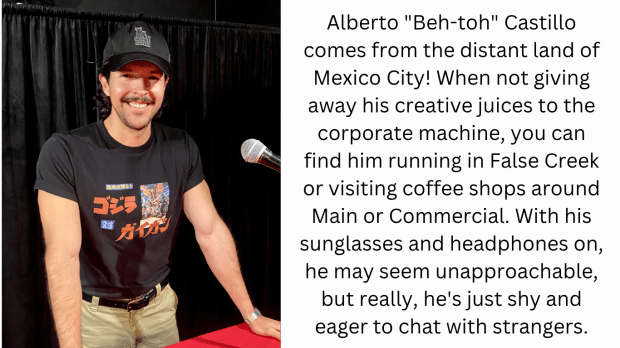
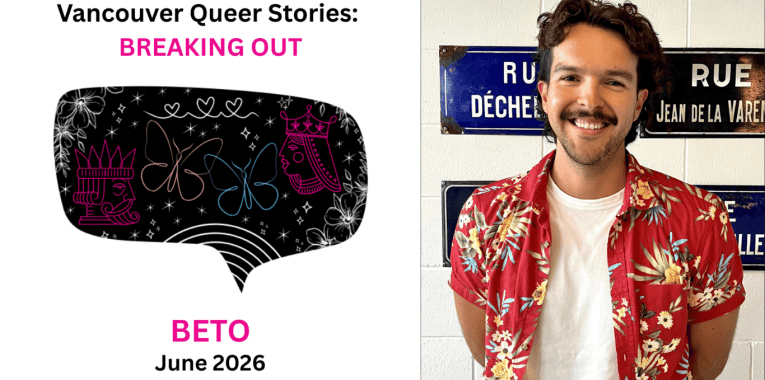
Celebration!: Beto’ Story

SPORTS!

My father was a decorated athlete for a brief period of his life, and like many men his vintage, he wanted his eldest son to be one as well.

That is why, during my early school years, I was arbitrarily enrolled in a new sport at the start of every grade. Each year began with a fresh activity and ended with a full introspective account of the embarrassments I endured and the numerous disappointments I served my father.

The sport of choice for third grade was baseball. Before being enrolled, I had never even touched a bat. My dad, much more excited than I, bought me the full kit: a used mitt, a second-hand bat, and some balls. He then commanded me to join him in the backyard for “practice time.” I suppose I did a decent job; next day my father didn’t feel the need to storm the coach’s office to beg for my removal.

I enrolled late into the season. I know this because that Saturday I set foot on the field—for the first time in my life—I did so without a uniform and with only twenty minutes of prior training with dad. My teammates looked professional. Assigned the New York Yankees uniform, they wore iconic white and navy blue stripes that shone like fresh snow under the morning sun.

I was wearing olive green pants and a gray hoodie.

The coach, a seemingly intuitive man, took one look at me and deduced that I could hardly distinguish between a bat and a mitt, and that I was dying of terror.

“Right field,” he said, pointing to a far corner of the park.

In case you don’t speak “the base-ball”, right field is where the least action happens. Most batters hit right-handed, sending the ball to the left. Balls would only come to me if there was a left-handed batter on the opposing team, or if there was a glitch in the Matrix and the bat hit the ball at the EXACT spot to send it towards my side.

And not to spoil the story for you, but if you’re listening to this, it’s because one of those two fucking things was exactly what happened.

I walked the long trek to practically another country to wait for the two hours of the game to pass without me having to intervene whatsoever. I was there, shifting my body weight between my two legs while my nylon pants made that “FFFT! FFFT!” sound, when I saw the opposing team get into position.

They wore the Tampa Bay Rays uniform. Deep purple shirts with dark gray pants. If our team looked like an elegant albino vixen, they looked like that purple mascot from Mcdonald’s–– menacing, I mean. And the cherry on top of this horror sundae: they were the fourth graders. The bigger, stronger, faster, fourth graders.

The whole scene was too overwhelming for this 8-year-old.

My father? Safe over by the stands, eating some fried pork rinds with Valentina sauce at nine AM. So, perhaps not that safe actually.

For most of the game, I just had to stand on the grass, something I have always been good at. The intense part happened on our turn to bat, when I furtively had to keep telling every kid behind me in line, “Oh, you can go before me,” until our turn was over.

That’s how I passed the time, and I don’t know if it was the mental numbness–because it definitely wasn’t because I was having a great time–but suddenly I realized we were already in the last round. And the Rays were batting.

The mood was tense. As my dad tried to explain on the car ride back home, we were leading by one point. We needed one more “out” to win; a home run for the Rays would mean defeat.

Clearly, all this I semi-understood right up until a couple of minutes ago, when I Googled “How to play baseball” to write this story. On that Saturday in question, I was standing obliviously in my peaceful right field, about 350km from where all the action and excitement was happening, skinny and sun-burnt like a human Slim Jim from all the exposure I was soaking.

Suddenly, a batter with a precocious mustache appeared. This creature went to the plate and hit the ball as if it was the crotch of his absent father.

I watched as the ball rose through the air like a rocket—heading towards me.

I had roughly three seconds to calculate the trajectory of my entire future. My eyes followed the ball like a predator: Velocity, weight, curvature, differential equations, air resistance, and the Coriolis effect. I was teetering on the fine line between glory and total catastrophe.

And finally, when the ball was a few meters above me, I decided to take the best possible strategy: I closed my eyes, stretched out my left arm, and prayed for the best.

THUNK!

The physical and emotional stress of the previous seconds had left me disoriented. My vision was blurry, and in my ears there was silence with a slight, sharp tone.

Gradually, I regained my senses. A steady echo came from my team’s dugout. 

When I finally opened my eyes, I could see blurry white patches running towards me. There was a slight weight shift in my hand, and when I turned to see it, my eyes finally focused: a steaming ball resting inside my mitt.

I didn’t even have half a second to examine it because I was violently rammed by a group of children dressed in white. Then I finally was able to translate the steady echo from a second ago: “BE-TO! BE-TO! BE-TO!” They yelled as they ruffled my hair and patted me on the torso amicably.

I felt on top of the world. I was living in my own Hallmark movie. The game had finished, and my actions had made the team win, my team—The Yankees of the Cristobal Colon Primary School.

Through the chaos, I glimpsed the stands. My dad had gotten up so fast from his seat that his pork rinds were spread all over; he was clapping like never before. Had I been closer, I wouldn’t have been surprised to see a couple of tears running down his face. 

After three years of insatiable searching, we finally found a sport in which I excelled at.

Unfortunately, my delusions of grandeur betrayed us. My teammates quickly forgot that game in which I had been the star when, the following Saturday, I failed to catch a ball that caused an opposing team’s home run. Never again in the entire school year did I catch another ball, and much less hit one. After all, baseball wasn’t my thing either.

And my dad? Despite my excellent debut, after a couple of months, opted to just drop me off at the entrance to the baseball park, and pick me up after the game. The following year, when I decided to try basketball, I don’t remember seeing him at any event.

I don’t blame him. It must be painfully uncomfortable to watch your kid constantly suck at sports. Four years into the failed experiment to have an athletic son would defeat even the most willing.

This is not a childhood trauma or a deep scar in our relationship, though. Years later, he was able to find some solace by cheering on my creative endeavours.

Anyway, I was not born for competitive sports. But while those four years of me dipping my toes in them were incredibly anxiety-inducing and humiliating, I now think they are worth it just for the memory of that cold Saturday morning, when for a brief moment in time, my dad and I were able to share the same passion. 

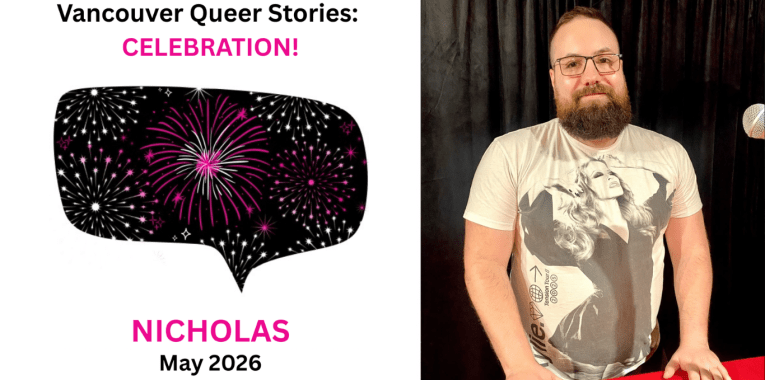
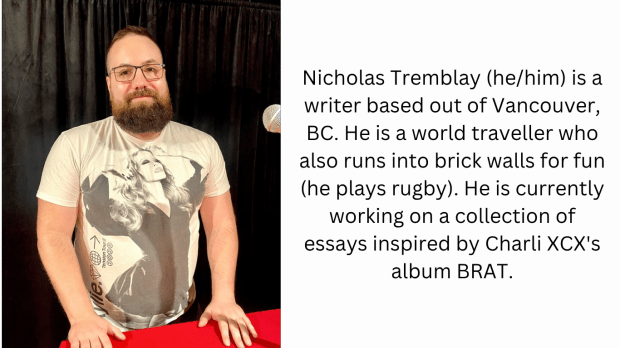
Celebration!: Nicholas’ Story

I celebrate myself, and sing myself,
And what I assume you shall assume,
For every atom belonging to me as good belongs to you
– Walt Whitman, Song of Myself

Note from the Author:
The following is an old piece I submitted to The Globe and Mail around Mother’s Day last year. It’s a letter to my departed Mother, who died in 2010 after a battle with cancer.

***

The thought of losing you was so staggering and overwhelming that, in tears, I proclaimed that I would make you proud of me. Your last words to me, although in truth I seldom think of them, were that you already were.

I was fifteen when you said that to me. And as this year is the fifteenth since your death, it seems appropriate to reflect. I don’t need to ruminate on whether or not you are proud—you have already said so—but rather, I want to reflect on whether or not I am truly proud of myself; and, by extension, if I bathe in the warmth, light, and love that a mother wants for her child.

When I was thirteen, surly like all teenagers, we often butted heads. You felt I was wasting my life away on the internet, and I thought you should back off and leave me alone. Despite changing logins, hiding keyboards, and unplugging modems, I would always find a way back online. You didn’t know that the internet was the only place I felt comfortable expressing myself, and that I found other nerdy teenagers who loved spending time with me. All I wanted to do was hang out with my friends. Just like any other kid.

Of course, as an adult I can expand my perspective and see myself as a confused parent worrying about their child, not understanding what would attract them about spending their entire day in front of a computer, worrying about the long-term damage it could cause. But I also know that I was miserably depressed and anxious even before you left us, and I wish you could’ve trusted me more.

People often say that mothers know their children better than themselves. For me, you knew I was gay before I was willing to admit it. Remember the day you called me a cocksucker while driving me to my shift at the radio station? That didn’t help things. Did you know I would become a man who, despite choosing to live with no regrets, would always wish that he came out to you before you died? That losing you would unlock a torrential floodgate, give me the courage to come out shortly after when I was sixteen? Probably not, but I’m sure you aren’t surprised.

When I turned eighteen, my loneliness was so turbulent, and the loss of you still so raw that it propelled me with a feverish desire to to be independent and become a grown man. I moved from BC to Nova Scotia, spent a summer in Scotland proper; spent nights upon drunken nights away from home, beer-taps flowing, cajoling with strange men I couldn’t understand, finding myself in their arms, trying to find my place in the world.

I eventually found myself where you were born, Toronto, finishing up the eighth year of a hellish undergraduate experience. I was twenty-five, dealing with COVID lockdowns, and my therapist called me out for never acknowledging your passing. She was right, and the solution was clear: I’d do a shot of tequila on the upcoming anniversary of your death. That was what the family did at the first memorial after all. It was a no-brainer.

I then chose to share that tradition with another family—my rugby family. A group of gay men (and their supporters) who gave me structure and community, allowed me the space to channel my emotions, helped me become the man I am today. One day after practice I gathered everyone together, gave them dingy plastic shot glasses, and poured the tequila. Told them that my mother was watching us and would help us win our upcoming tournament, silently promising that I would pull this off somehow.

My team took the shot for you; shut out a team from Perth, Australia in the finals after they said they’d kick our ass; I won forward of the tournament for leading my pack; your warrior’s spirit shone within me; I fulfilled a promise to myself; we achieved this together.

Winning that championship at twenty-seven is my finest accomplishment so far. It was with profound emotion that I moved back to BC shortly after the tournament, a type of bittersweet that comes from knowing you’re making a responsible decision. It was time to stop running away from you and move back home where I belong.

I’m now thirty years old, and it’s funny how the goals for my life are intersecting more with the goals you had for me. I don’t want to spend time online anymore; I want to engage in the offline world with my friends. But above all, I am a damn proud little cocksucker who’s living authentically in an increasingly challenging world.

Mom, I am happy to say that I am proud of myself. I’m a man who’s confident enough to part the clouds with my bare hands, bathe in the warm rays of the sun as it shines upon me, embrace myself in my entirety, and feel the love of the world as I walk on Wreck Beach with my friends, baring everything for all to see, as the world made me.

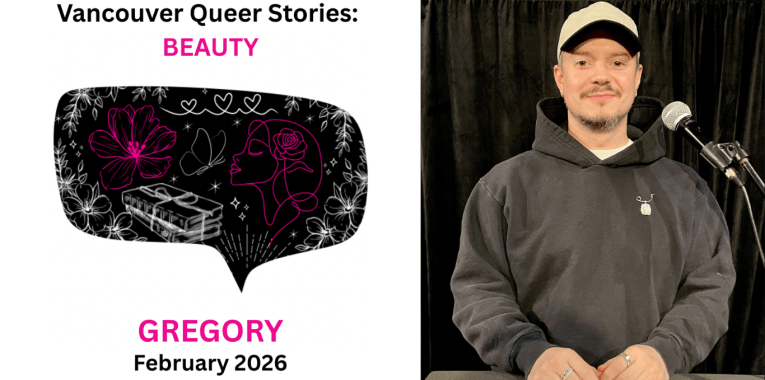
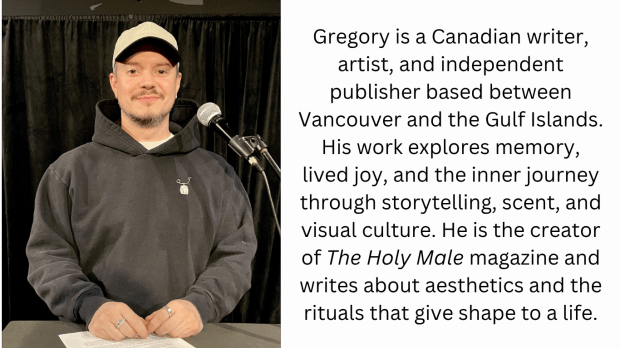
Beauty: Gregory’s Story

“There is no greater agony than bearing an untold story inside you.”
– Maya Angelou.

It was late, after movies and Nintendo, with our stomachs full of pizza. My friend René and I lay on my bed, both of us in oversized boxer shorts, our skinny bodies pressed together in the dark.
My heart pounded, blood rushing everywhere, as if my body already understood something my mind had not yet fully grasped.
We had ended up like this after about twenty minutes of silent readjustments, little movements disguised as casual shifts but really meant to bring us closer. I could feel the faint acne on his chest, the wiry hairs scattered there. My own chest was bare, as it still is. Tentatively, I held his chest, and he placed his hand over mine, holding it there. His cold toes slid over my feet and, for the first time in my life, I knew what it felt like to give comfort to another man.
We were fourteen.

Even now I can see it vividly, almost like I am watching from above, two boys sharing something tender and unspoken in the safety of the dark.
René was, by all accounts, a bad boy. He smoked cigarettes, swore, and got in trouble at school.
He had posters of women in bikinis on his bedroom walls. He played hockey and was good at it, fast and aggressive, with a reputation for being a bit of a troublemaker on the ice. His parents spoke French, and when I joined them for dinners, his father’s eyes would flicker between us, full of suspicion. Even though René and I came from different worlds, it felt like René did not notice the differences, or maybe he just didn’t care.
“You’re not like other guys, Greg,” he said once as we played video games in my parents’ basement. He did not look away from the screen as he said it, his voice low and matter-of-fact. “I can talk to you about stuff.”
He did not elaborate on the stuff, but I understood what he meant. You let me be me. And I did.
With me, René was silly and unguarded. He danced to girly music in my room and did impressions of MADtv characters. The mask he wore around the hockey team or at school would slip away, leaving someone softer, someone freer. We roughhoused and he would try to stick his cheese puff-covered fingers in my mouth. His teasing never felt cruel. It felt like affection.
I watched him constantly, my feelings for him growing in ways I did not yet have the words to name. His scruffy, matted hair. The strong jawline that hinted at the man he was becoming. His bedroom eyes, the raspy voice of adolescence. I memorized the way he walked around my room shirtless, playing air guitar. The way he spoke politely to my mom when she brought us snacks.
The way he shrugged in his oversized Montréal Canadiens jacket with his baggy jeans, their frayed and wet hems dragging through the winter slush.

I followed him everywhere. Across the street to the hockey rink, to his games, even on overnight tournaments. I tagged along with his girlfriend Tara and her friends, who giggled and cheered from the bleachers. While the girls bought corn dogs and danced to the Macarena during intermissions, I watched René skate. He was strong, fast, and undeniably beautiful to me.
But the hockey rink was not always kind. One evening, as we watched the game, a man in a trucker hat muttered a slur loud enough for me to hear. My friend Kelly snapped at him to shut up, but he did not even flinch. His words hung in the air, thick and vile, sinking into my chest. I never told René what happened, even though I wanted to, it seemed like something I had to
carry alone, something I’d learn to do for a long time in my life.
René always insisted I come to his out-of-town games. His parents, strict and traditional, made Tara sleep in their hotel room while René and I shared a room and a bed. At night, after everyone else had gone to sleep, we stayed up watching TV and eating junk food, our legs tangled together under the blankets.
One night, exhausted from the day, he fell asleep on my shoulder. His sweet gummy worm breath mingled with the scent of his sweat and deodorant. I did not move, afraid to wake him, so I sat there perfectly still, tracing the hair on his arms with my fingertips.
I did not know what I was feeling. I only knew that I wanted to protect him, to take care of him, to offer him something I did not yet understand.
Then everything started to change.
He started pulling away. At the rink he brushed past me without a word, hand in hand with Tara.
He made excuses not to hang out, saying he had plans with his teammates or needed to be alone.
Each rejection was a blow and I did not understand what I had done wrong.
Eventually he reached out and the last night we spent together, just the two of us, felt different.
He seemed restless, burdened, his usual warmth muted by something I could not name. When we finally went to bed, we lay in the dark inching closer in our familiar way. And I gathered the
courage to hold him, I could feel his sadness, heavy and unspoken. He sniffled once and I wondered if he was crying.
I touched him gently, tracing the hollow of his chest with my thumb, my nose buried in his hair, breathing him in, trying to hold the moment still.
I did not have language for what I was feeling yet, but I knew it was important.
For most of my childhood, beauty had meant something simple. Nice clothes, nice faces, things people pointed at and admired. But lying there beside him, I understood something new. Beauty was not what I saw when I looked at him. Beauty was what I felt when I noticed him.
It was the way he could be tough in the world and soft in private.
The way he trusted me enough to let the performance drop.
The way closeness could exist without explanation.

I realized I loved him, and I also understood he could never love me in the same way. And strangely, that was somehow beautiful, even though it hurt.
For the first time I saw the inner life of another boy, and it was complicated and tender and a little sad. I began to notice it in other men, too, as I grew older. The gentleness they hid, the expectations placed on them, the weight many of them carried, whether anyone spoke about it or not.
That was when beauty changed for me.
It was no longer appearance.
It was recognition.

We grew apart after that. He quit hockey and got into trouble, fights, arrests, gangs. The last I heard he was in prison, and despite my searching over the years, I cannot find him anywhere.
I still think about him sometimes. With a little melancholy.
Not because I am still in love with him, but because that was the moment I first understood what beauty actually was. It was not perfection, and it was not desire.
It was the feeling of seeing another person clearly and caring about what you saw.
That night did not just give me my first love.
It gave me the beginning of how I would see men for the rest of my life. Tender, full of contradictions, multitudes as Whitman would say.
And even now, when I notice tenderness where the world expects hardness, or gentleness where someone has been taught to hide it, I recognize it immediately.
Because I have seen it before.
I saw it first in a fourteen-year-old boy lying beside me in the dark, pretending to be asleep.

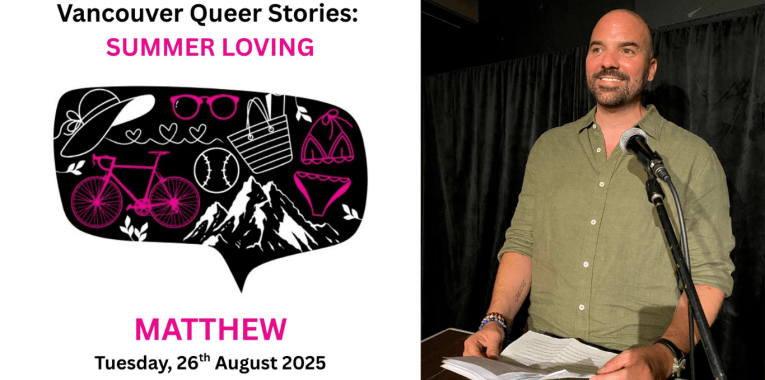
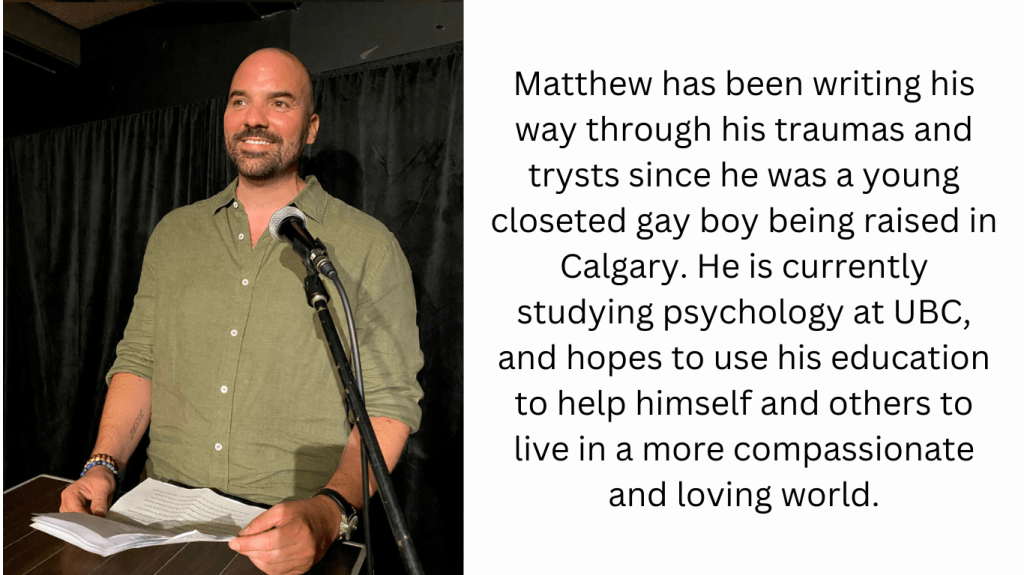
Summer Loving: Matthew’s Story

My closet was made of tinted glass. So you’d think a Caribbean cruise would be the perfect place to hide, given all that bright, glaring sun. But not even my oversized orange hoodie, perfectly covering my awkward 17-year-old body, or the baggie raver pants that flared out to the ground could shield me from the look in his eyes as he tilted his sunglasses onto his nose and gazed me up and down.
“Nice pipe,” He said, in his thick southern drawl.
I stared down at my hands, nervously turning the small wooden bowl over as I did my best to avoid looking up, the large bulge protruding through his bright blue Speedos at almost the exact height of my face practically begging me to stare at it. I thought if I ignored him long enough, he would go away, but he didn’t.
“Are you planning to put something in it”? He asked, pulsing his groin towards me. I finally looked up and met his eyes, my cheeks flushed red.
“It’s for a friend. I bought it on the island yesterday,” I said, nervously looking around the deck to see if any of my family was around. Even though I told my sister I was “bisexual” in a hotel room in Miami the night before we boarded the ship, I was still playing the all too familiar game of hide and seek with the rest of my family. The hardest part about coming out isn’t actually coming out, it’s having to expose something about yourself that isn’t really exposing anything at all. Thankfully, the coast was clear.
“Lucky friend”. He said and winked.
The truth was, he was the first person I noticed when I came up to the pool deck an hour before and found a shaded corner to hide in. That all too familiar game I always played as I scanned every room for signs of others that might be like me. Not because I found safety in numbers. More to protect myself from being around someone with the power to reveal my secrets. All it takes is a look. But as much as I tried to ignore him, my eyes kept wandering back, his body sprawled out flamboyantly on a lounger, sipping on some fruity cocktail as he laughed and screeched with the two women framing him. He made my stomach squirm. The way his wrist flicked back and forth as he talked too loudly. The way he threw his head back when he laughed. The way his tanned orange belly hung over his Speedo. A direct affront to my idea that all gay men in the world but me had 6 packs and bulging biceps.
“Hey, aren’t you a little overdressed for the occasion? You do know it’s over 90 degrees up here?” He teased.
“I don’t like the sun”, I lied.
“Did you forget your swimsuit?” He asked. “Because I have an extra Speedo in my room. If you want to come try it on.”
A rush of heat flushed through my body as my eyes flicked back to his bulge. Oh god, please tell me he didn’t see that. Of course he saw that. My eyes darted around. Were those people staring at us? Suddenly, I felt myself start to move. Automatic shifting of awkward limbs, gathering up my backpack on the floor beside me, the towel under me. But before I could stand, he took a step forward and leaned down, his fried blonde hair falling into his freckled face.
“I might even have something to put into that pipe if you want.” I froze.
“You mean like, pot?” I asked, looking up and directly into his eyes. They were crystal blue. He smiled.
“Yup. I’ve got a whole bunch of it. You wanna go smoke?”
Oh God, how badly I wanted to. How much I missed the sweet comfort of marijuana, tragically deprived of it since my parents forced me onto the plane for this stupid family vacation almost a week ago. But I couldn’t do it. As much as the lure his bulge and the prospect of getting high put their powers of seduction into overdrive, fear and disgust tightened their tendrils around my lungs, and I jumped up, spinning around to make sure I had everything before stumbling away, turning back quickly and awkwardly apologizing. I went back to my room and jerked off, then curled up like a baby and cried.

When I found myself back in the same spot the next day, I would have sworn to you it wasn’t on purpose.
“So you do own a swimsuit.” He said as I lowered the book from my face to see him back, standing in front of me in another, albeit equally revealing Speedo. “What a relief.”
My heart pounded. I looked around, then leaned forward and looked right at him. “Do you really have pot in your room?”
He smiled.
The room was tiny, the door closing behind me as my backpack dropped to the floor. He took the pipe from me and sat on the edge of the bed, filling it with weed from a plastic bag.
“My name is Calvin, by the way.”
“I’m Matthew,” I said as I sat down on the bed, taking the pipe and inhaling a long, slow hit. He moved his leg so it was touching mine, then reached his hand onto my thigh and started sliding it up towards my crotch. He leaned his face towards me, his chapped lips puckered and his eyes closed tight.
“I can’t do this,” I said, standing abruptly.
“What are you talking about?” He said, his eyes popping.
“I’m sorry. I can’t.” I turned and stepped towards the door.
“So what, you just used me for my drugs? Please. Typical fag.” The word hit like a knife, and I stopped, my hand gripping the door handle as I turned back to him, our eyes locking. And there it was. That look. That look in his eyes that said, I see you. I see right through you. I know you. I am you.
I turned and barreled out the door.

Over the next few days I stayed far away from the pool deck, but even that didn’t stop me from seeing him everywhere. I was so terrified at the thought of running into him that I didn’t even realize my siblings dragging me straight from dinner to the disco one hot, humid night. It wasn’t until I saw the crowded dance floor that it hit me. If there was one place you could guarantee you’ll find gays on a boat, it’s at the disco. I tried my best not to think about it, downing a boozy pina colada as the sweet sound of Kylie Minogue blared through the speakers. I finally started to relax, moving my body on the dance floor with my sister, doing shots at the table with my brothers. For the first time in days I wasn’t even thinking about big fat blunts and bulging speedos when suddenly the waitress appeared at our table, a large, fruity cocktail in her hand. She set it down in front of me.
“I don’t think we ordered that”, my brother said. She looked at me.
“It’s for you. From him.” She turned and pointed across the room as our entire table followed along together with their gaze. I leaned over to see around my brother, and it all came into view. Calvin, four tables away, with a harem of women surrounding him, all turned towards us. His head was tilted and his arm was straight up in the air with his wrist bent, his fingers flapping up and down, waving at me. I sank down into my seat as the entire weight of the cruise ship piled onto my chest. Everyone’s eyes turned from him and back to me.
“Who is that?” my brother Jesse asked. I looked over at my sister, our eyes locking for a single second.
“Oh my God”. I said, years of practice kicking into high gear. “That guy is such a fucking creep. He was stalking me all over the pool deck the other day.”
Everyone was silent.
“I’m pretty sure that he’s gay,” I said, and my brothers started to laugh.
“You think?” They said in unison.
“I don’t know why he sent me this. We hardly even talked to each other. He’s disgusting.” I spat the words out and shoved my trembling hands down onto my lap.
“Well, he obviously thinks you’re cute,” My sister said, trying to help.
“Whatever”. I said, looking over at her again, desperately.
“Well, you should just take it as a compliment. Nothing wrong with someone buying you a drink, right?” She turned back to him and waved. My brothers’ eyes stayed on me. I looked from one to the other.
“Yeah, I guess you’re right,” I said, picking up the drink and downing it all at once, lifting the empty glass into the air and gesturing it towards Calvin’s table.
“Attaboy,” My brother Darcy said, hitting me playfully on the arm.
Everyone cheered. Everyone moved on. And I did my best to follow suit. It wasn’t until we were all downing a final glass of water, getting ready to leave, when suddenly he was there.
“Well, hello there everyone.” He said, leaning his arm onto our table. “I’m Calvin.”
Everyone said hi except me; my voice caught in my throat, and my body frozen in place. The silence seemed to stretch on forever.
“Nice to meet you, Calvin,” I said awkwardly.
He laughed, running his hand through his hair, turning to me and reaching his finger out through the air and bopping me on the nose.
“You left your pipe in my room.” He said, loud enough for the whole table to hear. My stomach dropped.
“You can feel free to come by and grab it anytime.” He said, winking at me as he turned and stumbled away.
I watched him go, my body paralyzed. I wanted to disappear. To vanish into thin air. But when I didn’t, I slowly turned back to face the table. My sister’s hand was on her heart, her eyes wide. My brothers and their girlfriends’ mouths all hung open as they stared at me in total and utter… belief.