
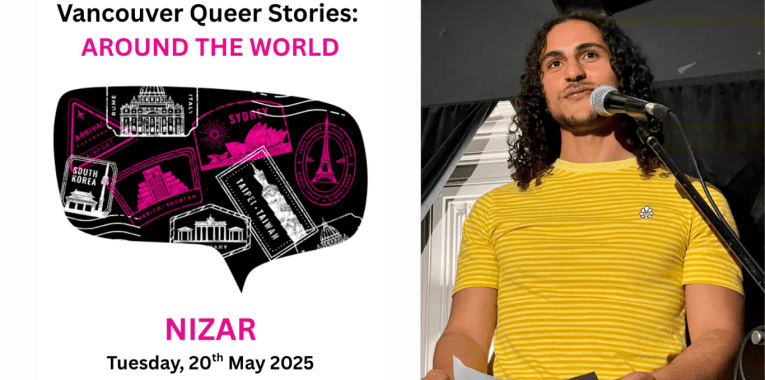
I grew up in a small town on the Mediterranean coast of Tunisia, a place where being different often meant being targeted. For those unfamiliar, Tunisia is a North African country with a rich and complex history. From the Phoenicians, Carthaginians, Romans, Vandals, Byzantines, Arabs, Berbers, Ottomans, to the French, many civilizations have left their mark. It’s a beautiful country with stunning landscapes and, if I may say so myself, a lot of beautiful men.
But despite its beauty, Tunisia’s laws are not as progressive. According to Article 230 of the penal code, same-sex relations are criminalized, with penalties of up to three years’ imprisonment. So, while the country is breathtaking, it’s not exactly a safe space for someone like me.
From as early as kindergarten, I knew I was different. My feminine manners and femme-presenting nature made me a target for relentless bullying. Before I even knew I was gay, people had already decided it for me. They called me “fag” and other slurs, and I couldn’t understand why. I felt trapped in a cycle of fear, confusion, and self-loathing.
Looking back now, I realize that people often fear what they don’t understand. In a place where traditional gender roles were set in stone, my existence challenged their norm. I didn’t know it then, but I was stronger than I thought simply for surviving that.
Every day, I’d walk down the street and brace myself for the insults, the rocks thrown my way, and sometimes even the beatings. I’d come home from school, bury my face in my pillow, and scream until I was exhausted. I couldn’t tell anyone, not my mom, not my dad, because I was terrified of judgment and ashamed of who I was. I contemplated ending my life more than once, but something within me, some spark, kept me going. Maybe it was hope or just pure stubbornness, but I wasn’t ready to give up.
As I approached my final year of high school, I knew I couldn’t stay in Tunisia any longer. I needed to escape. My parents couldn’t afford to send me abroad for school, but I was determined to find a way out. Here’s the funny thing about desperation: it makes you creative. I started browsing a website called GayCupid, it doesn’t exist anymore, but at the time, it felt like a lifeline. I reached out to countless men from around the world, Italy, France, Canada, the US, the UK, hoping one of them could help me leave. I convinced myself I was in love with one of them, a man named “Tom”. For two years, I stayed in touch with him, keeping that hope alive. Eventually, he helped me get a visa to Canada as an international student.
Moving to Canada was a huge relief, but living with “Tom” during those first two years was challenging. Even though I had set the boundary that we would just be friends, I often found myself doing things I wasn’t comfortable with to maintain stability. Eventually, I decided that I wanted better for myself. Leaving his place felt like reclaiming my own agency after years of feeling like I had to compromise to survive.
Not long after I moved out, I found myself on the phone with my mom. I wasn’t planning to come out to her that day, it just happened. The emotions overwhelmed me, and before I knew it, I was telling her everything I had kept bottled up since kindergarten; the bullying, the fear, the pain. I couldn’t stop the words from pouring out. It was raw, emotional, and something I didn’t know I needed. At first, she struggled to accept it, but I realized that I needed to accept her too, her background, her limited exposure to different perspectives. My dad’s reaction was different. He simply said, “I don’t care, be whatever you want.” Part of me wanted him to care more, to cry with me, but in time, I understood that his indifferent acceptance was a form of love.
One thing I’ve learned is that acceptance is a two-way street. I was asking my family to accept me, but I had to accept them too. When I let go of the need for my mom to fully understand and embraced her own struggle with my identity, a weight lifted off my shoulders. It wasn’t about them; it was about me, about learning to love myself despite the years of hatred and misunderstanding I had faced.
Living in North America has its own challenges, but it’s nothing compared to fighting for survival back home. Sometimes I feel like I’m going to be one of those people who say, “Back in my day…” but really, the contrast is stark. Back in Tunisia, just being myself was like trying to get a massage while stuck in a war zone. But here I am now, free, resilient, and finally at peace with who I am.
If there’s one thing I want you to take away from my story, it’s this: Sometimes, the journey to self-acceptance means accepting others, too. It’s about finding your own freedom without demanding that everyone understands it. The weight lifts when you let go of the need for validation and choose to live for yourself.
 vancouverqueerstories.com