Celebration!: JJ’ Story

“Please report the video. I hate that your faces are on there with no consent. Getting everyone to report it.”

It’s 2023 and I’m at a bar on a first date. He’s in the bathroom when I get the text from my work wife; it’s accompanied by a Twitter link, posted by an account I’ve never heard of, Libs of TikTok, with the caption: “Elementary school in Vancouver held a pride parade today. Homeschool your kids!”

Even before playing the video, I recognize myself in the thumbnail. 

The video starts with me walking by shouting “Happy Pride!” followed by my students and several parents, waving, cheering. A few more clips of students walking by, smiling, waving rainbow flags, before it ends.

My date sits back down, and I show him the video, and proceed to chuckle about some of the comments. 

“Give me an S, Give me an I, Give me an N, SIN!”

“Those boys look “sissified” to me”

“It’s a free for all, next is orgy day”

And my personal favourite, the one that, to this day, I still lowkey want to get tattooed on my body: “Homeschool > homoschool”

Already the video has hundreds of thousands of views. I want to keep reading the comments, but don’t want to be that guy, so I put my phone away, and break the tension with a quip.

“How does it feel, knowing you’re on a date with a queer icon?”

The next day our staffroom is buzzin’. Coworkers tell me they’ve reported the video, my principal checks in to see if I’m okay. The video quickly balloons to 1.4 million views. In the comments, someone posted a screenshot of me from the video, wearing a rainbow cape and shiny cowboy hat, with the caption “Found the groomer!”

Another person comments on my picture, “He’s just a flat-out molester. He doesn’t even bother with grooming.”

My friend at the union reaches out, says there’s a lawyer on staff if I’m interested in trying to have the video taken down. We all report it, but all that does is hide the video on our accounts.

Repeatedly, I say I’m okay. That we’re celebrating Pride for the kids who don’t know they’re queer, or don’t feel comfortable being open about it yet, and if it makes things easier for even one of them, then it’s worth it. 

But writing this story and revisiting that video in 2026—thankfully stalled at paltry 1.7 million views—my whole body still burns.

I scour the video’s comments section for the funniest pull quotes, trying to discern what’s awful in the entertaining-let-me-read-this-out-loud-to-strangers way and what’s awful in the oh-boy-I’ll-probably-have-to-talk-about-this-in-therapy way. The margin between them is narrower than you think.

I was bullied and called gay before I even knew what that word meant, but I knew that I was supposed to vehemently deny being it.

In sixth grade, I received a friend request online from the email account “jjisgay99@hotmail.com,” one of those memories that’s hilarious now, but at the time, felt like someone had ripped the uvula from the back of my throat.

I’d stay in the closet for almost two decades longer, dating women, participating in casual misogyny. Talking about which actresses I thought were “hot,” but really, I probably just thought they had a nice smile. 

It wasn’t until 2020, when, after having my first session of therapy, I knew I was ready to start living authentically. The next day, my 30th birthday, I came out to the majority of my close friends at a socially-distanced pie-themed hang in the park, scrawling “I’M GAY” on the inside of a pie box—the pie was peach-cardamom, obviously.

The atmosphere was one of compounding disasters: sitting on blankets six-feet apart, unknowingly about to embark on the second wave of the pandemic. The sky was muggy and thick with forest fire smoke and a recent looper moth infestation surrounded us with thousands of fluttering bugs.

It was one of the best days of my life. 

After coming out during lockdown, I struggled with how to relate to the queer community I suddenly found myself identifying with: my main connections being gay meme accounts on Instagram and a parade of COVID-safe dates that always ended back at my apartment. Dr. Bonnie Henry would certainly agree our activities involved a curve, though none flattened.

One first date, after a guy spent most of the night talking about how much he wanted a boyfriend, we ended back at my apartment, carnally making out on the couch, before he climbed on top of me, squeezed my cheeks together, and hawk-tuahed a single oblong strand of saliva slowly into my mouth. “Sir, we are in a pandemic here, you can’t just spit in people’s mouths, especially without asking first.” We still had sex, of course.

Fucking this rogues’ gallery of strangers felt necessary at the time. Fleeting connections to the gay community, sharing coming-out-stories with cum still leaking out. Hearing about Internet chatrooms and early cruising. I was a cultural anthropologist, absorbing every detail and mentally cataloguing to better understand where I fit.

Later that school year, I was recruited to help organize my school’s first-ever Pride celebration. Starved from no parties in almost 15 months, I brought a finely-curated selection from my personal tickletrunk for my kindergartens. Flamingo sunglasses, a taco hat, sequined fans, an inflatable telephone.

Suddenly, at 30-years-old, I was marching in my first Pride parade.

For the past six years I’ve helped organize and grow school Pride celebrations, each with their own lil’ moments. After our neighbourhood parade in 2024, we headed to the school’s backfield and performed a flashmob to families, all to the song “Born This Way.”

When I’d talked to my kindergartens about what other Pride celebrations involved, my students globbed onto the idea that people sometimes dress up, and asked if they could wear costumes—which is why, in videos of that flashmob, you can see Disney princesses and superheroes dancing to Lady Gaga.

I want these to be the stories I share about school Pride, but it’s important to know it’s not all rainbows and five-year-old Captain America dancing to Gaga. 

Like when kindergartens from my class are noticeably absent the day of the parade, because their family “doesn’t celebrate Pride.”

A parent’s venomous email to a colleague, calling everyone at the school pedofiles; the same parent who, later that month, smiled and cooed to me about how she hoped her son would be in my class next year.

The idea that schools are somehow brainwashing youths by showing support and normalizing words like “bisexual” and “trans.” 

“I’ve been teaching for decades, and I can barely teach these kids math. And I’m a math specialist!” a colleague shared with me, exasperated. “They think I can somehow influence these kids enough to change their whole ideology or gender?!”

Knowing teachers who’ve been doxxed, received death threats—putting themselves at risk while trying to make things safer for queer youth.

There’s decadent irony that, in tandem with writing this story, I’m helping organize this year’s Pride at my school. 

We’re going bigger, bolder, louder. A coworker designed a Pride 2026 logo with our school’s mascot, and managed to get custom stickers donated. We’re inviting neighbouring schools. We have a whole spirit week planned, a dance party, a photobooth. We’re getting T-shirts made as a fundraiser. I get giddy thinking about how amazing this year will be. Usually that excitement drowns out all the what-ifs. 

I’ve been working on a handout, highlighting statistics about queer youth, for families to help understand the importance of Pride. Pulling from Statistics Canada empirical gut-punches like how queer youth are twice as likely to describe their mental health as being poor; they’re more likely to be targeted for bullying, experience homelessness, and twice as likely to consider suicide; how trans and non-binary youth are twice as likely to experience cyberbullying.

I triple-check my sources with a diligence I wouldn’t have dreamed of during my English undergrad, knowing these stats will be scrutinized with the vigor that only a bored, privileged suburban parent can muster. 

I hate having to take the more thoughtful high road. Having our “We want every kid to feel safe being who they are” met with “You’re all pedofiles,” coming from zealots whose churches, businesses, and governments knowingly protect actual predators. But I digress.  

Progress can sometimes feel small.

The odd joy of when reading a book to my class, a student refers to someone as “gay,” and my body seizes up like they’re using a slur, when in fact, the book has a family with two dads. Gay as a descriptor, not an allegation.

It took until my mid-30s before I saw being gay as a gift. A hard-won title after a lifetime of being teased for liking things I didn’t even know I liked yet; the finally-satiated hunger of someone who spent years eating what they weren’t craving. Let’s hope the next generation gets to feel this lucky some day.

And if you need to contact me or have any questions about this story, you can always reach me at jjisgay99@hotmail.com.

Celebration!: C.’s Story

You know how they say big things always come in threes? On March 31st this year I had three big things to celebrate, which is a nice change of pace from last year’s three big things, which were decidedly less fun. 

March 31st 2026 marked my four-year Van-iversary. 

Four years since my husband and I quit the grown-up jobs that were slowly killing us and invested our theoretical house deposit in two one-way tickets and six months’ worth of rent in one of the most expensive cities in the world. 

Four years since we filled our folks’ sheds with a decade’s worth of hand-me-down furniture, expensive kitchenware, second-hand books and records, and a couple of pricey-but-priceless artworks—all the trappings of a couple in their late twenties who finally graduated from undergrad sharehouses to cosplaying as adults. 

Four years since we farewelled our family and friends at what will likely be the only “retirement party” we’ll ever have, and flew across the world to a city we’d never been to and where we knew one person. Vaguely. 

Four years since we rented the first (and only) place we looked at, a basement suite advertised on Facebook marketplace by a new account with no profile picture. Turned out fine, they were a lovely family, and I’m pretty sure I sealed the deal by complimenting their ugly dog. 

Four years in our 500sq foot flat with two windows and a resident mouse called Jonathan. Four years is the longest I’ve lived in one place since I was a child. 

And each day of those four years, I’ve woken up feeling a bone-deep sense of gratitude. I can walk out my front gate, head four blocks north down our magnolia-lined street to the park with the pollinator meadow and beach access, where you get a flawless view across the inlet to the mountains, where it snowed on our first Christmas, and where I saw the northern lights. Twice! 

Four years that I’ve been able to say I get to live here!

It’s been four years since I looked in the mirror and saw myself buried deep beneath a lifetime of trying. 

Four years of gently prying that moldering heteronormative mask out of fingers stiffened with the effort of clutching it like a lifeline. 

Four years of deep exhales, of space and safety and community and sliding scale counselling. Four years of freedom and finding a happiness I didn’t think was possible for me. 

And that’s just the first big thing to celebrate! 

March 31st is also Trans Day of Visibility, which feels fitting as it’s really only since moving to Vancouver that I’ve been able to become visible to myself, let alone others. It’s a day that highlights Trans JOY, so it’s kinda nice to celebrate the joy I’ve found here.  

The joy of visibility is so much more than being seen, though. 

It’s being asked my pronouns when meeting someone new, or even better, when the other person introduces themself with their pronouns first. 

The joy of visibility is hearing a grownup customer tell their kid “go ask that person, they look like they work here.” It’s working in such an accidentally queer workplace that they/them has become the default until otherwise corrected. 

The joy of visibility is making the conscious effort to “be the me I want to see”, and finding out it’s actually working. It’s being told that you actually are the visible queer person (Cool Gay Elder™) in someone’s life that makes them feel like they, too, are possible. 

But the biggest joy is feeling known and seen by people who just get it. So that means that I get to build my friends’ flatpacks and lift their heavy boxes, and then they call me strong and handsome, and it goes straight to my head. 

It’s dancing at the birdhouse and being hit on so respectfully that you forget for a second that you should probably tell them you’re married… and when you do, they’re so nice about it and say “well, what a lucky person” and they wish you well, and somehow that whole experience is one of the hottest things that’s ever happened to you. 

This year I went all out: maximum visibility, maximum joy. 

On March 31st, I submitted my very trans, intensely personal thesis about nonbinary intelligibility and identity in middle-grade fiction, thereby ensuring that I will remain visibly trans in one pocket of cyberspace for the rest of the internet’s existence. How’s that for something to celebrate!

I am trying to get more comfortable with the idea of celebrating myself. It’s something that doesn’t come naturally, perhaps the result of growing up in Australia, terrified of being the poppy that grows too tall, only to be eviscerated by the same people in charge of doling out the fertiliser.

 After a lifetime of moderating myself to be just enough, never too much, believing that any sort of self-recognition is boastful, I’m re-learning what achievements actually look like, to me. 

So, aside from the big things, like acknowledging the fact that I’m graduating from my second master’s degree tomorrow (entirely paid for by a federal scholarship, which inherently values the importance of my gay little research!), I’ve been celebrating myself in less obvious, more honest ways…

Like the fact that I allow myself space to be bad at (some) things and give myself room to grow.

Despite gaslighting myself for the past three years, I actually can drive in Vancouver.

I can do nearly 2 push-ups. My goal is five—and has been for the past three years—but this time I think I’ll get there. 

I have no idea how much I weigh anymore, and that thought doesn’t panic me. I’m just letting the soft animal of my body love what it loves.

I’m learning to trust my own opinion more instead of being swayed by whoever is talking the loudest at the time, and sometimes I can even sit in the discomfort of holding two different ideas at once.

Sometimes I ask for help when I need it.

Sometimes I am even capable of being deeply honest in therapy. 

My grey hairs are really starting to come in and I’m genuinely thrilled about it because it’s proof that I’m getting older

I am healthy 

I am happy 

I am still here

And I reckon that’s something to celebrate

Celebration!: M.’s Story

I’m turning 30 this year.
When I found out the theme for tonight was “Celebrate,” I started thinking about that word. Celebrate. And I realized, I don’t think I really know how to celebrate myself. Which is weird, because I’m gay, Lebanese, kind of a drama queen, and emotionally attached to both Arabic and English pop music. On paper, I should be excellent at it.
And I genuinely love celebrating other people. I love showing up. I love planning. I love hosting. I love making people feel loved. I’m good at it too. Maybe too good. I will plan the timing, the food, the vibe, every small detail and pretend that it’s no big deal, but emotionally, there is a very serious project plan.
But when it’s about me? I become aggressively casual.

A couple of months ago, I “celebrated” two years in Canada by going to a St. Paddy’s gay party at the Junction. Very convenient: one of the biggest celebrations of the year was already happening on my anniversary. The universe forcing me to celebrate my milestones.
Fair play, universe.

But birthdays are worse. Because birthdays are the one day of the year where you’re allowed to be a little self-centered, and I still don’t know what to do with it.
Last year, on my actual birthday, I scored tickets to Lady Gaga’s Mayhem Ball.
Picture this: A gay Lebanese boy, now an adult, watching Lady Gaga sing “Born This Way” live. And then the words: “You’re Lebanese.”
I’m not even that patriotic. But so many of my early queer moments happened with that song playing secretly through wired headphones, pretending I was just listening to music, when really, I was trying to feel seen.
And if Lady Gaga, mother of monsters, said “Lebanese,” not Middle Eastern, not Arab, Lebanese, then she was clearly speaking directly to me. That song was celebrating a part of me before I knew how to celebrate it myself.
It’s going to be hard to top a Lady Gaga concert as a birthday celebration. But this year, I’m turning 30. And there is a version of me who wants the balloons. The cake. The friends. The photos. The whole shebang.
I know he exists, because once, he fought very hard for a birthday party.

I’m the youngest of four boys, which means by the time my parents got to me, the parental sparkle was running on low battery.
But the photos were there. Printed albums. My brothers with their friends. Finger food. Cups of Jell-O. A big cake made by my mom. Awkward parents in the background. Kids playing arcade games and mini golf at this place called Putt Putt.
Putt Putt was everything: Arcade games. Skeeball. Ball pit. Chaos. If you had a birthday there, you were basically local royalty.
Every brother got Putt Putt. Except for me.
To make things worse, my birthday is in August, which is terrible timing if you want a big party as a kid. School is out. Everyone disappears. Half the class is at their village, the other half is at the beach, and suddenly, your birthday is a logistical crisis.
So I made my parents feel bad about it. And it happened that my dad did business with the owners of PuttPutt, so it didn’t take much convincing.
I may have also pulled the “you don’t love me as much as my brothers” card. Bold strategy. But hey, it worked.
And somehow, I convinced my parents to let me do it two months early: June 9, 2006. The day after the last day of school. Also, the first day of the FIFA World Cup, so almost exactly twenty years ago (Very convenient time to tell this story… And very organized of my trauma).
And because it was the World Cup, the theme chose itself. Football.
Now, did I play football? No. Did I care about football? Also no. In fact, I kinda hated it. Playing football as a closeted gay kid with straight boys going through puberty? Not fun.
But it was football season, and you have to understand, people in Lebanon take that very seriously. And I wanted to look cool, so football it was.

I had the party. I had the place. I had the theme. I had the friends. Basically my entire class. This was my moment. I was wearing a Ronaldinho Brazil football costume, because obviously, I LOVE football.
Everyone came, (Well, everyone I invited. I had just gone through a huge fight with my best friend at the time, and I decided not to invite him. I don’t remember what the fight was about, but I was very firm about it. I remember my dad looking at me and asking, “Are you sure you don’t want to invite this boy?” And I said, “Yes. We’re not friends anymore.” I was so sure I didn’t want him there. But for someone I apparently didn’t want there, I kept noticing that he wasn’t).
The party itself was going really well. I remember parents walking in with their kids. I remember the mountain of gifts. I remember my mom’s cake, a forêt noire, with a chocolate football-shaped ganache on top. Keeping it on theme. We’re committed.
Because again: I LOVE football.

Everything was happening exactly how I wanted… then came the piñata. Yup, I had a candy pinata at my birthday party. What shape was the piñata, you ask? A football, of course.
You have to understand, back then, a piñata was a big fucking deal. At that point, I had only seen piñatas on TV in cartoons. So having my own piñata, one I got to choose the candy for? Hell yes.
They hung it up. The kids gathered around. Everyone got a few hits. People were screaming. The energy was rising. And then the birthday boy got the stick.
I started hitting it. I’m going at it. I’m ripping it apart. Everyone is screaming. And then eventually, it breaks.
And the second it broke, it was no longer a birthday party. It was capitalism.
Kids dropped to the floor like wild cats. Hands everywhere. Candy flying. Elbows out. No morals. No friendships. No birthday etiquette. It was my Hunger Games. And I had lost.
Because there I was. The birthday boy. Standing with nothing. I remember looking at my hands and realizing they were empty. And I tried to hold it in. I really did.
But then people started noticing. Kids looked at me. Then they looked at their bags of candy. Then back at me. Suddenly everyone realized, OMG… the birthday boy didn’t get any candy. And because it was my birthday, everyone started offering me some of theirs.

Aww. That’s so sweet.
It was HORRIBLE, because somehow that made it even worse. Now I wasn’t just the birthday boy with no candy. I was the birthday boy everyone felt bad for. And I couldn’t hold it anymore. I started crying. Hard. Not cute crying. Full meltdown. Birthday drama queen.
And if you’re thinking, “Oh God, poor kid, that must have been so embarrassing,” well, there’s more. Even through the tears, I had a plan. What? I’m just gonna stand there and let people feel sorry for me on my fucking birthday? No way José.
I looked at everyone, face fully wet, probably snot involved, and said: “Everyone… throw the candy back on the floor. We’re going again.” Which, looking back, is insane.
Imagine being a kid at a birthday party, and the birthday boy is sobbing, demanding a second round of candy distribution, after going through WrestleMania with at least 20 other kids. Very socialist of me, honestly.
But hey, I was ten. It was my birthday.

Now, I’m not saying this one piñata is the reason I don’t know how to celebrate myself. That would be too easy.
The thing is, when the celebration is for someone else, that works. I get to focus on them. But when it’s for me, suddenly I can’t just enjoy it. I have to manage it.
Is the food enough? Is the music right? Are people bored? Is the lighting homophobic?
And I think that’s the part I still negotiate with. The embarrassment of wanting the day to feel good…. And by good I mean, perfect. Obviously.
Because even now, when someone asks, “What are you doing for your birthday?” I feel this little panic. Like I need to have an answer that sounds casual enough. Not too sad. Not too planned. Not too desperate. Something like, “Oh, nothing big.” Which usually means, “I would love for it to be big, but I’m not ready to be responsible for wanting that out loud.”
But one day, I would love to have a big party that is actually for me. Maybe for another age when I become more chill, because honestly, just saying “my 30th” spikes my anxiety.

But I want to try anyway. And I don’t think I need to top Gaga. I think I’m just trying to find whatever version of that feeling I can make for myself. It could be a big party, with a giant dick-shaped piñata, just for me.
Or maybe it’s quieter than that. A little stoned. Surrounded by people who love me for who I am. Without having to pretend that I like football.
Looking around and realizing I’ve built a life that younger me would not believe.
And honestly, for now, that feels worth celebrating.

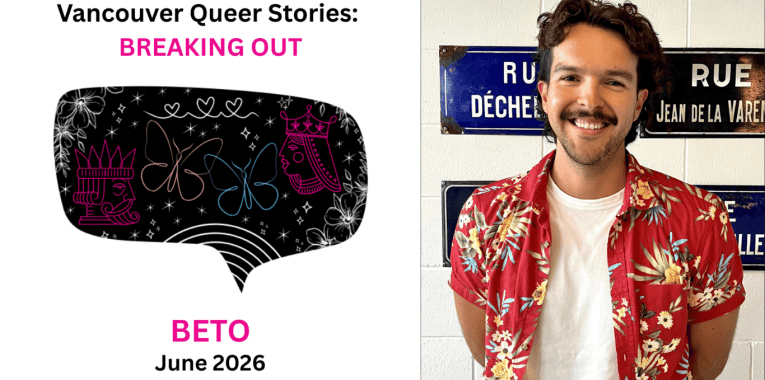
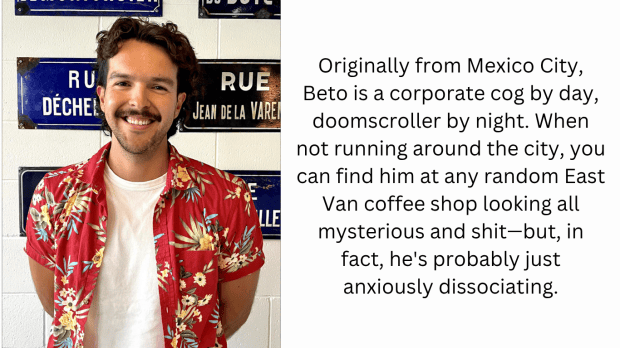
Celebration!: Beto’ Story

SPORTS!

My father was a decorated athlete for a brief period of his life, and like many men his vintage, he wanted his eldest son to be one as well.

That is why, during my early school years, I was arbitrarily enrolled in a new sport at the start of every grade. Each year began with a fresh activity and ended with a full introspective account of the embarrassments I endured and the numerous disappointments I served my father.

The sport of choice for third grade was baseball. Before being enrolled, I had never even touched a bat. My dad, much more excited than I, bought me the full kit: a used mitt, a second-hand bat, and some balls. He then commanded me to join him in the backyard for “practice time.” I suppose I did a decent job; next day my father didn’t feel the need to storm the coach’s office to beg for my removal.

I enrolled late into the season. I know this because that Saturday I set foot on the field—for the first time in my life—I did so without a uniform and with only twenty minutes of prior training with dad. My teammates looked professional. Assigned the New York Yankees uniform, they wore iconic white and navy blue stripes that shone like fresh snow under the morning sun.

I was wearing olive green pants and a gray hoodie.

The coach, a seemingly intuitive man, took one look at me and deduced that I could hardly distinguish between a bat and a mitt, and that I was dying of terror.

“Right field,” he said, pointing to a far corner of the park.

In case you don’t speak “the base-ball”, right field is where the least action happens. Most batters hit right-handed, sending the ball to the left. Balls would only come to me if there was a left-handed batter on the opposing team, or if there was a glitch in the Matrix and the bat hit the ball at the EXACT spot to send it towards my side.

And not to spoil the story for you, but if you’re listening to this, it’s because one of those two fucking things was exactly what happened.

I walked the long trek to practically another country to wait for the two hours of the game to pass without me having to intervene whatsoever. I was there, shifting my body weight between my two legs while my nylon pants made that “FFFT! FFFT!” sound, when I saw the opposing team get into position.

They wore the Tampa Bay Rays uniform. Deep purple shirts with dark gray pants. If our team looked like an elegant albino vixen, they looked like that purple mascot from Mcdonald’s–– menacing, I mean. And the cherry on top of this horror sundae: they were the fourth graders. The bigger, stronger, faster, fourth graders.

The whole scene was too overwhelming for this 8-year-old.

My father? Safe over by the stands, eating some fried pork rinds with Valentina sauce at nine AM. So, perhaps not that safe actually.

For most of the game, I just had to stand on the grass, something I have always been good at. The intense part happened on our turn to bat, when I furtively had to keep telling every kid behind me in line, “Oh, you can go before me,” until our turn was over.

That’s how I passed the time, and I don’t know if it was the mental numbness–because it definitely wasn’t because I was having a great time–but suddenly I realized we were already in the last round. And the Rays were batting.

The mood was tense. As my dad tried to explain on the car ride back home, we were leading by one point. We needed one more “out” to win; a home run for the Rays would mean defeat.

Clearly, all this I semi-understood right up until a couple of minutes ago, when I Googled “How to play baseball” to write this story. On that Saturday in question, I was standing obliviously in my peaceful right field, about 350km from where all the action and excitement was happening, skinny and sun-burnt like a human Slim Jim from all the exposure I was soaking.

Suddenly, a batter with a precocious mustache appeared. This creature went to the plate and hit the ball as if it was the crotch of his absent father.

I watched as the ball rose through the air like a rocket—heading towards me.

I had roughly three seconds to calculate the trajectory of my entire future. My eyes followed the ball like a predator: Velocity, weight, curvature, differential equations, air resistance, and the Coriolis effect. I was teetering on the fine line between glory and total catastrophe.

And finally, when the ball was a few meters above me, I decided to take the best possible strategy: I closed my eyes, stretched out my left arm, and prayed for the best.

THUNK!

The physical and emotional stress of the previous seconds had left me disoriented. My vision was blurry, and in my ears there was silence with a slight, sharp tone.

Gradually, I regained my senses. A steady echo came from my team’s dugout. 

When I finally opened my eyes, I could see blurry white patches running towards me. There was a slight weight shift in my hand, and when I turned to see it, my eyes finally focused: a steaming ball resting inside my mitt.

I didn’t even have half a second to examine it because I was violently rammed by a group of children dressed in white. Then I finally was able to translate the steady echo from a second ago: “BE-TO! BE-TO! BE-TO!” They yelled as they ruffled my hair and patted me on the torso amicably.

I felt on top of the world. I was living in my own Hallmark movie. The game had finished, and my actions had made the team win, my team—The Yankees of the Cristobal Colon Primary School.

Through the chaos, I glimpsed the stands. My dad had gotten up so fast from his seat that his pork rinds were spread all over; he was clapping like never before. Had I been closer, I wouldn’t have been surprised to see a couple of tears running down his face. 

After three years of insatiable searching, we finally found a sport in which I excelled at.

Unfortunately, my delusions of grandeur betrayed us. My teammates quickly forgot that game in which I had been the star when, the following Saturday, I failed to catch a ball that caused an opposing team’s home run. Never again in the entire school year did I catch another ball, and much less hit one. After all, baseball wasn’t my thing either.

And my dad? Despite my excellent debut, after a couple of months, opted to just drop me off at the entrance to the baseball park, and pick me up after the game. The following year, when I decided to try basketball, I don’t remember seeing him at any event.

I don’t blame him. It must be painfully uncomfortable to watch your kid constantly suck at sports. Four years into the failed experiment to have an athletic son would defeat even the most willing.

This is not a childhood trauma or a deep scar in our relationship, though. Years later, he was able to find some solace by cheering on my creative endeavours.

Anyway, I was not born for competitive sports. But while those four years of me dipping my toes in them were incredibly anxiety-inducing and humiliating, I now think they are worth it just for the memory of that cold Saturday morning, when for a brief moment in time, my dad and I were able to share the same passion. 

Celebration!: Nicholas’ Story

I celebrate myself, and sing myself,
And what I assume you shall assume,
For every atom belonging to me as good belongs to you
– Walt Whitman, Song of Myself

Note from the Author:
The following is an old piece I submitted to The Globe and Mail around Mother’s Day last year. It’s a letter to my departed Mother, who died in 2010 after a battle with cancer.

***

The thought of losing you was so staggering and overwhelming that, in tears, I proclaimed that I would make you proud of me. Your last words to me, although in truth I seldom think of them, were that you already were.

I was fifteen when you said that to me. And as this year is the fifteenth since your death, it seems appropriate to reflect. I don’t need to ruminate on whether or not you are proud—you have already said so—but rather, I want to reflect on whether or not I am truly proud of myself; and, by extension, if I bathe in the warmth, light, and love that a mother wants for her child.

When I was thirteen, surly like all teenagers, we often butted heads. You felt I was wasting my life away on the internet, and I thought you should back off and leave me alone. Despite changing logins, hiding keyboards, and unplugging modems, I would always find a way back online. You didn’t know that the internet was the only place I felt comfortable expressing myself, and that I found other nerdy teenagers who loved spending time with me. All I wanted to do was hang out with my friends. Just like any other kid.

Of course, as an adult I can expand my perspective and see myself as a confused parent worrying about their child, not understanding what would attract them about spending their entire day in front of a computer, worrying about the long-term damage it could cause. But I also know that I was miserably depressed and anxious even before you left us, and I wish you could’ve trusted me more.

People often say that mothers know their children better than themselves. For me, you knew I was gay before I was willing to admit it. Remember the day you called me a cocksucker while driving me to my shift at the radio station? That didn’t help things. Did you know I would become a man who, despite choosing to live with no regrets, would always wish that he came out to you before you died? That losing you would unlock a torrential floodgate, give me the courage to come out shortly after when I was sixteen? Probably not, but I’m sure you aren’t surprised.

When I turned eighteen, my loneliness was so turbulent, and the loss of you still so raw that it propelled me with a feverish desire to to be independent and become a grown man. I moved from BC to Nova Scotia, spent a summer in Scotland proper; spent nights upon drunken nights away from home, beer-taps flowing, cajoling with strange men I couldn’t understand, finding myself in their arms, trying to find my place in the world.

I eventually found myself where you were born, Toronto, finishing up the eighth year of a hellish undergraduate experience. I was twenty-five, dealing with COVID lockdowns, and my therapist called me out for never acknowledging your passing. She was right, and the solution was clear: I’d do a shot of tequila on the upcoming anniversary of your death. That was what the family did at the first memorial after all. It was a no-brainer.

I then chose to share that tradition with another family—my rugby family. A group of gay men (and their supporters) who gave me structure and community, allowed me the space to channel my emotions, helped me become the man I am today. One day after practice I gathered everyone together, gave them dingy plastic shot glasses, and poured the tequila. Told them that my mother was watching us and would help us win our upcoming tournament, silently promising that I would pull this off somehow.

My team took the shot for you; shut out a team from Perth, Australia in the finals after they said they’d kick our ass; I won forward of the tournament for leading my pack; your warrior’s spirit shone within me; I fulfilled a promise to myself; we achieved this together.

Winning that championship at twenty-seven is my finest accomplishment so far. It was with profound emotion that I moved back to BC shortly after the tournament, a type of bittersweet that comes from knowing you’re making a responsible decision. It was time to stop running away from you and move back home where I belong.

I’m now thirty years old, and it’s funny how the goals for my life are intersecting more with the goals you had for me. I don’t want to spend time online anymore; I want to engage in the offline world with my friends. But above all, I am a damn proud little cocksucker who’s living authentically in an increasingly challenging world.

Mom, I am happy to say that I am proud of myself. I’m a man who’s confident enough to part the clouds with my bare hands, bathe in the warm rays of the sun as it shines upon me, embrace myself in my entirety, and feel the love of the world as I walk on Wreck Beach with my friends, baring everything for all to see, as the world made me.

Beauty: Robyn’s Story

It’s not a beautiful dog park.
That’s the first thing to understand.

There’s no charming fence or wildflowers or benches. The grass is mostly dirt. The mud never fully dries. Someone has zip tied a broken gate shut in a way that feels unsafe and sincere. The sign says CLEAN UP AFTER YOUR DOG, clearly replaced too many times.

And yet.

Every morning, we arrive like a loose congregation. Names learned accidentally, through repetition, through dogs yelling them across the field.

My dog drags me in, nails clicking, vibrating with the promise of chaos. She does not care that I am tired or half inside yesterday. She believes in the dog park with a devotion I haven’t felt since my early twenties. Her faith is absolute.

Beauty shows up first as sound.

A chorus of barks, each one a dialect. The deep woof of the older shepherd patrolling the perimeter. The shrill yelps of a tiny dog who has no business being this brave. The breathless scream of my dog when she sees her best friend, a grey Frenchie with the face of a warm croissant that grew opinions. Love is loud.

Humans trail behind, holding coffee, leashes, grief, the last threads of sleep. We look worse than our dogs. This feels important.

At the dog park, no one asks the questions I am used to answering. My haircut, my clothes, the way I move through the world—none of it requires translation. I am simply the person with this dog.

There’s a woman with a shaved head who always wears the same hoodie. She throws a tennis ball perfectly. There’s a couple who move in orbit. An older man talks to every dog like they’re his nephew.
No one blinks at anyone else. Bodies arrive as they are.

And then there’s the person I notice every day.
They arrive late, jogging a little, apologetic. Their dog is a disaster, ears too big, body shaped like a comma, heart outside their ribcage. The leash is always tangled. The dog park hums when they arrive.
They are not beautiful in the way magazines understand. Their hair is often wrong. Their clothes are practical. They move through the gate with the posture of someone who has learned how to take up space carefully.

I recognize that posture.
I have practiced it.

But beauty does not care about permission.
It shows up when they kneel to untangle the leash. When their face softens as the dog barrels into another body and they wince, not with embarrassment, but with awe. You’re alive, that wince says.

Dogs do not perform gender. They do not care if you are hot, impressive, healed, or legible. They smell you. They decide. Relief settles into my shoulders when I unclip the leash.

I do not have to be careful.
I do not have to be palatable.

I watch my dog play with a three-legged husky who runs like the wind learned a new rule. Beauty, right there, without a lesson attached.

A trans kid, maybe seventeen, maybe twenty, comes sometimes with their family’s dog. The dog wears a rainbow collar. The kid keeps their hands in pockets, shoulders tight, chin tucked, bracing for impact that never comes.
Their dog barrels back, mud streaked and ecstatic, and stops inches from their knees. The kid flinches, like they are used to being collided with in ways that do not feel like love.

But this is love.

The dog sits, trembling with joy, tail sweeping the dirt. The kid hesitates, then kneels. Both knees in the mud. They bury their hands in the dog’s fur and press their forehead there like it is an altar.
The sound that comes out is not careful. Not small. A laugh that breaks open and turns into something softer, almost a sob, almost relief. No one stares.

When they stand, their shoulders have dropped an inch. 
Beauty, sometimes, is that inch.

Someone always brings too many treats. Someone always forgets bags. Someone always steps in something and says a word they regret. We forgive each other constantly, in ways that do not make the news.

I realize, standing with mud on my cuffs and my dog’s leash wrapped around my wrist, that this might be the only place in my day where my queerness is irrelevant. Not erased, just unremarkable. Just another fact, like the weather.

The person I do not stare at sits on the cold bench and scrolls their phone. Their eyes follow every movement. When the dog comes back, muddy and triumphant, they open their arms without hesitation.

And I see it, before I mean to.
Their dog does not leap or demand. It circles, then presses its side against their shins, leaning its full weight there as if gravity has chosen them.
They crouch slowly, and the dog tucks its head beneath their chin like it has found the exact place it belongs. No spectacle. No audience. Just contact.
Their hand moves along the dog’s back. Tension leaves their shoulders. Their face softens. They close their eyes.

And that is it.

No performance. No apology. Just a body leaning into another body and staying there.
Beauty is not loud in this moment. It is steady. The choice not to pull away.

The moment lasts maybe three seconds. Someone calls a dog’s name. A fight almost starts and does not. A tennis ball sails overhead. The world resumes its ordinary chaos.
But something has shifted in me.

I think about all the places I have been told beauty lives. Mirrors, approval, before and after photos, the quiet violence of almost. How often queer people are taught to earn beauty, to present it correctly, to make it legible so it does not scare anyone.

And here, in a muddy, imperfect dog park, beauty is unbothered.
It rolls in dirt. It drools. 
It shows up late. It loves badly and openly.

When we leave, my dog is exhausted, happy, ruined. The sun has crept higher. People wave. The person I do not stare at meets my eye for a second and smiles, not performance, just recognition.

On the way out, my dog pulls back toward the gate, unwilling to leave this temporary, holy mess. I let her pause. I always do.
Because beauty does not live in perfection.
It lives in places where bodies are allowed to be what they are.

Even here.
Especially here.

Beauty: Gregory’s Story

“There is no greater agony than bearing an untold story inside you.”
– Maya Angelou.

It was late, after movies and Nintendo, with our stomachs full of pizza. My friend René and I lay on my bed, both of us in oversized boxer shorts, our skinny bodies pressed together in the dark.
My heart pounded, blood rushing everywhere, as if my body already understood something my mind had not yet fully grasped.
We had ended up like this after about twenty minutes of silent readjustments, little movements disguised as casual shifts but really meant to bring us closer. I could feel the faint acne on his chest, the wiry hairs scattered there. My own chest was bare, as it still is. Tentatively, I held his chest, and he placed his hand over mine, holding it there. His cold toes slid over my feet and, for the first time in my life, I knew what it felt like to give comfort to another man.
We were fourteen.

Even now I can see it vividly, almost like I am watching from above, two boys sharing something tender and unspoken in the safety of the dark.
René was, by all accounts, a bad boy. He smoked cigarettes, swore, and got in trouble at school.
He had posters of women in bikinis on his bedroom walls. He played hockey and was good at it, fast and aggressive, with a reputation for being a bit of a troublemaker on the ice. His parents spoke French, and when I joined them for dinners, his father’s eyes would flicker between us, full of suspicion. Even though René and I came from different worlds, it felt like René did not notice the differences, or maybe he just didn’t care.
“You’re not like other guys, Greg,” he said once as we played video games in my parents’ basement. He did not look away from the screen as he said it, his voice low and matter-of-fact. “I can talk to you about stuff.”
He did not elaborate on the stuff, but I understood what he meant. You let me be me. And I did.
With me, René was silly and unguarded. He danced to girly music in my room and did impressions of MADtv characters. The mask he wore around the hockey team or at school would slip away, leaving someone softer, someone freer. We roughhoused and he would try to stick his cheese puff-covered fingers in my mouth. His teasing never felt cruel. It felt like affection.
I watched him constantly, my feelings for him growing in ways I did not yet have the words to name. His scruffy, matted hair. The strong jawline that hinted at the man he was becoming. His bedroom eyes, the raspy voice of adolescence. I memorized the way he walked around my room shirtless, playing air guitar. The way he spoke politely to my mom when she brought us snacks.
The way he shrugged in his oversized Montréal Canadiens jacket with his baggy jeans, their frayed and wet hems dragging through the winter slush.

I followed him everywhere. Across the street to the hockey rink, to his games, even on overnight tournaments. I tagged along with his girlfriend Tara and her friends, who giggled and cheered from the bleachers. While the girls bought corn dogs and danced to the Macarena during intermissions, I watched René skate. He was strong, fast, and undeniably beautiful to me.
But the hockey rink was not always kind. One evening, as we watched the game, a man in a trucker hat muttered a slur loud enough for me to hear. My friend Kelly snapped at him to shut up, but he did not even flinch. His words hung in the air, thick and vile, sinking into my chest. I never told René what happened, even though I wanted to, it seemed like something I had to
carry alone, something I’d learn to do for a long time in my life.
René always insisted I come to his out-of-town games. His parents, strict and traditional, made Tara sleep in their hotel room while René and I shared a room and a bed. At night, after everyone else had gone to sleep, we stayed up watching TV and eating junk food, our legs tangled together under the blankets.
One night, exhausted from the day, he fell asleep on my shoulder. His sweet gummy worm breath mingled with the scent of his sweat and deodorant. I did not move, afraid to wake him, so I sat there perfectly still, tracing the hair on his arms with my fingertips.
I did not know what I was feeling. I only knew that I wanted to protect him, to take care of him, to offer him something I did not yet understand.
Then everything started to change.
He started pulling away. At the rink he brushed past me without a word, hand in hand with Tara.
He made excuses not to hang out, saying he had plans with his teammates or needed to be alone.
Each rejection was a blow and I did not understand what I had done wrong.
Eventually he reached out and the last night we spent together, just the two of us, felt different.
He seemed restless, burdened, his usual warmth muted by something I could not name. When we finally went to bed, we lay in the dark inching closer in our familiar way. And I gathered the
courage to hold him, I could feel his sadness, heavy and unspoken. He sniffled once and I wondered if he was crying.
I touched him gently, tracing the hollow of his chest with my thumb, my nose buried in his hair, breathing him in, trying to hold the moment still.
I did not have language for what I was feeling yet, but I knew it was important.
For most of my childhood, beauty had meant something simple. Nice clothes, nice faces, things people pointed at and admired. But lying there beside him, I understood something new. Beauty was not what I saw when I looked at him. Beauty was what I felt when I noticed him.
It was the way he could be tough in the world and soft in private.
The way he trusted me enough to let the performance drop.
The way closeness could exist without explanation.

I realized I loved him, and I also understood he could never love me in the same way. And strangely, that was somehow beautiful, even though it hurt.
For the first time I saw the inner life of another boy, and it was complicated and tender and a little sad. I began to notice it in other men, too, as I grew older. The gentleness they hid, the expectations placed on them, the weight many of them carried, whether anyone spoke about it or not.
That was when beauty changed for me.
It was no longer appearance.
It was recognition.

We grew apart after that. He quit hockey and got into trouble, fights, arrests, gangs. The last I heard he was in prison, and despite my searching over the years, I cannot find him anywhere.
I still think about him sometimes. With a little melancholy.
Not because I am still in love with him, but because that was the moment I first understood what beauty actually was. It was not perfection, and it was not desire.
It was the feeling of seeing another person clearly and caring about what you saw.
That night did not just give me my first love.
It gave me the beginning of how I would see men for the rest of my life. Tender, full of contradictions, multitudes as Whitman would say.
And even now, when I notice tenderness where the world expects hardness, or gentleness where someone has been taught to hide it, I recognize it immediately.
Because I have seen it before.
I saw it first in a fourteen-year-old boy lying beside me in the dark, pretending to be asleep.

Beauty: Lou’s Story

It’s been an exhausting day of travel and emotional upheaval to make it to the musky back seat of a stranger’s used minivan in the parking lot of the massive hub that is the Cleveland Airport. It’s 2013, I’m 19 years old, going into my third year of college, and I just completed my first solo flight. Well, technically, first two solo flights, if you include the short little jaunt to my neighbouring Province and then the connecting international flight to the States. I’ve been preparing for months and months for this day.

Every early morning shift at the pool, every denied invite to go out, every bring-your-own-lunch-to-school dollar has been saved to get me here. Here, now rolling along Ohio’s highways, letting the bare landscape whizz on by. The sky is bright and expansive, the emotional forecast… not so much. In the time that it took for me to sprint from my first flight to my connecting flight, the terrifying turbulence that had even my phased-by-nothing seat mate gasping, and now this backseat’s “eau de B.O.” sitting with 4 other strangers who have come from God knows where, has me convinced me I do not want to be here. I want to be the opposite of here. I want to be home. I want home. I am so far from home.

The barren rolling hills start to turn green as we drive through forests that look nothing like the dense and mighty cedars of the Northwest Coast. Sunlight streams through the branches with ease and everything within looks aglow. Somehow this is both mesmerizing and multiplying my aching homesickness. The roads wind as the minutes tick on by. Small talk has arisen amongst us strangers as we share where we are coming from and how we first heard about this retreat. People seem nice. Polite.
Typical church personalities. I know this type well. I am this type. My Christian resume is thorough. Take a look at my contributions to its contents from the last week: I have five scribbled prayers in my notebook from the two boarding lines I have waited in today. I have checked off my communication responsibilities to schedule someone back home to cover my spot on the church Praise Team for the Sunday services. I am fully backed by the leadership of my Presbyterian roots after seeking the blessing of my pastor, his wife, a Christian mentor, and a member of session… just to cover my basis. And I have whole-heartedly believed that this, this one-week International Prayer Retreat, this is the path that God himself has made for me. And if it wasn’t for this divine calling, this clear conviction, that tenacious little flame of faith I have been fanning for the last 6 years, I would have already been on my third flight of the day, my flight home.
These strangers are my people, and I know how to “people” well. I know how to present myself and hide myself at the same time. I am so good at it, that I genuinely can enjoy the connection despite the storm I keep at bay inside. But today, these whiffs of a middle-aged man’s unwashed workout gear resting in the confines of a tightly packed automobile, these foreign roads with their foreign colours of green in their foreign sunlit forests, and the choppiest of internal waters, the crashing waves start to pool at the corners of my. smiling eyes and I am not sure how long that smile of mine will convince these strangers that I belong here.
In actuality, this minivan commute is just under an hour, a fraction of time amongst my travel day, but within those 57minutes I have entertained the fear that drives almost all that I do; I DO NOT belong here. But if I don’t belong here, if I don’t hear from God, if I don’t get answers and nothing changes, if I don’t change, if I leave just as broken as I have arrived… I won’t belong back home either. Not in my church, not in my family, not in my circles, not in myself. And if I don’t belong at home, I do not have a place of belonging. The truth will become loud and clear… I DO NOT belong.

I’ve only let a few silent tears leak down my cheeks. Subtle enough to wipe them away like the sweat I see the elderly man named Everett in the first row of seats attempts to wipe from his brow. I have observed his leaning posture and shaky hands. His voice deep but raspy as if it held strength before his muscles atrophied. My guess is Parkinson’s, muscular dystrophy, old age? His wife, sitting beside him, fanning her also flushed face, sees his fable attempt, pulls a tissue from her bag and wipes his brow for him. God, that is all I crave and yearn for. To sit in the discomfort of it all, in any state, in all circumstances and turn to look into the eyes of my love. My person. And see my belonging. Please God, let this bravery of coming here lead me one step closer. Not one more step closer to the man I grew up thinking I was going to marry, I have prayed in the depths of this closet far too long for me to believe in this Pray the Gay Away scheme anymore. No, I desire something far more reasonable. This is my last-ditch effort to get close enough to God for him to give me the grace to not desire what I am not supposed to desire. Celibacy, a current coffin of a closet, I need desperately transformed into something I do not mourn. Please God, please won’t you do this for me. Or maybe, just maybe, could there even be a fragment of a hint of a hope that this retreat could get me one step closer to finding her?

The minivan rolls to a stop at the far end of a pull-through driveway. Through the tinted windows, amongst the towering maple trees, lay a small lodge with a trail of cabins off to the right-hand side. The main building, larger than the rest, is framed by dozens of windows, which allow me to see through to the other side, where the wrap-around deck borders the rushing river beyond it. It is stunning… and yet, its beauty does nothing to calm me. How many tears can I pass as sweat? The sliding door of the van is rolled open and we pile on out, gathering at the top of the gravel pathway that leads down to the lodge. My mind is busy. I bet that the lodge has the phone I will need to call my parents. I bet that the lodge will have the computer that I will use to search for flights home. I bet that the visa in my orange Velcro wallet will be able to cover the expenses of making my way back to my precarious belonging. Once I am home, then I can figure out some way to pay off the bill of this mistake and figure out a new way to earn God’s favour.
As we unload the trunk of all our luggage, I’ve run through my exit plan 18 times; it’s foolproof. We are instructed to meet in the lodge to meet our mentors and other fellow retreat goers, so down the path I go. I am certain I will not be meeting anyone who doesn’t have practicality in my purposed plan to skip introductions and make my leave. Before making it down the tiered steps directly in front of the lodge, my mental preparations are interrupted by the sound of heavy footsteps approaching. I look up to see a mammoth of a man walking up the steps. Blue denim overalls and a buttercup yellow golf shirt that encompasses his big, round belly and wide shoulders. When I look up to see his face, I see sweet blue eyes hiding behind half-rimmed glasses and a trimmed white beard circling his beaming smile. Undenounced to me, Santa apparently lives in Ohio during the summer months.
In the smallest of moments between my observations and festive judgements, this jolly man meets my gaze, raises both arms above his head, joy radiating from his face and exclaims…

“LISA!!! YOU MADE IT!!! I AM SO HAPPY YOU ARE HERE!!!”

If ever there was a single moment that has defined who I want to be in this world, it would be the welcome I received from who I now know as my beloved friend John, endearingly known to many as Papa John. In all the wonder and awe I have found in this world, who knew a big old white guy with a certified twang from the South would become my definition of beauty. I did not call home that day. I did not book an emergency flight home. Instead, I spent a week in the bright green forests of Ohio redefining the God I thought I knew. Those seven days of prayer planted the seed of my belonging. Not to religion, not to church, not to celibacy, not within or outside the guise of rights and wrongs, my understanding of sin or the work of earning and deserving love. I began the work of believing in my own inherent belovedness, learning and leaning into the wisdom held within my body, the power of my imagination, my creativity, my goodness. I started to find belonging in myself.

Beauty came to me. Beauty showed up when bravery said, “There is a different way.” Beauty befriended me, not because my eyes were open or my heart was less hard, but because of the softness of the heart who was willing to see me. Papa John saw me. Freeing himself from expectation and norm, he chose to love with arms high above his head.
I’m 32 now. I graduated college. Moved out. Became a teacher.
Branched out with my bravery. Found queer community. Found more of me. Loved more of me. I spend my days living in the beauty of belonging to myself. I fell in love with the woman of dreams I never allowed myself to have. And our love, this love that found me, is an arms-high-above-the-head kind of love.
Beauty came to me, became part of me.

And I belong to me. To her. To a love I now endearingly know as beauty.

Beauty: Meaghan’s Story

I want to forewarn you that this piece has been called “jarring,” so, like, prepare yourselves. Also, before I begin, I want to assure you all that I am okay, and it’s okay to laugh. 

I’ve always known that I’m pretty, but I didn’t always believe that I am beautiful. 

My philosophy in life is “when someone compliments you, believe them! And if more than one person says it, you know it’s true!” I remember the compliments about my pretty face going back as far as my memories do. How many times have people told me that I don’t need makeup? Everyone was in agreement that I was pretty. But pretty is for your face. Fat girls are allowed to be pretty, but beautiful? Now that is a full body equation, in which being fat is the ultimate negative. 

It is a truth universally acknowledged that you have no worth until you are skinny.

I was always fat. I have a distinct memory of being 3 years old and my “boyfriend” telling me that if we were going to stay together I had to lose weight. I grew up in a family with people who hated their bodies more than anything (my mother hated being fat so much she went to Mexico to have experimental weight loss surgery). I’ve been put on every fad diet there was! One of them would surely lead me to the beauty I so desired.

Does anyone here remember HotorNot.com? Strangers on the internet assigning attractiveness a numerical value. That 3.8 stayed with me for over a decade. But I now know that was a skewed scale, and being a fat girl was a ticket to the bottom. There was no way a fat chick on the early internet was going to get anything but tricked and abused. Basically every man I was with before the age of 20 tried to garner my attention with generic compliments so that I would sleep with them. Sleeping with someone to feel beautiful is a trap set by men to beguile women who have been told they’re worthless their entire lives.

So how does someone whose entire being is rooted so deeply and generationally in fatphobia fall in love with their body? Enter a fetishist!

There’s something to be said for chubby chasers. They sure can make a girl feel beautiful. It was not the first time I’d been called beautiful, but it was the first time I actually believed it. Until then I thought everyone calling me beautiful was lying, blowing smoke up my ass, or trying to be nice. But this man, he was enraptured.

He also cracked the code of my autistic brain, and helped me understand myself and my beauty through quantitative data. Small true facts that cannot be refuted. My blue eyes, my smile, my giant titties, my formerly glorious ass, my hourglass shape, my blonde hair. Everything was broken down into data for my little computer mind.

I redefined the HotorNot scale. While I am more than the sum of my parts, having great parts gave me an even higher sum. There was a 1-10 scale for every body size.

And at 300lb I was a 10.

Having someone wax poetic about my body and my beauty was intoxicating. Now, remember earlier when I talked about young fat girls on the internet getting tricked and abused?….you’ll never guess what happened! I have 10 min so tldr: insidious feeding, isolating me from my friends, and I seriously think he may have still been married the entire time.

The crucial mistake he made was giving me self-worth in my own body. I took that confidence, or what my friends would describe an incredibly inflated sense of self, left that loser, and walked forward in my life never again forgetting what a bad bitch I am.

Oh wow, Meaghan loves herself so the story is over with 5 min to spare! Alas, that is not where this tale ends.

Cut to almost 3 years ago: I finally agreed to get a breast reduction to stop the crippling of my back. The bitch of it is: I don’t even want it haha. I am obsessed with my beauty and the idea of losing one of my most striking features is terrifying. But what’s less cute, is turning into Quasimodo because I’m being a dumbass. The world however is not making it easy. About 85% of people I tell that I’m getting a breast reduction go, “noooo” but a fair few of them are cishet men so their opinion doesn’t really count.

My doctor sent out the request to 3 different plastic surgeons who all returned with the same answer, “patient must be under 33 on the BMI.” 33. I was 300lbs. They need me to be 207lb.

So as you can probably spot, I am no longer 300lb. For the last two years I’ve been forced to lose weight by plastic surgeons so that they will give me medical care.

Weight loss! Extreme weight loss! The thing I was always told would change my life! It would fix all my problems! I would be truly happy! People will love me more! I will be prettier! 

Except I’m being forced to change my body against my will. I have no happy feelings associated with it. Everyone else is happy for me. Everyone around wants to celebrate me for it.

I knew it would be a frequent topic of conversation so, I decided before I would even start losing weight, that I needed a cutting line to say to people who brought it up. Because if I’m one thing, it’s a cunty bitch.

My friends and I workshopped and came up with, “I have an eating disorder thanks for bringing it up.” Which is very fun to say to people and watch their faces drop.

But, losing weight for me has sucked. I have hated the whole process. I hated having doctors tell me that the only way I’ll lose weight is by taking Ozempic. And, because I’m a cunty bitch, I said, “watch me!”

This is not my first rodeo! Do you think a girl who grew up perpetually on a diet doesn’t know how to eating disorder? You want me to take Ozempic? I choose anorexia. And guess what, it has been extremely successful.

Now it’s always fun when someone comes up to tell me that I look healthy knowing I’m making the least healthy choices I have in my entire life.

And you know what else happens when you lose weight? Your body changes. There is no way to predict how it will change and that was my biggest fear at the beginning. And some of it was well-founded.

Now, I just need to take a second to mourn my ass. It was so beautiful and bouncy and huge. And then covid happened and I stopped walking and she shrunk. And then weight loss happened and she lost heft. And now I have been downgraded to a nice ass. At least she can still clap though!

Anyway, I am in a new body that I’ve been forced into, and I no longer see the same value in my parts. I’m between normie weight and fetish weight. My body is in the liminal space where I’m at the upper end of normie stores, I am at the lower end of the plus size stores, so nothing really fits. Even in my own closet nothing fits. I can’t buy new clothes because I still have more weight to lose, so until then I just get to look frumpy.

But here I am in my new in-between body. I can still dress her up and get my daily quota of compliments. But because I no longer feel attached to my body, these compliments don’t hit quite as much as they used to. The body dysmorphia has only just begun, because I still have my big ass titties.

My therapist likes to remind me often that, “you don’t always have to be cute.” But I was raised a girl, with all the socialization that comes along with that. I do always have to be cute. Yes I have value in many other areas of my life (come on, 2 masters degrees), but it has always been my beauty that I am most obsessed with. It was something I was told I could never attain. A moment of feeling truly beautiful, and defying all the voices from my childhood, and fully loving myself.

I do recognize that while my body is changing, it is still beautiful, and all of the things that were true about me at 300lbs are all still true about me now. And I mean, being a 9 is great…unless you started as a 10.

Beauty: Drew’s Story

Beauty is mercurial and elusive.
It’s subjective. It changes and evolves. As does your perception, as you evolve with it. And apparently, it fades with age — unless you’re Brad Pitt.

Beauty has almost gotten me into trouble.
When I was a kid, I wasn’t into hockey sticks, jumping off trees onto the sidewalk head first, or whatever else boys were supposed to like doing.
I was sensitive. Not in a dramatic way — just… attentive. I didn’t want to wear my mom’s high heels or makeup, but I was fascinated by the pretty things in nature.
Flowers. Plants. Bugs. Furry animals. Mostly rabbits and skunks, because that’s what we had around. And lots of garter snakes.
While other boys were trying to shoot the rabbits with BB guns or pull the wings off insects, I was firmly in the catch-and-release camp. An early environmentalist without knowing it. Because I was admiring what I thought was beautiful.

My father did not see this as charming.
He was traditional. Grumpy. And convinced that boys were supposed to like cars, and fighting, smoking cigarettes, and whatever passed for manliness in the 1970s. He didn’t complain when I would bake a chocolate cake after school for dessert, which I am sure was on the not-so-masculine list.

Thankfully, my mother let me like what I liked. Now, she wouldn’t have been thrilled if I’d shown up in her best church shoes — and as a deeply religious woman, she would have prayed hard about that. Til her eyes bled. You don’t want to upset the Virgin Mary with drag too early in life.

By the time I hit my teens in the 80s, I thought I had beauty figured out. I had a modified Flock of Seagulls haircut and some truly committed eyeliner. You know the haircut — you can hear it before you see it.
I wore clothes that, in retrospect, should probably have been illegal. The 80s were a dark time: cheap asymmetry, massive shoulder pads, poor judgment, apparently a lot of cocaine.

As a kid, beauty was something outside of me. As a teenager — suddenly social, suddenly sexual, and wildly clumsy at both — beauty became about me. Or at least the shell I was walking around in. When you realize how much belonging matters, you start dressing for your tribe. We thought we looked incredible. Completely badass.
That is, until the real badass kids showed up — mullets, Mötley Crüe t-shirts — and we immediately ran away. If they threw anything at us, the thick coating of hairspray probably would have softened the blow to our young brains.

This was also the moment I realized something else:
I thought the guys around me were pretty too. Not in a competitive way. In a way that made my stomach drop. That realization opened an entirely different can of worms — one that would take decades to sort out.
Beauty, it turned out, wasn’t fixed. It kept moving. Expanding.

Fast forward about 25 years. Two University degrees. Many pints of beer. A series of very short-lived almost-relationships. Not because I didn’t want one — I did — just not with the wrong guys.

I found myself living on Pender Island in a van, pretending to be Jewel, having exhausted the entire gay male population of the island. All one of them.
So, I joined Manline. Also known as Lavalife. Pre-smartphone, Grindr, and Scruff. You use what you’ve got.
Every day, as the dial-up screamed and squealed, I waited. Hoping someone — anyone — had flamed me, or woofed me, or whatever it was called back then. As the page loaded, painfully, line by line, I saw his smile. My future husband. And I could feel it: oxytocin flooding my body — that ridiculous, euphoric high of being in love. I remember thinking, “I need to lock this beauty down.”
So I did. I put a ring on that. We built a life together.
Then we adopted — which was many things: complicated, exhausting, worth it. But not especially beautiful. That’s a story for a different day. Maybe a Vancouver Queer Stories entitled “Queer Parents Who Survived Parenthood”.

Around the same time, I finished my nursing degree at UBC. I worked in medicine, psychiatry, emergency, community mental health — and eventually landed in the Downtown Eastside, leading an outreach team working with people the system had failed over and over again.
I was intimidated. I had barely been there before. I was walking into single-room-occupancy buildings no one should have to live in. Truly. Shame on the city and the province for that.
I listened to stories of trauma so severe I couldn’t understand how anyone survived it. I remember thinking, there is no beauty here. This is a war zone.

But slowly — walking down Hastings, visiting clients, sitting in meetings with other service providers — something shifted. I started to see it.
Beauty was in the relationships. In the community. In the way people looked out for each other. In their resilience. In the small kindnesses — and in the gratitude they showed me, just for showing up as the nurse.

Was it always beautiful? Absolutely not. I ran from people who didn’t want me there. And if you’ve ever seen me play softball with WESA, you know I’m built more like a tortoise than a hare. The adrenaline helped.
But the thread that ran through everything was connection. Shared trauma bonds people deeply.
You would be amazed how far a little respect goes. These are the people our society treats as disposable — the reason NIMBY exists — and being treated like a human, even briefly, restores something vital.

That work forced me to face my own prejudices. It stretched my understanding of beauty in ways I didn’t expect.
Like a lot of things, when I was twenty and thought I knew everything, it turned out I knew very little.

And honestly?

I’m still learning what beauty really looks like. And I am very grateful for what it has taught me so far.