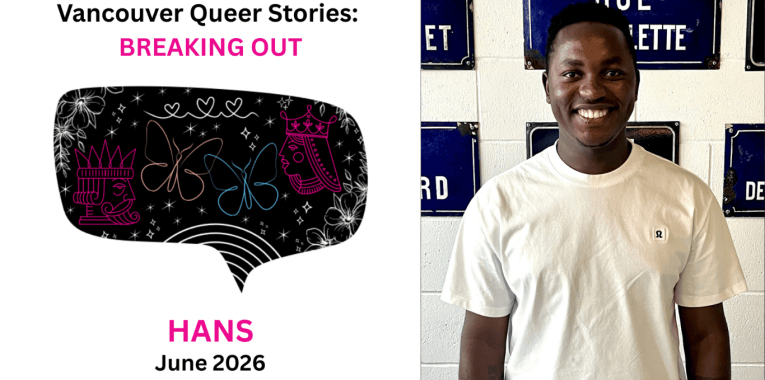
Breaking Out: Hans’ Story

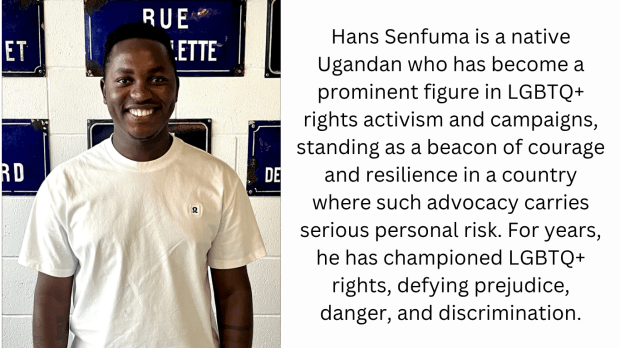
My name is Hans Senfuma, and I am a gay man from Uganda. Writing that sentence still carries weight for me, even today, because for so many years of my life, those words felt like a death sentence — not metaphorically, but literally.

I grew up in a deeply religious household in Uganda, surrounded by people I loved and who loved me, but who I knew would not love this part of me. From a young age, I understood that who I was did not fit the world I had been born into. Uganda is a country where homosexuality is not just socially stigmatized — it is criminalized. And in 2023, the government passed the Anti-Homosexuality Act, one of the harshest anti-LGBTQ laws in the world, with provisions that include the death penalty. Growing up knowing that your existence is punishable by law does something to a person. It teaches you to shrink yourself. It teaches you that survival means silence.

For years, I lived that silence. I smiled at family gatherings when relatives asked when I would get married. I sat through sermons that described people like me as broken, deviant, an abomination. I laughed along with jokes that were made at the expense of queer people, because laughing was safer than flinching. Every single day was a quiet performance of a version of myself that didn’t fully exist. And the exhaustion of that — the loneliness of carrying something so fundamental about yourself completely alone — is something I don’t think I have the words to fully describe.

Coming to terms with my identity was not a single moment. It was slow, painful, and non-linear. There were periods of self-loathing that I am not proud of. There were times I prayed to be different, not because I believed being gay was wrong, but because I desperately wanted to feel safe in my own skin, in my own country, around my own people. Acceptance didn’t arrive like a revelation. It crept in quietly, over time, through stolen moments of honesty with myself — and eventually, with a small circle of people I trusted with my life.

Leaving Uganda was one of the hardest decisions I have ever made. It was also one of the most necessary. The escalating legal climate made it impossible to continue the work I wanted to do from inside the country without putting myself and others at serious risk. When I finally arrived in a place where I could walk down a street without fear, where I could say my name and my truth in the same breath, I cried in a way I hadn’t allowed myself to cry in years. It wasn’t just relief. It was grief — for all the years spent hiding, for the community I left behind, for the Uganda I wished existed.

But leaving didn’t mean stepping away. If anything, it sharpened my sense of purpose. I have dedicated my work to legal advocacy and policy change, fighting for the rights of LGBTQ people in Uganda and across the African continent. I believe deeply that change is possible — not because I am naive, but because I have seen what happens when queer Africans find each other, support each other, and refuse to be erased. I have worked with legal teams challenging discriminatory legislation, contributed to policy frameworks that center the voices of those most at risk, and tried in every way I know how to use whatever platform I have to make noise where there has been silence.

I carry Uganda with me everywhere. I carry its sunsets, and its warmth, and its music, and the faces of people I love who are still there, still navigating a reality I know too well. I carry the responsibility of speaking for those who cannot yet speak for themselves without consequence. That weight is not a burden to me — it is a privilege.

I am sharing my story because visibility matters. Because somewhere right now, there is a young gay boy in Kampala doing exactly what I did — shrinking, hiding, surviving. And I want him to know that survival is not the ceiling. That there is a life beyond silence. That he is not alone, and he is not broken, and he is not an abomination.

He is exactly who he is supposed to be.

And so am I. 
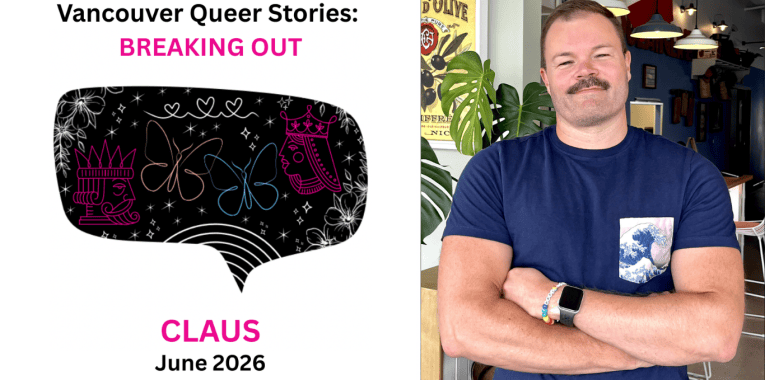
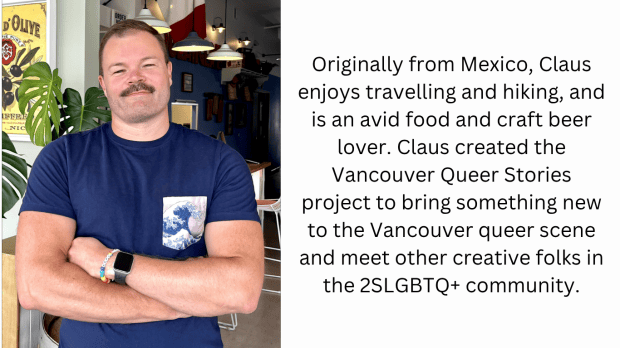
Breaking Out: Claus’ Story

In 1990, my teacher warned my best friend’s mom not to let her daughter, Daniella, hang out with me, because I was rarito – a Spanish word that directly translates to “queer.” Like its English counterpart, rarito means “a little strange,” or “a little peculiar.” In Mexico, it specifically refers to men who appear to be gay.

It probably wasn’t hard to see that I was gay: I never enjoyed playing rough games or sports with the other boys, opting instead to play house with the girls at my school. My teacher knew I was gay before I realized it myself. And, rather than choosing to provide support or guidance, she tried to isolate me—an already painfully shy and very socially awkward little boy— by separating me from the one person that I connected with fully at the time. As if a rarito, a queer, didn’t deserve acceptance.

I was seven-years-old.

As the years progressed, so did the insults. If I thought rarito was bad… I had it coming. When I moved to another state at the age of 10, I spent one year in an all-boys school. The insults there became more pointed – maricon, marica, joto, puto (all words for fag — we seem to have a lot of them in Mexico). I then moved to Canada at the age of 14, and was introduced to the English variants of these insults.

When I look at photos of my childhood, I see a naive little queer boy who smiled widely, unaware of the way others perceived me — when teachers called me queer behind my back, but not to my face. But in photos from my teenage years, I see sadness. Not the typical teenage angst, but something deeper. The sorrow of someone who sometimes wondered if life would ever get better.

At 42, I can look back at these snippets of my life with clearer eyes. To my teenage self, I can truthfully say (as cliché as it sounds): it does get better. But it also gets difficult in new ways, because self-acceptance, and pride, and queerdom, isn’t always linear:

In 1992, I had my first crush. His name was Mathias, a German classmate with golden hair… which is odd, because I’m not typically attracted to blonde men.

In 1996, I had a platonic bromance with my friend Jorge. I moved away the next year, and he came out as gay in our 20s. We kept in contact, but never saw each other again, and he died of Covid. I sometimes wonder if I hadn’t moved away, if he might have been my first kiss. 

In 2000, I had a crush on a girl from high school. But at the same time, I was deeply attracted to so many of my male classmates. It was a very confusing time. I was repressing my sexuality so much, that when one of the guys I was crushing on slapped my ass during PE class — not sure if he was flirting or bullying me — I responded by slamming a hockey stick to his stomach. Hard.
A week later, he returned the favour, slamming a hockey stick against my shins, which fucked up my legs for years to come.

In 2002, at the ripe age of 19, I went on my first date… with a girl from university. Sarah was also my first kiss, which I didn’t enjoy at all. That same year, I went on my first date with a guy. His name was Danny. My name was “Nick…” yes, I used a fake name, because I was still terrified that someone I knew would find out I was gay! Danny was my second “first kiss,” which was more like it. He went on to become my first of many, (many… many) boyfriends

❖ ❖ ❖

When I came out to my friends at 19, their response was mostly positive, but I did lose some friendships over it. When I told my friend Nelda, she responded by asking me: “So what, you like it from behind?,” as if that is the only thing that makes a man gay. I was a virgin at the time… but to answer your question, Nelda – Yes, I do like it from behind.

A year later, in 2003, I came out to my brothers and then my parents. My middle brother had softened the blow by coming out the year before, which simultaneously made things better and worse. I didn’t know at the time that having multiple queer children in one household is actually very common.

In 2009, while holding hands with my boyfriend at the time, someone inside a passing car yelled “faggots,” and threw a jawbreaker at the back of my head. This was on Davie Street. During Pride weekend.

In 2014, I met Eamonn, and we got engaged five years later. When I got engaged, a woman who had worked in the same office as me for four years asked, after seeing my engagement ring, “Where did you propose to her?” I thought it was funny at the time. Then I realized how much of my life I still kept private from non-queer people I saw every day. It seems I’m allegedly “straight-passing” in some circles and find the constant “coming out” exhausting. 

❖ ❖ ❖

My relationship with Pride has also had its ups and downs. 

In 2004, I went to my first Vancouver Pride, and over the following two decades, I’ve been to many prides and queer-centric events throughout the world. London, Cape Town, Reykjavik, Buenos Aires, Guadalajara… even exotic Winnipeg — searching for queer joy in every time zone.

In 2022, I marched in a Pride parade for the first time, with the Vancouver Queer Irish group, and then again the following year. Yet, since last year, I’ve fallen out of love with Pride parades. With sponsor pullbacks, corporate and government support of an ongoing genocide, and the rights of trans and non-binary folks under attack, I’m feeling disconnected. I know we need visibility… but I keep wondering if we need to change the method. “The first Pride was a Riot,” they say… maybe it’s time we go back to marching on the streets, rather than parading on them.

In 2063, when I’m 80 years old, I’ll hopefully look back at today, and realize how good we had it. But I also hope that things will get much better for queer people over that time, because this, still isn’t it.

❖ ❖ ❖

In 1990, when I was 7-years old, my teacher called me Queer as an insult for the first time… behind my back, of course… Cabrona.

In 1998, someone wrote ‘faggot’ on the back of my sweatshirt in high school… and I wore it that way all day, because I didn’t notice until I got home.

In 2002, I came out as gay to my friends. A year later, I came out to my family.

In 2016, I began using the word Queer as an umbrella term to refer to myself, my friends, and other 2SLGBTQ+ people, in a positive light.

In 2022, I married Eamonn in two wonderful celebrations of the most immense queer joy, surrounded by so many of our friends and family.

Today, in 2026, I stand here, in a room full of queer people, telling our stories. And I finally realize: being a little strange, a little peculiar… a little rarito, if you will, is actually something to be proud of.

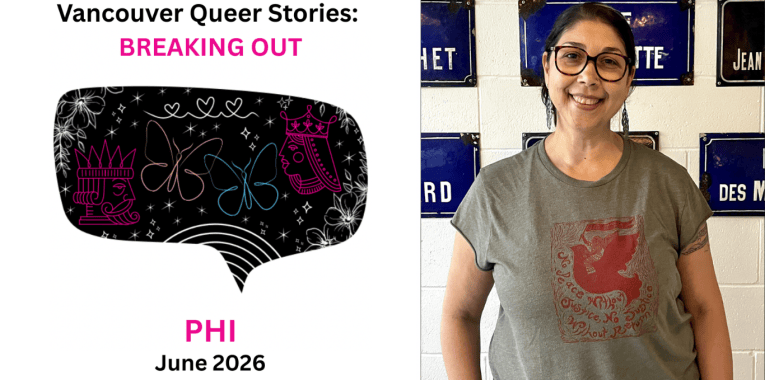
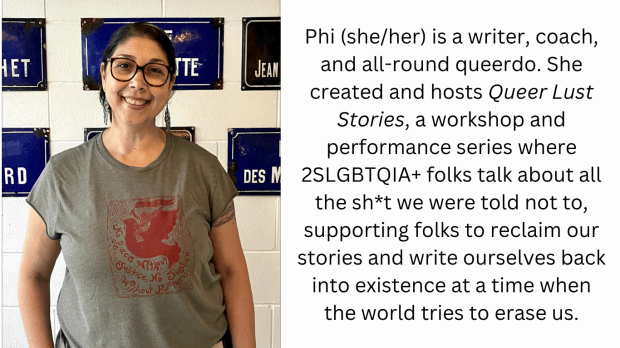
Breaking Out: Phi’s Story

Four months before my wedding, I was in full planning mode. Seating charts, handmade invitations, handmade ceremony programs, finalizing caterers and place settings, the works.

One evening, my fiancée, the man of my… parents’ dreams, was scrolling the TIVO, looking for the next show we should watch. He said, “Hey, what about this show? You heard of it? The L Word?”

My insides burned. “Sure,” I managed to say aloud.

I did not tell him I had already seen the series.

I did not tell him I knew The L Word inside out, that certain scenes were burned into the folds of my brain.

You see, long before living with him in Silicon Valley, I had lived in another valley, Lynn Valley, with my parents and sisters.

One of my sisters had brought a pirated copy of the whole DVD set back from China after a year of teaching abroad. One afternoon, sitting in our parents’ basement, I was thumbing through her giant folder of DVDs, and found this show.

With the first sex scene, my entire body responded. All the kissing. Touching. Fucking. Back then, I wasn’t registering the problematic parts of this series: how most of the actors playing lesbians were straight. White. How the sex scenes were so hetero-performative. I just saw boobs. And I liked it. I found myself sliding my hand down my pants and touching myself. Right there in the family basement. Afterwards, I was flooded with shame.

And then I pressed play and kept watching. I wondered how my sister had watched this show with her two roommates, wouldn’t it have turned them all on like it did me?

In the next episode came the next sex scene. And so did I.

Each scene whether it was sex, touching, a glimpse of something, gave me such massive, full-bodied orgasms, that getting through just one episode was quite exhausting.

All this flashed through my mind as my fiancee loaded up the show. I was anxious as shit. How was I supposed to navigate this situation? What would happen when we started watching this show and it started doing to me what I knew it had done before?

As far as anyone knew, including myself, I was straight. The fact that I’d been binging the L Word on loop since my mid-20s was not something I dwelled on.
The fact that I’d been binging sapphic erotica since my late teens in that same basement didn’t even make a dent in my mind.
Everyone had their secrets, I figured. I never once questioned my sexuality. I just locked it all away in the closet that I didn’t know I had back there.

When my fiancee hit play and the first episode showed the first sex scene, things worked out in my favor. With that first sex scene, he kinda did that straight guy thing of “ohhh” at the sight of two women having sex.
He looked at me and I probably made a face like “____” like a desperate attempt to match his turn-on without betraying the depth of my own.

After the episode ended, he began to touch me and I was all too ready to comply. I jumped onto him and came so hard and so fast it left us both shocked. I had had roughly one to two orgasms with this man in the three years we’d been together. But this too, I put away.

The next day, I went back to wedding planning. I stood in the ribbon aisle at Michael’s, contemplating ribbons for the ceremony programs that I was hand-making. Snippets of the night before came unwanted to my mind, right there in the tubelit aisle at Michael’s.

I drilled down harder: lace or satin? I could not go there. Cream or white? More flashes of the night before, the intensity of my orgasm: nope. Not going there.
I knew what I needed to do: more sequins for my invitations. And off to the next aisle I went.

That night, we watched the next episode of the L Word. Same turn on, same raging orgasm.
Night after night, we watched, I came. And the following day, back to the crafting project that was my wedding.

Finally, my fiancee asked the question I did not ask myself. “Have you ever been with a woman? Have you ever wanted to?”

I caved inward. Memories of all those years of my basement self-pleasurings burned inside me and I fought with Herculean effort to say, “Nah,” and try to sound normal about it. And then neither of us knew what to say. So we just watched the next episode.

One afternoon, back at Michael’s, I studied the cardstock: plain or textured? The question came:
“Phi,” a voice inside said, “These nightly sex romps are great and all, but should we talk about what this means?”

But here was where that vast black void kind of clouded my vision. I didn’t know how to examine this. Or who to examine it with. Everyone I knew was straight. Everyone I knew was getting married or was already married.

But each time I asked myself, “Should we examine what’s going on here?” I would think, “Welll, it’s four months till the wedding. People have already bought their plane tickets. It would be rude to cancel.”

This was the actual thought that would go through my head: you can’t cancel a wedding. I have to get married because you can’t cancel a wedding. Back then, I lived by these rules. The you can’ts and you musts and you shoulds.

But the deeper truth, the truth that I would not piece together until years and years later, was this: the idea of listening to my body, the idea of following my desire, at that time in my life, four months before my wedding to the perfect straight brown man, uh uh. I couldn’t.

Because to listen to my body, to follow my desires would make me different. And different was bad. I was already way too different: being a writer, a traveler, wanting to birth novels instead of babies. I was nearly 30 and try as I might, I was not doing a great job at following the script that everyone around me seemed to just slip into so easily. Now my body wanted to add queerness to the list? Queerness was definitely not part of the script.

But getting married? That meant I could fit in. That I would belong. That I had finally done something right. It was all right there within reach. And at that time, I needed to belong, to be like everyone else, more than I needed to be my true self.

We can intellectualize our lust, we can tell ourselves “everyone reacts to the L Word that way”, we can talk ourselves out of what we desire, but sometimes, the body gives it all away. And you can still shove that shit down, and that’s okay too.

It would be years before I would leave my marriage, before I would come out and come in to my full queer self.

It would be years before I would see QUEER community with my own eyes. People who were queer and trans and poly and kinky and thriving.

But that day did come. Literally the same day I left my marriage, I came out. To the person who would become my best friend and my greatest unrequited love. I couldn’t hold it in any longer.

He was stir-frying broccoli for our dinner and I burst out with: “I think I like … girls.”

He nodded, fully accepting of this news. Over the following weeks, he guided me on my great coming out journey, starting with queer films I had to see.

“Hey, have you seen Blue is the Warmest Color?” he asked, naming an extremely sapphic film.
“Ummm… yes.”

Shame crept up my neck and into my cheeks. But he just laughed and said, “Oh friend, you’re so gay.” Not in a shaming way. In a way that felt like, “I get you, welcome home.”

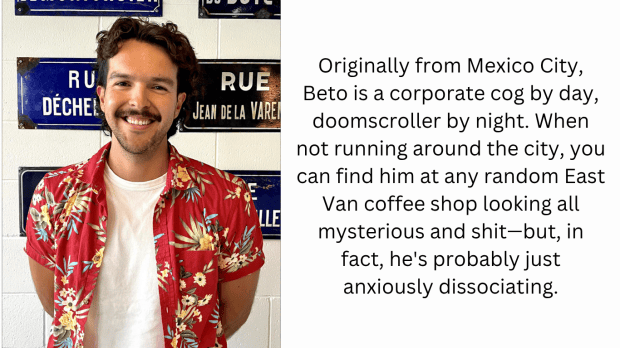
Breaking Out: Beto’ Story

COVID Made Me GAY

It was late one evening, at dinner time, when my mother broke down in tears. A first for my then 29-year-old-ass.

We don’t cry in my family unless we are watching a sad movie. Even then, it’s a game of who can blink their tears back in the quickest. We don’t hug or kiss unless outside airport terminals and we only text “Love you!” right before takeoff, just in case the plane goes down.

Seeing my immunocompromised mother cry right in front of us, chicken still half-chewed in my mouth, I knew this was serious.

It was April, 2020. We had been hearing about this killer disease and every night we saw the case numbers creep closer to our own social circles.

After consoling her by saying that this would fizzle out in a few weeks (we were a bit short), I escaped to my bedroom.

Is this it? I thought. Is this how we go?

And more importantly: Am I going to die before getting to be gay?

❖ ❖ ❖

The first whiff of queerness arrived when I was 13, in a random dream where I saw my cousin laying in bed wearing bright blue briefs. I hovered towards him, Nosferatu-style, until my hand was but a millimeter shy away from his bulge, only to suddenly wake up.

That night sealed two fates: I was going to have a fluid sexuality and I’d never see the 3rd act of any sex dream.

For the next 15 years, bogged down by toxic prejudgments and not exactly feeling “100% top, masc to masc, no smooths, no twinks,” I was like: Why even bother? I’ll just carry on as a straightie, occasionally lusting for Zac Efron’s biceps like any normal, liberal dude.

But then COVID and the threat of imminent death appeared.

❖ ❖ ❖

In January 2022, I moved to Vancouver with three goals: be social, be gayer, and marry quickly to stay in the country. (I’m still missing the third, please inquire after the show.) By nightfall, I had downloaded Grindr.

“How goes it?” a faceless profile asked.

What does that mean? How goes what? I thought. “Hi. How are you?” I replied.

Though surely thinking I was a little slow, this faceless man kept texting and before I knew it he shot: “Send pics.”

“Ok. What do you want to see?”

“Dick and ass,” he replied.

What an assertive man, I thought. I hadn’t planned in advance, so I quickly scrammed to take some pics lest I lose the attention of this prized individual. I was more pressured than aroused, so my photos didn’t represent my full potential. Even so, I must’ve charmed him because he then shared his location.

I was staying at an Airbnb near 41st and Knight. The map showed him across Duffin Donuts, south of a Shell station.

“On my way,” I sent, and my body started shaking uncontrollably. Oh – wow. Being gay is super fun, I thought.

I went outside. The wind had picked up and that Pacific Northwest mist felt a bit like horizontal rain. The weather and my nerves were wreaking havoc on my Mexican skin.

As soon as I turned the corner where this dude lived, I froze. It was a dark, damp, and scary-looking backstreet. I’ll get murdered, I thought. I’ll star as a victim on one of those Netflix exploitative documentaries about homosexual cannibals, confirming my parents’ belief that gays are ‘More passionate than straight people’!

I ran back to my Airbnb.

“Sorry. I’m actually kinda cold – lol,” I texted.

“No problem. I get it. You’re new at this. I could tell,” the would-be-cannibal replied.

❖ ❖ ❖

Even though I eventually wanted to find my legally Canadian partner, I wanted to have some fun before committing. Unfortunately, within the following weeks I discovered I sucked at hookups.

It would always go something like this:

1 – Get horny EXCLUSIVELY after 11pm on a weeknight and find a suitor after an extensive background check.

2 – Invite them over after making sure—just in case—that they knew my big, rugby-playing roommate was sleeping next room. (I live alone.)

3 – Shiver uncontrollably during foreplay. “Are you okay?” “Just cold,” I’d whisper next to my roaring heater.

4 – Say goodbye with a “Sorry. I think I’m just tired,” after failing to finish the deal. “But coffee sometime?”

5 – I’d get blocked.

My body refused to cooperate with my desire for casual sex. After a few lukewarm wins, I theorized hookups weren’t my jam. I was, apparently, a monogamous family man.

❖ ❖ ❖

A couple months after, I had moved into my current place—a garden suite located in one of those “scary backstreets” which, turns out, are quite lovely. My Grindr exploits had slowed down since I started dating this dude who, I was sure, was going to be my forever.

Being my first homosexual relationship, I unfortunately fell infatuated with the guy, which made the text he sent me one night hit like a brick:

“Hey, I think I see you more as a friend.”

“Oh—“

“And I’m also kinda married.”

“Ah.”

I was not looking to break up a marriage, but I was baffled. What happened? Am I boring? Ugly? Not gay enough? What does his husband have that I don’t? Pick me. Choose me. LOVE ME.

❖ ❖ ❖

“Can you fart all over my face? You’re so hot,” read a message on Grindr. I had gone back to the app after a couple of weeks of listening to Sam Smith, journaling, and burning letters.

“Oh – wow. How does that work?”

“Special chair. You sit; I put my face under it.”

Despite just having a protein-heavy dinner, I politely declined. I’m pretty open but wasn’t in the mood to take that kind of a dive.

“You know you can monetize this?” my brother said after I shared the screenshot.

“I don’t think my visa allows for this type of entrepreneurial venture,” I replied.

❖ ❖ ❖

Months turned into years of me being on every app and meeting random men. I got better and more confident in my hookups and dates, but something still hadn’t quite clicked. Much like snow in Vancouver, nothing stuck. I was still missing something. I kept having these brief connections that led only to me sending them off into the night.

In January 2025, my brother and best friend both moved away during the same weekend, leaving me at zero: no friends, no family, no partner. After allowing myself a two-day pity party, I got to work on a new, more critical mission: finding community.

I started attending every event or public meetup that came across my desk. Running groups, drag show events, art exhibits, board game nights—nothing was off the table. I started dancing with strangers at 1181, cheering queens at Junction, sharing beers with bears at Pumpjack. And slowly, something started to finally click.

In my limited view as a prejudiced baby-homo, I thought being gay meant being a regular dude who happens to have sex with men—which is true. But I’d missed that being anyone means being a universe of thoughts, history, connections, feelings, beliefs, perspectives; and being part of a community meant sharing these universes.

By hyperfocusing on trying to find sex and partners, I had been living vicariously through morsels of experiences men shared with me between climaxing and the door.

It is through actively participating that I’ve started to scratch the surface of actually being part of a community. Talking to people, sharing stories, and celebrating one another is what has made me feel closer to “being gay.” And what a joy it’s been!

❖ ❖ ❖

“If you ever need your pits licked, let me know,” someone texted me the other night.

“Sure,” I replied. “… but we gotta be quiet. My big, rugby-playing roommate is sleeping next door.”

I still live alone. 

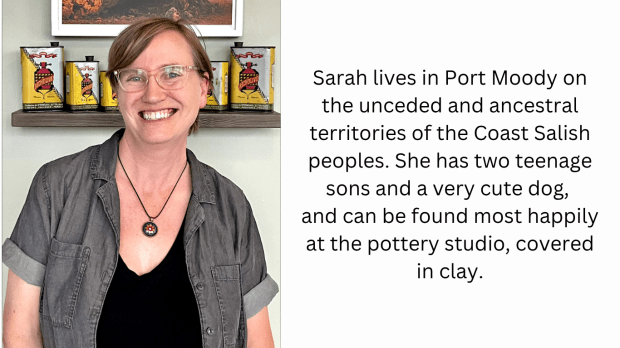
Breaking Out: Sarah’s Story

It’s six pm on a rainy Saturday in January and I’m driving alone up Mount Seymour in the dark. My heater is on full blast but even so my windows keep fogging up. My windshield wipers fight furiously against the rain that turns to wet snow as I drive higher. 

When I’d signed up for this event, I thought a full moon hike sounded like a lovely, romantic idea. It was my first outing with a hiking group I’d dared myself to join – an antidote to scrolling through dating apps or missing the ex who had recently broken my heart.

Immediately after signing up, panic washed over me. Willingly going out with a group of strangers is as far out of my comfort zone as, I don’t know, kissing an octopus. 

But I knew I needed something different. My life as a single mom in the suburbs felt small, limited, and I was starting to feel small with it. 

So I cobbled together a hiking outfit, packed a backpack with the things I thought I might need, and said yes.   

In the weeks leading up to the hike my anxiety came in waves. I almost cancelled a dozen times. I worried about pretty much everything – would my raincoat look cute? Would the other hikers be boring? What if I was stuck for hours with annoying people? What if they thought I was boring? I scrolled through their tiny photos looking for clues of compatibility.

I hadn’t even thought to consider practical things like, for example, the weather. 

So of course, the morning of the hike dawned rainy. With that Vancouver winter rain, ceaseless and daunting. It just kept coming down.

From my couch I alternated between refreshing the weather report and refreshing the event listing. As the day went on, the attendee list dropped from 12 to 8 to 6. I wondered if the hike would be cancelled, if I should pull out. 

The more it seemed like it might not happen, the more I realized I really wanted it to. 

“Fuck it,” I said, my backpack into the trunk.  

As I pull into the parking lot, there might as well not be a parking lot – it’s just a wall of fog. Doubt crowds my mind. Am I the only one stupid enough to actually show up? Why did I think this was a good idea? 

Finally, near the end of the lot I spot another vehicle. I pull up beside it and roll down my window. “I’m here for the full moon hike?” I say, cautiously, ridiculously, as wet snow pelts down. 

Three women climb out of the car. One, a few years older than me approaches with a welcoming smile and an outstretched hand. Cute braids stick out from under her toque. I like her already. 

“I’m Linda,” she says. “This is Joy, that’s Gina.” I recognized them from the photos, but here they were for real, organizing things in their backpacks, pulling on layers. 

“You’ve got your ten essentials?” she asks.

I smile and nod like I know what that means. 

I feel like such a fraud. Not knowing what to wear, I wore everything. A long sleeve shirt covered by a fleece covered by a down jacket with a raincoat over top.

I try to look like I know what I’m doing. I pull my Value Village rainpaints from the trunk and layer them over my sweatpants. 

These women seem effortlessly technical – they have those backpacks with the water hoses to drink from, and Gortex jackets, and carabiners that rattle from their bags like Christmas ornaments. I guess it takes a certain kind of person to come out in these conditions. 

I slide my feet into my old hiking boots, tighten the laces over two pairs of socks. 

We throw our backpacks on, adjust our headlamps, and head out into the dark night. For awhile there’s nothing but the crunch of our feet on the snow and the wind whistling through the tall trees.

They’ve all met before, chat easily together, and I feel the familiar self-consciousness creep over me. Do I have anything to say?  

A little way up the trail, we stop to put our microspikes on over our boots for traction. I pull mine out  – cheap ones I bought on Amazon, with little grippy dots. Theirs have big metal teeth. Where they walk, I slide. 

Have I mentioned that this is my first hike in months, if not years? That in all of my excitement to get out of my comfort zone and have an adventure, I forgot I’d be lugging my body along with me? You know that expression ‘your eyes were bigger than your stomach”, when you put more food on your plate than you can eat? 

This was that, but adventure was the food and the limit was my neglected muscles. 

Before long I am huffing and puffing, sweat pouring down inside my many layers. 

When they ask about me, it dawns on me that I’m meeting people who didn’t know me before I came out. People who haven’t witnessed my transition from being partnered with a man to becoming comfortable as a queer woman. 

I’ve gotten used to defining myself by what I felt I’d failed at – a marriage, keeping my family together. 

But here, and now, I can be whoever I want. 

The further we climb, the easier conversation flows. One of the women just got back from a trip to to Peru and tells us about her hikes there. I talk about the time I spent living in Chiang Mai in my twenties, and as I do memories come rushing back. Not just memories of tuktuks and pad thai, but of who I was then, independent, confident, curious. 

A woman with a taste for adventure. 

Near the top we stop in a sheltered valley to discuss our options. We’d planned to climb to Pump Peak to have our snack at the viewpoint. The snow is coming down hard now and visibility is next to nothing. Maybe we should turn back. “But we’re here,” I say, surprising even myself. “Let’s go for it.”  

So the four of us, like trekkers on the ascent to Mount Everest, set off up the icy bank for the climb towards the peak. There’s no path, just a sheet of white and shadow under the beam of our headlamps. We are comical, occasionally losing our balance and knocking each other over as we slip backwards.  

Finally we make it. The wind whips around us and we search in all directions for a glimpse of the elusive moon.

Instead, it’s almost as though the clouds thicken – we howl with laughter at this epic failure. 

I pull out my granola bar, thinking that will suffice as a hiking snack. Not with these ladies. Joy whips out a stove and manages to light it in spite of the wind and rain. She finds her pot and starts cooking gnocchi, of all things. Linda makes hot chocolate and someone produces a bottle of whiskey. Gina lays a tarp on the snow for us to sit on. 

I feel like a kid, giddy with the novelty, the make-your-own-fun of it. 

This is so much better than a mediocre first date on Commerical drive. 

I’ll be honest – originally I joined the group because thought I might meet a woman. 

Instead, I met women. Strong, independent women who climb mountains in the dark for fun. Women who see terrible weather not as a reason to stay home, but as part of the adventure.

On the way back down, certain sections of the trail are perfect for sliding and so we do – our feet up in the air like kids. Our screams and laughter echo across the valley, up to the dark sky. 

Driving home that night, I am soaked, exhausted, grinning and eager for more.

The moon never appeared that night. 

But I felt something else come into view: a version of myself that was still growing, still exploring, still willing to say yes to things that scared me. That night, somewhere between the parking lot and the summit, something had shifted. 

For the first time in a long time, my life felt bigger than the boundaries I’d been living inside.

A few months later we returned to Pump Peak for the Strawberry Moon – a larger group this time, the fairweather hikers – and we were treated to a spectacular moonrise over the mountains. This time I brought my newly purchased hiking stove, my backpack with a waterhose. This time I was the one greeting newcomers with a smile and an outstretched hand.